
5 Days in Nepal Tour
Five days is Nepal’s most efficient timeframe. It is long enough to see something properly and short enough that every hour counts. Travellers who arrive with a clear picture of what they want get a tremendous amount done. Those who try to cover everything get a highlights reel. The difference is not the country’s fault — Nepal is generous to short-trip visitors. The difference is the planning.
In five days you can complete a three-day Annapurna foothills trek and still have two full days for Kathmandu heritage. You can cover the Kathmandu and Pokhara cultural circuit at a pace that feels generous rather than rushed. You can spend two full days in Chitwan’s jungle with morning safaris, river canoes, and Tharu village evenings, combined with two Kathmandu heritage days. You can do the Namche Bazaar heli-trek and land at Everest Base Camp on the final morning. Or you can follow the Poon Hill circuit condensed to its finest four trekking days, beginning and ending in Pokhara with a Kathmandu day on either side.
This guide presents ten completely distinct five-day itineraries for Nepal, each designed for a different traveller profile. Before the itineraries, the activities section gives an honest, detailed picture of every major experience available in this window. Everything starts and ends in Kathmandu.
Nepal’s Best Activities and Experiences
Understanding what each experience actually involves makes choosing between itineraries far easier. These are the building blocks.
1. Kathmandu Valley
The Kathmandu Valley holds seven UNESCO World Heritage Sites within a 20-kilometre radius, making it one of the most culturally dense places on earth. For five-day itineraries, two full days here is the standard allocation. The following are the experiences that make those days worthwhile.
- Pashupatinath Temple on the Bagmati River is Nepal’s most sacred Hindu site. The Arya Ghat cremation area on the river’s western bank and the evening aarti ceremony performed by priests as the sun sets are two of the most profound and moving experiences available to any traveller in Asia. Arrive at 5:00 PM. Stay for the full ceremony.
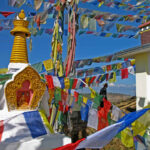
- Boudhanath Stupa is one of the world’s largest Buddhist stupas and the most important Tibetan Buddhist site outside Tibet. At 36 metres high, the stupa is surrounded by monasteries, meditation centres, and the constant sound of prayer wheels being turned. The pre-dawn circumambulation walk at 5:30 AM, before the tourist groups arrive, when monks chant from the surrounding gompas and butter lamps line the plinth, is the finest morning experience in Kathmandu.
- Swayambhunath, the hilltop stupa known as the Monkey Temple, dates from the 5th century CE. The climb up the 365 stone steps through the resident monkey colony brings you to a platform with panoramic views of the Kathmandu Valley and the watching eyes of the Buddha on the gilded spire above. Best at sunrise or in the golden hour before dusk.
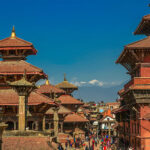
- Bhaktapur Durbar Square is Nepal’s finest medieval city. The Nyatapola Temple (Nepal’s tallest pagoda at five tiers, built 1702), the Golden Gate, the 55-Window Palace, and the Pottery Square where traditional potters work on hand-turned wooden wheels make this one of Asia’s great living heritage destinations. A full half-day is the minimum. A full day is better.
- Patan Durbar Square contains the finest Newari temple architecture in the valley. The Patan Museum is internationally acclaimed for its collection of Buddhist and Hindu metalwork. The surrounding neighbourhood of Mangal Bazaar, with its stone-paved lanes and traditional workshops, rewards extended slow walking.
- Nagarkot at 2,175 metres on the eastern rim of the valley is Nepal’s most celebrated Himalayan sunrise viewpoint accessible by road. On clear mornings the panorama stretches from Annapurna in the west to Kanchenjunga in the east. Best experienced with an overnight stay followed by an early departure to Bhaktapur.
2. Pokhara
Pokhara is 45 minutes by air from Kathmandu. The city sits at 827 metres on the shore of Phewa Lake directly beneath the Annapurna massif, and is simultaneously Nepal’s adventure capital and one of its most relaxed destinations. One to two Pokhara days within a five-day itinerary delivers the following experiences.
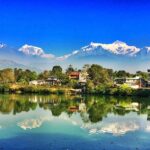
- Phewa Lake at dawn is one of Nepal’s most consistently beautiful daily moments. The reflection of Machhapuchhre’s double peak in the still surface before the wind arrives is something no photograph fully captures. A wooden rowboat crossing to Tal Barahi island temple costs NPR 800 and takes 20 minutes.
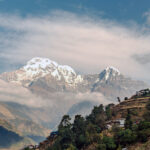
- Sarangkot at 1,590 metres is Pokhara’s famous pre-dawn sunrise viewpoint. The Annapurna range from Dhaulagiri to Machhapuchhre lights up in gold, orange, and pink as the sun rises. Arrive before 5:30 AM for a clear position on the ridge.
- Tandem paragliding from Sarangkot is one of the world’s finest paragliding destinations. Instructors launch from the Sarangkot ridge and thermal currents carry you to 1,800 metres above the valley with the Annapurna range directly ahead. A standard flight lasts 20 to 60 minutes. The landing zone is the lakeside. Cost: USD 80 to USD 120.
- The World Peace Pagoda is a Japanese-built Buddhist stupa on a forested hilltop south of Phewa Lake. The approach is a 20-minute boat crossing followed by a steep 45-minute forest trail. From the terrace the view encompasses the full Pokhara valley, Phewa Lake, and the Annapurna range. Best in the afternoon when the light is facing east.
- Davis Fall and Gupteshwor Cave are two geological curiosities 30 minutes south of Lakeside. Davis Fall plunges underground into a narrow gorge that has no visible end. The adjacent Gupteshwor Cave holds a natural Shiva shrine and impressive rock formations. A pleasant 90-minute afternoon activity that most Pokhara visitors skip.
- The International Mountain Museum near Prithvi Chowk is one of Nepal’s best museums, documenting the history of Himalayan mountaineering, the cultural traditions of Nepal’s highland peoples, and the ecology of the high Himalaya. Two hours here is well spent for anyone with an interest in mountains beyond the postcard view.
3. Poon Hill Trek
The Poon Hill circuit from Nayapul is Nepal’s most popular short trek and one of its genuinely finest. The trail climbs through the Gurung villages of Tikhedhunga and Ulleri via the famous stone staircase of more than 3,000 steps, continues through rhododendron and oak forest to Ghorepani at 2,860 metres, and then rises for the pre-dawn summit of Poon Hill at 3,210 metres. The panoramic arc of Dhaulagiri (8,167 m), Annapurna I (8,091 m), Annapurna South, Hiunchuli, Nilgiri, Lamjung Himal, and Machhapuchhre illuminated by the first sun is Nepal’s most celebrated mountain sunrise. In March and April the rhododendron forests bloom red, pink, and white. In autumn the same forest is golden and the mountain views are at their clearest. The standard four-day Poon Hill circuit (Nayapul to Tikhedhunga, Tikhedhunga to Ghorepani, Poon Hill then Ghandruk, Ghandruk to Nayapul) fits within a five-day itinerary combined with a Kathmandu arrival day. Easy to Moderate. The most popular trekking choice in Nepal for very good reasons.
4. Australian Camp Trek
Australian Camp at 2,060 metres is one of the most rewarding short Annapurna trekking experiences accessible from Pokhara. The trail starts from Kande, a 30-minute drive west of the city, and climbs through Gurung villages and rhododendron forest to an open ridge where the full Annapurna panorama spreads across the northern sky. Annapurna South, Annapurna I, II and III, Machhapuchhre (Fishtail), Lamjung Himal, and Manaslu are all visible from the camp ridge on a clear day. No TIMS or ACAP permit is required for the standard Australian Camp circuit, which simplifies logistics considerably. The two-day circuit (Kande to Australian Camp, Australian Camp to Dhampus and back to Phedi) can be combined with paragliding on the first Pokhara morning and a lakeside recovery day to fill the Pokhara portion of a five-day itinerary. Easy difficulty, no altitude risk.
5. Ghandruk Cultural Trek
Ghandruk at 1,940 metres is the largest Gurung village in western Nepal and the cultural centrepiece of the lower Annapurna foothills. The trail from Kande or Phedi climbs through terraced farmland and rhododendron forest through Dhampus and Landruk before reaching Ghandruk, where the Gurung Museum documents the community’s Gurkha military history, spiritual traditions, and the ecology of the region. The view of Annapurna South and Hiunchuli from the village ridge is one of the most intimate ground-level Annapurna views available from any trail in Nepal. The Ghandruk circuit is easier than Poon Hill, more culturally rich, and equally beautiful in terms of mountain scenery. Daily walking times are three to five hours. Maximum altitude is below 2,000 metres. Easy difficulty. Suitable for first-time trekkers, families, and older travellers of all ages.
6. Mardi Himal Trek
Mardi Himal is the Annapurna region’s finest off-the-beaten-path short trek, offering closer and more dramatic mountain views than Poon Hill from a trail that sees a fraction of the foot traffic. The route climbs from Kande through Forest Camp (2,620 m), Low Camp (3,150 m), and High Camp (3,580 m) to the Upper Viewpoint at 4,200 metres, where Machhapuchhre’s unclimbed south face fills the sky at close range. In five days the full circuit is achievable: fly to Pokhara, drive to Kande, two days ascending to the Upper Viewpoint, one day descending to Siding village, return to Pokhara. The trail is officially open since 2012 and is substantially quieter than the main Annapurna routes. Moderate difficulty. The best short trek in the region for travellers who want solitude alongside extraordinary mountain scenery.
7. Chitwan National Park
Chitwan National Park is Nepal’s most accessible wildlife destination and one of Asia’s finest. The UNESCO World Heritage Site covers 932 square kilometres of subtropical grassland, riverine forest, and sal jungle in the Terai lowlands. One-horned rhino sightings on jeep safaris are virtually guaranteed. Bengal tiger sightings occur regularly, particularly in the dry season from October to April. Gharial and mugger crocodiles line the river banks. Two nights in Chitwan within a five-day itinerary gives time for a dawn jeep safari, a Rapti River canoe trip, a guided nature walk, and an evening Tharu cultural programme. The Tharu are the indigenous people of the Terai, and their stick dance, drumming, and cultural storytelling are a genuine and engaging evening experience. The 30-minute Kathmandu to Bharatpur flight makes the logistics clean and quick.
8. Balthali Village Trek and Namobuddha
The Balthali circuit is Nepal’s finest short cultural trek within easy reach of Kathmandu, requiring no domestic flight at any point. The trail from Dhulikhel or Jarsing Pauwa passes through Namobuddha Monastery, one of Tibetan Buddhism’s most sacred sites, on a forested ridge above the Kavrepalanchowk valley. A stupa there marks the exact location where the Bodhisattva, in a previous life, offered his body to feed a starving tigress and her cubs. Below the monastery the trail descends to Balthali village at 1,730 metres through apple and plum orchards and terraced fields, and continues the following day to the ancient Newari town of Panauti at the confluence of two sacred rivers, with the 13th-century Indreshwar Mahadev Temple at its heart. The entire three-day trekking circuit, combined with two Kathmandu heritage days, makes one of the most culturally complete and least crowded five-day Nepal itineraries available. Easy difficulty.
9. Namche Bazaar and Everest Helicopter
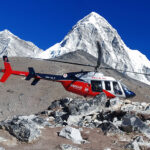
The Namche Bazaar heli-trek compresses the Khumbu experience into five days by combining two days of trekking from Lukla to Namche Bazaar with a helicopter return that includes a landing at Everest Base Camp or Gorak Shep at 5,364 metres. The helicopter on the final day replaces the two-day return walk to Lukla and simultaneously delivers one of the most spectacular aerial Himalayan experiences available anywhere: the Khumbu Glacier from the air, a landing below the South Col of Everest, and a flyby of Kala Patthar at 5,545 metres before flying south to Kathmandu. Namche Bazaar itself on days 3 and 4 delivers the Saturday market, the Sherpa culture, the Hillary Bridge crossing, and the Hotel Everest View hike at 3,880 metres, all of which are as rewarding as any EBC trekker’s equivalent days. For travellers with a higher budget who want the full Khumbu and Everest experience in five days, this is the best option available anywhere.
10. Multi-Sport Adventure Circuit
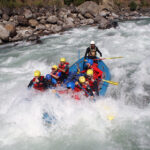
Nepal’s finest adventure activities within five days: Trishuli white-water rafting, Pokhara tandem paragliding, an Australian Camp or Sarangkot-Dhampus ridge walk, and Phewa Lake boating. The circuit runs from Kathmandu along the Prithvi Highway to the Trishuli river, continues to Pokhara for the paragliding and the trek, and closes with the lakeside and the Kathmandu return flight. No high altitude, no trekking permits required, and every day involves a different physical and sensory environment. The Trishuli adds a river adventure to what would otherwise be a purely mountain and city trip. The paragliding flight from Sarangkot provides the aerial perspective on the Annapurna range that most travellers only see from a ridge. Suitable for all fitness levels. No prior experience required for either the rafting or the paragliding.
11. Mohare Danda Trek
Mohare Danda sits at 3,300 metres on a ridge above the Annapurna foothills south of Ghorepani, and is one of the finest and least-known viewpoints in the entire Annapurna region. The summit ridge delivers a 270-degree Himalayan panorama: Dhaulagiri (8,167 m), Annapurna South, Annapurna I, Baraha Shikhar, Machhapuchhre, and the full sweep of the Nilgiri range without obstruction. The community-managed teahouses at Mohare Danda are run by local Magar farmers who have preserved their traditional dress, cooking, and cultural practices. This is one of the few trekking destinations in the Annapurna region where travellers can try on traditional Magar dress, work alongside farmers in the terraced fields, and cook local food with a host family. For five days: fly to Pokhara, drive to the Nayapul area, trek to Mohare Danda via Patichaur and Lespar, summit the ridge, descend, and return to Pokhara. Moderate difficulty. A genuinely original five-day itinerary for travellers who want something beyond the standard Poon Hill circuit.
10 Itinerary Ideas for 5 Days in Nepal
All ten itineraries start and end in Kathmandu. Each is designed for a different type of traveller. Read the opening paragraph of each to find the one that fits.
Itinerary 1: Kathmandu Heritage and Pokhara
Nepal’s two greatest cities in five focused days. Three days in Kathmandu for a full cultural and spiritual circuit, two days in Pokhara for mountain views and adventure activities. No trekking. No tight logistics. The right choice for first-time visitors, cultural travellers, older visitors, and families with young children. Easy throughout. Suitable for all ages and fitness levels.
Itinerary at a glance
Day 01 Arrive Kathmandu, welcome dinner, Boudhanath pre-dusk circumambulation walk (overnight: Kathmandu)
Day 02 Kathmandu: Pashupatinath aarti at dusk, Swayambhunath sunrise, Patan Museum afternoon (overnight: Kathmandu)
Day 03 Kathmandu: Bhaktapur full day, overnight Nagarkot for Himalayan sunrise (overnight: Nagarkot)
Day 04 Nagarkot sunrise panorama, scenic drive to Pokhara via Bandipur stopover (4.5 hours) (overnight: Pokhara)
Day 05 Pokhara: Sarangkot sunrise, paragliding, World Peace Pagoda walk, Phewa Lake, fly to Kathmandu, departure (overnight: Departure)
Days 2 and 3 cover the full Kathmandu circuit without repeating any site. Day 2 moves from Pashupatinath at dusk (the most powerful single experience in Kathmandu), to Swayambhunath at dawn on day 3 morning, to the Patan Museum and Durbar Square in the afternoon. Bhaktapur on day 3 with a full morning gives time to go beyond the main square and find the craftsmen’s lanes, the Dattatreya Square, and the Pottery Market where wheel-thrown earthenware is set out to dry in long rows. Nagarkot overnight on day 3 earns its place with the sunrise panorama on day 4 that stretches from Annapurna to Kanchenjunga. The Bandipur stop on the drive to Pokhara turns what would be a 6-hour transit into an experience in itself: the vehicle-free heritage bazaar at 1,030 metres, with the Annapurna range visible from the Tundikhel ridge, is one of Nepal’s finest and most undervisited places. Pokhara on day 5 packs in the finest experiences the city offers: Sarangkot at 5:00 AM, paragliding in the late morning thermals, the World Peace Pagoda forest walk, and the Phewa Lake sunset before the departure flight.
Itinerary 2: Poon Hill Trek
Nepal’s most celebrated short trek in five focused days. The four-day Poon Hill circuit combined with a Kathmandu arrival day. The Ulleri stone steps, the rhododendron forests, the Poon Hill sunrise, and Ghandruk village. Easy to Moderate. The best five-day trekking itinerary for first-time trekkers and anyone visiting Nepal for the first time.
Itinerary at a glance
Day 01 Arrive Kathmandu, welcome, Pashupatinath dusk aarti, Boudhanath early morning (overnight: Kathmandu)
Day 02 Fly Kathmandu to Pokhara, drive Nayapul, trek to Tikhedhunga (1,540 m) (overnight: Tikhedhunga)
Day 03 Trek Tikhedhunga to Ghorepani (2,860 m) via Ulleri stone staircase and rhododendron forest (overnight: Ghorepani)
Day 04 Poon Hill pre-dawn summit (3,210 m), full Annapurna panorama, trek to Ghandruk (1,940 m) (overnight: Ghandruk)
Day 05 Trek Ghandruk to Nayapul, drive to Pokhara, fly to Kathmandu, departure (overnight: Departure)
Day 1 condenses Kathmandu to its two spiritual anchors: Pashupatinath in the evening (the dusk aarti is achievable even after a midday international arrival) and Boudhanath at dawn on day 2 morning before the Pokhara flight. The drive from Pokhara to Nayapul on day 2 takes 90 minutes, leaving the afternoon for the walk to Tikhedhunga along the Modi Khola valley. Day 3 is the physical challenge day: the Ulleri stone staircase climbs more than 3,000 steps from the valley floor to the village, then the trail continues through deepening rhododendron forest to Ghorepani. The effort is real but the forest is beautiful and the teahouse arrival at Ghorepani in the late afternoon, with the mountains visible above the ridge to the north, reframes everything. Day 4 is the best single day of the itinerary: pre-dawn Poon Hill with the Annapurna arc in the first light, then the long traverse through Tadapani forest to Ghandruk. Day 5 is the relaxed descent and road return before the departure flight.
Itinerary 3: Ghandruk Cultural Trek
Village Nepal at its best. The Ghandruk circuit is easier than Poon Hill, more culturally rich, and equally beautiful in terms of mountain scenery. The right five-day itinerary for families, older travellers, beginner trekkers, and anyone who wants to understand a Himalayan community rather than just walk through it. Easy difficulty. Maximum altitude below 2,000 metres.
Itinerary at a glance
Day 01 Arrive Kathmandu, welcome, Boudhanath evening walk (overnight: Kathmandu)
Day 02 Kathmandu: Pashupatinath, Bhaktapur, Patan Museum, evening fly to Pokhara (overnight: Pokhara)
Day 03 Pokhara Sarangkot sunrise, drive Kande trailhead, trek to Dhampus (1,650 m) (overnight: Dhampus)
Day 04 Trek Dhampus through Landruk to Ghandruk (1,940 m), Gurung Museum, village evening (overnight: Ghandruk)
Day 05 Trek Ghandruk to Nayapul, drive to Pokhara, fly to Kathmandu, departure (overnight: Departure)
Day 2 uses Kathmandu efficiently with three major heritage visits before the evening Pokhara flight. Dhampus on day 3 is the gentle beginning: a hilltop Gurung village at 1,650 metres with good Annapurna views and a relaxed teahouse atmosphere that eases you into the trek after the city days. The forest walk from Dhampus to Landruk on day 4 is one of the most pleasant sections of trail in the lower Annapurna foothills. Ghandruk itself is the destination: the Gurung Museum, the stone-paved traditional lanes, the community water mill, and the view of Annapurna South from the ridge above the village at 1,940 metres are all genuinely worth the walk to reach them. The Gurung Museum in particular is one of Nepal’s best community-run heritage collections, documenting the Gurkha military connection, traditional spiritual practices, and the farming calendar of the surrounding hills. Day 5 is the descent and road return before the departure flight.
Itinerary 4: Mardi Himal Trek
The Annapurna region’s finest quiet trek in five days. Close-up Machhapuchhre views from the Upper Viewpoint at 4,200 metres, no crowds, and a complete circuit from Pokhara back to Pokhara. One Kathmandu day on arrival. Moderate difficulty. The best five-day trek for travellers who have already done Poon Hill or who want something more dramatic and less-visited.
Itinerary at a glance
Day 01 Arrive Kathmandu, Pashupatinath evening aarti, Boudhanath morning, fly to Pokhara (overnight: Pokhara)
Day 02 Drive Kande trailhead, trek through Deurali to Forest Camp (2,620 m) (overnight: Forest Camp)
Day 03 Trek Forest Camp to High Camp (3,580 m), first dramatic Machhapuchhre views open (overnight: High Camp)
Day 04 Pre-dawn hike to Upper Viewpoint (4,200 m), Annapurna panorama, descend to Low Camp and Siding village (overnight: Siding)
Day 05 Drive Siding to Pokhara, Phewa Lake morning, fly to Kathmandu, departure (overnight: Departure)
Kathmandu is condensed to the arrival day: Pashupatinath at dusk and Boudhanath at dawn, then the Pokhara flight. The trekking begins on day 2 at Kande and moves efficiently upward. Forest Camp at 2,620 metres on day 2 sits inside dense rhododendron and oak forest. The transition to High Camp on day 3 at 3,580 metres marks the change from forest to open alpine terrain where the scale of the surrounding peaks becomes immediate and visceral. Machhapuchhre’s south face appears at close range in a way that the standard Poon Hill viewpoint, 14 kilometres to the west, cannot provide. The pre-dawn hike to the Upper Viewpoint on day 4 is the defining moment: at 4,200 metres with the unclimbed Machhapuchhre directly above you, the Annapurna range lit by the rising sun, and no other trekking group within sight or earshot, this is one of Nepal’s finest mountain moments accessible without technical climbing. The descent to Siding on day 4 afternoon goes through cleared pasture and farmland with the Pokhara valley visible below. Day 5 drives back to Pokhara for a Phewa Lake morning and the departure flight.
Itinerary 5: Chitwan Wildlife and Kathmandu Heritage
Two full days of Nepal’s finest jungle wildlife combined with two days of Kathmandu’s finest heritage. No trekking. Every day is a completely different Nepal. The right choice for wildlife enthusiasts, cultural travellers, families, and anyone who wants to understand what Nepal is beyond mountains and temples. Easy throughout.
Itinerary at a glance
Day 01 Arrive Kathmandu, welcome, Boudhanath evening kora walk (overnight: Kathmandu)
Day 02 Kathmandu: Pashupatinath, Bhaktapur full morning, Patan Museum afternoon (overnight: Kathmandu)
Day 03 Fly Kathmandu to Bharatpur (30 min), arrive Chitwan lodge, afternoon nature walk, Tharu welcome (overnight: Chitwan)
Day 04 Chitwan: 6:00 AM jeep safari, Rapti River dawn canoe, afternoon guided forest walk, Tharu village evening (overnight: Chitwan)
Day 05 Chitwan: early morning elephant breeding centre, fly to Kathmandu, Patan final hour, departure (overnight: Departure)
Two full Kathmandu days and two full Chitwan nights is one of the most satisfying five-day Nepal itineraries because the contrast between the two places is so complete and so deliberate. Kathmandu is ancient stone, carved wood, incense smoke, and the sound of bells and chanting. Chitwan is primary jungle, tall grass, birdsong at dawn, and the sound of a crocodile entering the river from the bank. Nothing prepares you for how different it is to the mountains. The 30-minute Bharatpur flight on day 3 morning makes the transition quick and seamless. Day 3 afternoon in Chitwan introduces the park through a gentle nature walk and the Tharu cultural welcome in the evening. Day 4 is the full wildlife day: the 6:00 AM jeep safari into the park interior (rhino encounters are virtually guaranteed, tiger sightings occur regularly in the dry season), the Rapti River canoe at dawn when gharial crocodiles bask on the banks in the early light, the afternoon forest walk where the naturalist guide brings the smaller wildlife into focus, and the Tharu village evening. Day 5 starts with the elephant breeding centre before the return flight.
Itinerary 6: Balthali Village Trek and Kathmandu Heritage
Five days of cultural walking and heritage sightseeing without leaving the Kathmandu region. No domestic flights required at any point in this itinerary. The right choice for cultural travellers who want genuine rural Nepal alongside the valley heritage, for travellers who want flight-independent logistics, and for anyone who values slow travel over fast movement. Easy to Moderate difficulty.
Itinerary at a glance
Day 01 Arrive Kathmandu, welcome dinner, Boudhanath evening circumambulation (overnight: Kathmandu)
Day 02 Kathmandu: Pashupatinath, Swayambhunath, Patan Museum, Kathmandu Durbar Square (overnight: Kathmandu)
Day 03 Kathmandu: Bhaktapur full day, drive to Dhulikhel (1.5 hours) in the evening (overnight: Dhulikhel)
Day 04 Trek Dhulikhel to Namobuddha Monastery to Balthali village through forest and farmland (5 hours) (overnight: Balthali)
Day 05 Trek Balthali to Panauti (Indreshwar Mahadev Temple, medieval Newari river town), drive to Kathmandu, departure (overnight: Departure)
Dhulikhel overnight on day 3 is the practical choice that makes the full circuit achievable in five days. The evening drive from Bhaktapur to Dhulikhel takes 30 minutes and puts you on the valley rim with mountain views from your guesthouse terrace for the morning. The walk from Dhulikhel to Namobuddha on day 4 takes two hours through pine forest and small farming villages. Namobuddha Monastery is one of the most tranquil and spiritually resonant places in the greater Kathmandu region. The descent from Namobuddha to Balthali on day 4 afternoon goes through apple and plum orchards and terraced barley fields that look essentially unchanged from how they have looked for centuries. Panauti on day 5 is the conclusion that most travellers arrive at and immediately wish they had more time to explore: a medieval Newari town at the confluence of two sacred rivers, with the 13th-century Indreshwar Mahadev Temple, traditional brick houses, and the sound of the rivers audible from the main square. The drive back to Kathmandu from Panauti takes 45 minutes.
Itinerary 7: Namche Bazaar Heli-Trek
The Khumbu Sherpa experience in five days, combining two days of trekking with a helicopter return via Everest Base Camp. The most complete Everest region experience available in a five-day window, and the most spectacular. Higher budget required. Moderate trekking difficulty. Requires Lukla flight. Suitable for all fitness levels capable of uphill walking.
Itinerary at a glance
Day 01 Arrive Kathmandu, Pashupatinath, Bhaktapur, Boudhanath evening, equipment check (overnight: Kathmandu)
Day 02 Fly Kathmandu to Lukla (2,860 m), trek to Phakding (2,610 m) (overnight: Phakding)
Day 03 Trek Phakding to Namche Bazaar (3,440 m) via Hillary Suspension Bridge, first Everest view on the ridge (overnight: Namche Bazaar)
Day 04 Namche acclimatisation: hike to Hotel Everest View (3,880 m), Khumjung village, Sherpa Museum, Saturday market (overnight: Namche Bazaar)
Day 05 Early helicopter: Everest Base Camp landing (5,364 m), Kala Patthar flyby (5,545 m), fly to Kathmandu, departure (overnight: Departure)
Day 1 visits Pashupatinath and Bhaktapur in the morning and Boudhanath in the evening, covering Kathmandu’s three most significant heritage sites in a single day. This is efficient rather than rushed because each site is a standalone half-day experience. The Lukla flight on day 2 is 35 minutes from Kathmandu with the Solu Khumbu foothills below and the first high peaks visible ahead. Phakding on day 2 is a comfortable first trekking night at 2,610 metres. The climb from Phakding to Namche on day 3 passes through the UNESCO-listed Sagarmatha National Park, crosses the Hillary Bridge suspension over the Dudh Koshi gorge, and delivers the first glimpse of Everest on the ridge just before the town. Namche Bazaar on day 4 rewards its acclimatisation day generously: the Hotel Everest View at 3,880 metres, the Khumjung school built by Sir Edmund Hillary in 1961, the Sherpa Museum, and the Saturday market where people from the surrounding valleys trade in a tradition that has continued for centuries. The helicopter on day 5 morning departs Namche before 7:00 AM when visibility is at its best, lands at Gorak Shep with Everest directly above, and then flies south over the Khumbu foothills to Kathmandu in time for an afternoon international departure.
Itinerary 8: Multi-Sport Adventure Circuit
Trishuli River rafting, Pokhara paragliding, an Annapurna ridge walk, and Kathmandu heritage in five action-packed days. Nepal’s finest adventure activities combined into a single circuit. Right for active travellers whose five days are for outdoor experiences and physical variety rather than cultural immersion. Moderate intensity. No prior experience required for rafting or paragliding.
Itinerary at a glance
Day 01 Arrive Kathmandu, welcome, Pashupatinath dusk aarti, Boudhanath morning (overnight: Kathmandu)
Day 02 Drive Kathmandu toward Pokhara via Trishuli river, half-day rafting (Class 2 to 3, 18 km), arrive Pokhara (overnight: Pokhara)
Day 03 Pokhara: Sarangkot sunrise, tandem paragliding flight, drive Kande, trek to Australian Camp (2,060 m) (overnight: Australian Camp)
Day 04 Trek Australian Camp to Dhampus (1,650 m), forest and Gurung village walk, drive to Pokhara, lakeside evening (overnight: Pokhara)
Day 05 Pokhara: Phewa Lake morning boat to Tal Barahi temple, World Peace Pagoda walk, fly to Kathmandu, departure (overnight: Departure)
Day 2 uses the Kathmandu to Pokhara road transfer productively. The Trishuli put-in at Charaudi (80 km from Kathmandu on the Prithvi Highway) is two hours from the city. A half-day session on the river covers 18 kilometres of Class 2 to 3 rapids through forested gorge scenery before the drive continues to Pokhara by late afternoon. Day 3 is the most activity-dense day of the itinerary: the Sarangkot pre-dawn panorama before 5:30 AM, the paragliding flight in the thermal currents that build by 10:00 AM, and then the drive to Kande and the afternoon walk up to Australian Camp. The combination of aerial and foot perspectives on the Annapurna range in a single day is something that stays with travellers. Day 4 descends through Dhampus with the mountains behind you and the Pokhara valley below. The lakeside evening is the first genuinely slow moment of the itinerary. Day 5 keeps Pokhara slow: a morning boat crossing to Tal Barahi temple and the World Peace Pagoda forest walk before the departure flight.
Itinerary 9: Mohare Danda Community Trek
Nepal’s most original five-day trekking itinerary. The Mohare Danda ridge at 3,300 metres delivers a 270-degree Himalayan panorama with Dhaulagiri and Annapurna simultaneously visible, and the community-run lodges on the ridge offer the most authentic Magar cultural immersion available on any short trek in Nepal. For travellers who want something genuinely different from the standard Poon Hill or Ghandruk circuit. Moderate difficulty.
Itinerary at a glance
Day 01 Arrive Kathmandu, welcome, Pashupatinath or Boudhanath evening, fly to Pokhara (overnight: Pokhara)
Day 02 Drive south of Pokhara to Nayapul area, trek to Patichaur village through terraced farmland (overnight: Patichaur)
Day 03 Trek Patichaur to Mohare Danda (3,300 m) through Magar villages of Lespar and Chitre (overnight: Mohare Danda)
Day 04 Dawn panorama from Mohare Danda ridge, Magar cultural experience (traditional dress, cooking, farming), descend (overnight: Nayapul area)
Day 05 Drive to Pokhara, Phewa Lake morning, fly to Kathmandu, departure (overnight: Departure)
Mohare Danda is one of Nepal’s best-kept five-day trekking secrets. Most international trekkers have not heard of it, which is precisely why it delivers an experience that Poon Hill no longer can: a Himalayan ridge viewpoint in complete solitude. The community-managed lodges at Mohare Danda are run by Magar farming families who have maintained their traditional practices, dress, and culinary traditions. Travellers who want to try on traditional Magar dress and actually understand what it means, cook a meal of dhido (buckwheat porridge) and saag (green leafy vegetables) alongside the lodge family, or walk in the morning with a local elder through the ridge meadows, can do so here in a way that is entirely genuine. The panorama from the ridge, with Dhaulagiri to the west and the full Annapurna chain to the north and east, is in the opinion of many trekkers who have done both more complete and more beautiful than the Poon Hill view. The itinerary from Pokhara is fully accessible on a standard budget.
Itinerary 10: Kathmandu Valley Discovery
Five days exploring the Kathmandu Valley in depth: all seven UNESCO heritage sites, a Nagarkot sunrise, the Balthali-Namobuddha walking circuit, a Vespa heritage tour, and the medieval cities of Bhaktapur and Patan. No domestic flights required. No trekking above 2,200 metres. The right itinerary for travellers who want a complete cultural immersion in Nepal’s historic heartland without leaving the valley region. Easy throughout.
Itinerary at a glance
Day 01 Arrive Kathmandu, welcome, Boudhanath circumambulation walk at dusk (overnight: Kathmandu)
Day 02 Kathmandu by vintage Vespa: Pashupatinath, Swayambhunath, Patan Museum, Kathmandu Durbar Square (overnight: Kathmandu)
Day 03 Bhaktapur full day, drive to Nagarkot (2,175 m), Nagarkot overnight for sunrise (overnight: Nagarkot)
Day 04 Nagarkot Himalayan sunrise, drive to Dhulikhel, trek Namobuddha Monastery to Balthali village (overnight: Balthali)
Day 05 Trek Balthali to Panauti (Indreshwar Mahadev Temple), drive to Kathmandu, Changu Narayan visit, departure (overnight: Departure)
This is the Kathmandu Valley done completely in five days, covering all the major heritage sites and adding the walking circuit on the valley rim that most cultural itineraries omit. The vintage Vespa tour on day 2 covers the spiritual sites (Pashupatinath, Swayambhunath, Boudhanath from day 1) and the cultural sites (Patan, Durbar Square) in a single atmospheric day at a pace and perspective that a van tour cannot match. Bhaktapur on day 3 with a full morning is the medieval city explored properly. Nagarkot overnight on day 3 provides the Himalayan panorama at dawn that the valley’s flat position otherwise denies visitors. The Dhulikhel to Balthali walking circuit on days 4 and 5 takes you off the valley floor and into the rural landscape of the eastern rim, where Namobuddha Monastery, fruit orchards, terraced farmland, and the medieval town of Panauti form a walking experience that is entirely different from the main heritage sites but equally worth the effort. Changu Narayan on day 5 afternoon, Nepal’s oldest temple built in the 4th century CE, closes the circuit at the right point.
Planning Your Five Days
How to Choose Your Itinerary
The ten itineraries above cover every major type of Nepal travel available in a five-day window. The right way to choose is to start with your travel purpose rather than with destinations.
If you came to Nepal for the mountains and want to walk in them, choose Itinerary 2 (Poon Hill), 3 (Ghandruk), 4 (Mardi Himal), or 9 (Mohare Danda). Poon Hill is the most popular and the most scenically dramatic viewpoint. Ghandruk is the most culturally rich and the most accessible for beginners and families. Mardi Himal offers the most dramatic close-up mountain views from a quieter trail. Mohare Danda is the most original, combining a spectacular ridge panorama with a genuine community cultural experience.
If you came for the Everest region specifically, Itinerary 7 (Namche Heli-Trek) is the best five-day option. If you came for wildlife and nature, Itinerary 5 (Chitwan) gives the most complete jungle experience. If you came for culture and heritage, Itinerary 1 (Kathmandu and Pokhara), 6 (Balthali Village Trek), or 10 (Kathmandu Valley Discovery) will serve you best. If you came for adventure sports and outdoor activity rather than cultural immersion, Itinerary 8 (Multi-Sport Adventure) covers the most ground in five days.
For families with children aged 10 and above, Itineraries 1, 3, 5, and 8 work well. For older travellers or those with limited mobility, Itineraries 1, 6, and 10 are the most appropriate. For monsoon travel between June and August, Itinerary 5 (Chitwan), Itinerary 6 (Balthali, no high altitude), and Itinerary 10 (valley-based) are the safest choices.
Best Seasons for Five Days
- October and November are the finest months for any five-day Nepal trip. Post-monsoon clarity means the sharpest mountain views of the year, stable weather on all trekking routes, and excellent wildlife visibility in Chitwan. October is the single best month overall.
- March and April deliver the rhododendron bloom on all Annapurna trekking routes. The forests on the Poon Hill, Ghandruk, Mardi Himal, and Mohare Danda trails are extraordinary in this window. April is the best spring month for mountain visibility.
- December through February are cold at altitude but often crystal clear. Kathmandu and Pokhara cultural itineraries are excellent. Chitwan is at its best in winter when the elephant grass is cut and animal visibility is highest. Trekking above 2,500 metres requires proper cold-weather gear and good sleeping bags.
- May is warm in the valleys and occasionally hazy but workable in the first two weeks before the pre-monsoon cloud builds. Mountain views are generally good in the early morning.
- June through September is monsoon season. Trekking routes are wet, leechy, and sometimes impassable above 3,000 metres. Chitwan and the Terai are viable year-round. The Kathmandu heritage and valley itineraries operate in all weather. The Balthali and valley circuits work well in light monsoon.
Getting to Nepal
- International flights arrive at Tribhuvan International Airport in Kathmandu. Main connections: Qatar Airways via Doha, Turkish Airlines via Istanbul, Air India from Delhi and Mumbai, Emirates via Dubai. Flight times from Europe average 8 to 10 hours with one stop. From Australia average 10 to 12 hours with one stop.
- Nepal Tourist Visa on arrival: USD 30 for 15 days, USD 50 for 30 days. Bring two passport-sized photographs and USD cash. The online e-Visa through nepalimmigration.gov.np speeds up the arrival process and is strongly recommended for short trips where every hour of day 1 counts.
- Domestic flights: Kathmandu to Pokhara is 25 minutes (USD 80 to USD 120). Kathmandu to Lukla is 35 minutes (USD 160 to USD 200). Kathmandu to Bharatpur for Chitwan is 30 minutes (USD 80 to USD 100). Book all domestic flights well in advance in October and November.
Budget Guide
Five days in Nepal ranges from approximately USD 230 to USD 420 at budget level (shared teahouses, local transport, self-arranged guide) to USD 500 to USD 1,000 at mid-range (private accommodation, domestic flights, operator-arranged guide). The Namche heli-trek (Itinerary 7) is significantly higher due to the helicopter return from Namche: USD 400 to USD 800 per person for the helicopter component alone plus the Lukla flight and trekking costs. Paragliding in Pokhara costs USD 80 to USD 120. The Trishuli half-day rafting session costs USD 30 to USD 60 per person. Chitwan two-night packages including all wildlife activities and accommodation run USD 200 to USD 500 per person at mid-range.
Trekking Permits
- Annapurna Conservation Area Permit (ACAP): NPR 3,000 per person (approximately USD 22). Required for Poon Hill, Ghandruk, Mardi Himal, and Mohare Danda treks. Not required for Australian Camp (standard circuit).
- TIMS Card (Trekkers’ Information Management System): NPR 2,000 per person (approximately USD 15). Required for all designated trekking areas. Individual trekkers must be accompanied by a licensed guide as of 2025.
- Sagarmatha National Park permit: NPR 3,000 per person (approximately USD 22). Required for the Namche Bazaar and Everest region treks. Available in Monjo on the Lukla trail.
- Shivapuri Nagarjun National Park: NPR 500 entry fee. Required for the Chisapani-Nagarkot and Balthali circuits that pass through park boundaries.
What to Pack
- Moisture-wicking base layers for the temperature range from 30 degrees Celsius in Chitwan to single figures overnight at High Camp on the Mardi route and in Namche Bazaar.
- Fleece mid-layer and a down jacket for any overnight above 2,000 metres on the trekking itineraries. Essential for Namche Bazaar (October nights reach 4 to 8 degrees Celsius).
- Waterproof jacket and trousers. Short afternoon showers are possible in all seasons outside deep winter.
- Trekking boots broken in before departure for all trekking itineraries. Comfortable walking shoes for cultural and city itineraries.
- Trekking poles for descent-heavy routes (Poon Hill, Mardi Himal, Mohare Danda).
- Sleeping bag rated to minus 5 degrees Celsius for teahouse nights above 2,500 metres. Liner bag adds warmth and hygiene flexibility.
- UV400 sunglasses and SPF 50 sunscreen. UV intensity increases significantly with altitude.
- Insect repellent. Essential in Chitwan and the Terai. Not required above 1,500 metres.
- Water purification tablets or a UV Steripen. Treat all water above the main towns and teahouse settlements.
- Personal first aid kit with blister pads, Ibuprofen, antihistamine, rehydration salts, and Imodium. Diamox for AMS prevention if trekking above 3,500 metres (consult your doctor before travel).
- Portable power bank of at least 10,000 mAh. Charging points are unreliable in teahouses and absent in jungle lodges.
- Nepali Rupee cash. ATMs in Kathmandu, Pokhara, and Chitwan. Absent on all trekking trails above the trailheads.
- Travel insurance covering trekking activities, medical treatment, and helicopter evacuation. Mandatory for all trekking itineraries. For the Namche heli-trek, ensure your policy explicitly covers commercial helicopter flights and activities above 5,000 metres.
Frequently Asked Questions
Can I do the Poon Hill trek as a complete beginner with no trekking experience?
Yes, and many people do. The Poon Hill circuit is specifically designed to be accessible to first-time trekkers. The daily distances are manageable (four to six hours of walking), the maximum altitude of 3,210 metres is below the threshold where serious altitude sickness is common for healthy adults, and the trail is well marked and well serviced with teahouses roughly every 45 to 90 minutes. The Ulleri stone staircase on day one is the most challenging section and is genuinely steep, but it is not dangerous. Most of the trekkers on the circuit on any given day are first-timers.
Is the Mardi Himal trek suitable for someone who is reasonably fit but has not trekked at altitude before?
Yes, with preparation. The trail reaches 4,200 metres at the Upper Viewpoint, which is significantly higher than Poon Hill and higher than most first-time trekkers have been. The key is ascending steadily rather than rapidly. The four-day circuit is paced well enough that most fit adults without prior altitude experience acclimatise comfortably, but you should be aware that acute mountain sickness (AMS) is possible above 3,000 metres and know the symptoms (headache, nausea, dizziness, loss of appetite). Descend immediately if symptoms develop. Drinking three to four litres of water per day, avoiding alcohol above 3,000 metres, and not pushing too fast on the ascent days all reduce the risk significantly.
What is the best way to use five days if I am connecting through Kathmandu on the way to or from another destination?
If you are connecting through Kathmandu at the beginning of a longer Asia trip (or on the way back), the most efficient five-day itinerary is the Kathmandu and Pokhara cultural tour (Itinerary 1) or the multi-sport adventure circuit (Itinerary 8). Both are self-contained, start and end at Kathmandu airport, and do not require any logistical preparation beyond domestic flight bookings. Avoid the Namche heli-trek for connection trips because the Lukla flight is weather-dependent and a delay can affect your onward international departure.
Is five days in Chitwan enough to see wildlife properly?
Two nights in Chitwan within a five-day itinerary gives you five wildlife activity sessions across two full days: a morning jeep safari and afternoon canoe on day one, another morning safari or elephant breeding centre visit and a forest walk on day two. Rhino sightings are virtually guaranteed in either session. Tiger sightings occur regularly but are not guaranteed in two days. The travellers who see tigers most reliably are those who stay three or four nights, which gives the morning safari odds more time to work in their favour. Two Chitwan nights is a genuine wildlife experience, not a sampler.
Five Days, One Nepal
Every one of the ten itineraries above represents a complete experience in itself, not a partial one. Five days in Nepal does not mean five days on the way to a longer trip. It means five days in a country where the ancient temples are 2,000 years old, the mountain views are the best on earth, the jungle is alive with wild things, and the people who live here are genuinely interested in the travellers who come to see it.
Choose the version of Nepal that matches why you came. Commit to it. The country will handle the rest.
Recent Posts