Faculty-Led Program in Nepal
Nepal doesn’t fit neatly into the typical study abroad brochure. It’s not a semester in Europe with café culture and metro systems. It’s something more demanding and more rewarding — a country where eight of the world’s ten highest mountains define the northern horizon, where Hindu temples and Buddhist monasteries share the same courtyard, and where ecological zones shift from subtropical jungle to arctic tundra within a single day’s drive. For faculty leading academic travel programs, that complexity is the entire point.
Faculty-led programs in Nepal are growing rapidly. Universities across North America, Europe, Australia, and Asia are increasingly sending student cohorts here for short-term immersive courses that no campus classroom can replicate. This guide covers everything institutions need to know: academic scope, program structure, key destinations, logistics, sustainability, and how to build a program that delivers real outcomes.
What Is a Faculty-Led Program in Nepal?
A faculty-led program is a short-term international academic experience designed, supervised, and led by a home institution’s faculty member. Unlike semester exchanges where students integrate into a foreign university, faculty-led programs are self-contained: the faculty member travels with the group, leads instruction, facilitates field visits, and maintains the academic curriculum throughout.
These programs typically run 7 to 21 days, often during winter break, spring break, or summer. They blend structured coursework with on-the-ground fieldwork, site visits, guest lectures from local experts, and cultural immersion. Students earn academic credit. Faculty get research and engagement opportunities. Institutions strengthen their international education portfolios.
Nepal sits at an almost perfect intersection of what these programs need: low cost, high academic density, extraordinary geography, and a welcoming infrastructure that has spent decades hosting international researchers, NGO workers, and educational travelers.
Why Nepal Is an Ideal Destination
Cultural Depth You Can’t Manufacture
Nepal is home to more than 125 distinct ethnic groups speaking over 120 languages. Hinduism and Buddhism don’t just coexist here — they overlap, blend, and influence each other in ways that scholars have studied for generations. The Kathmandu Valley alone contains seven UNESCO World Heritage Sites, including Pashupatinath Temple, Boudhanath Stupa, Swayambhunath, and the Durbar Squares of Kathmandu, Patan, and Bhaktapur.
Living heritage is the operative phrase. These aren’t ruins in a museum context — they’re active sites where priests perform daily rituals, markets operate around ancient monuments, and communities continue practices centuries old. That kind of cultural immediacy is irreplaceable for academic fieldwork.
Environmental and Ecological Significance
Nepal compresses extraordinary ecological diversity into a relatively small area. The country spans five climatic zones, from the Terai lowlands at roughly 60 meters elevation to the summit of Everest at 8,849 meters. That vertical range produces some of the most diverse ecosystems on earth — tropical forests, subtropical zones, temperate forests, alpine meadows, and permanent snow and ice, all within a few hundred kilometers.
For environmental studies, this is a living laboratory. Climate change is visible in real time: glaciers retreating, weather patterns shifting, agricultural zones moving upslope. Students studying ecology, climate science, or conservation don’t read about these phenomena in Nepal — they walk into them.
Cost Advantage
Nepal is consistently one of the most affordable destinations for international academic programs. Daily program costs — including accommodation, meals, ground transportation, and guide services — run significantly lower than comparable destinations in Southeast Asia, let alone Western Europe or Latin America. This cost efficiency means institutions can design longer programs for the same budget, or offer more affordable per-student pricing, which directly improves access for students who would otherwise be priced out of international education experiences.
Safety and Accessibility
Nepal has hosted international travelers, researchers, and students for decades. The tourism and education sectors are well-developed, English is widely spoken in both industries, and the country has established systems for managing international academic groups. Kathmandu has international airport connections from major regional hubs. Domestic flights and road networks connect to most program destinations.
The overall security environment is stable. Nepal does not appear on most government travel warning lists. Crime against tourists and academic travelers is rare. The primary logistical challenges are weather, altitude, and remote area access — all of which experienced operators plan for systematically.
Academic Scope and Learning Opportunities
The honest answer is more than most places offer. Nepal has legitimate, high-density academic content across multiple disciplines.
Anthropology and Sociology.
The ethnic diversity is unparalleled in South Asia. Students can conduct fieldwork among Gurung, Tamang, Newari, Tharu, Sherpa, Magar, and dozens of other communities, each with distinct social structures, languages, and cultural practices. Caste systems, gender dynamics, migration patterns, and urbanization are all live research questions.
Environmental Studies and Climate Science.
The Himalayas are ground zero for cryosphere research. Glacial lake outburst floods, GLOF risk assessment, species range shifts, and deforestation-watershed dynamics are active research areas that student groups can engage with through field observation and expert consultation.
Biodiversity and Wildlife Conservation.
Field study in Chitwan or Bardia puts students in direct contact with conservation science — anti-poaching programs, buffer zone community management, endangered species monitoring, and the politics of protected area governance.
Religion and Philosophy.
Few places on earth offer the density and accessibility of religious traditions that Nepal provides. Hindu temples, Tibetan Buddhist monasteries, Theravada Buddhist communities, Kirant animist traditions, and Bon practitioners all operate within close proximity.
Public Health and Rural Development.
Nepal’s health statistics reflect significant challenges: maternal mortality, malnutrition, limited rural healthcare access, water and sanitation gaps. Organizations like the Nick Simons Institute run programs that student groups can visit and engage with.
Sustainable Tourism and Hospitality.
Nepal’s tourism industry has grown dramatically while grappling seriously with questions of sustainability, community benefit, and environmental impact — making it a live case study in sustainable tourism policy.
Program Structure and Duration
Short-Term Programs (7–14 Days)
The most common format for faculty-led programs. Typically run during winter break or spring break. These programs compress academic content into intensive daily schedules: morning site visits, afternoon lectures or expert sessions, evening reflection and journal work. A well-designed 10-day program in the Kathmandu Valley can cover cultural heritage, urban development, religious studies, and public health without leaving the valley.
Short-term programs work best when built around a single coherent academic theme rather than trying to cover everything. Focus produces better learning outcomes than breadth.
Mid-Length Programs (15–21 Days)
Allows for geographic range — typically combining Kathmandu Valley cultural content with either a southern wildlife destination (Chitwan or Bardia) or a Himalayan trekking component. Mid-length programs can support more substantial student research projects and offer a more complete exposure to Nepal’s geographic and cultural diversity.
Key Destinations for Programs
Kathmandu Valley
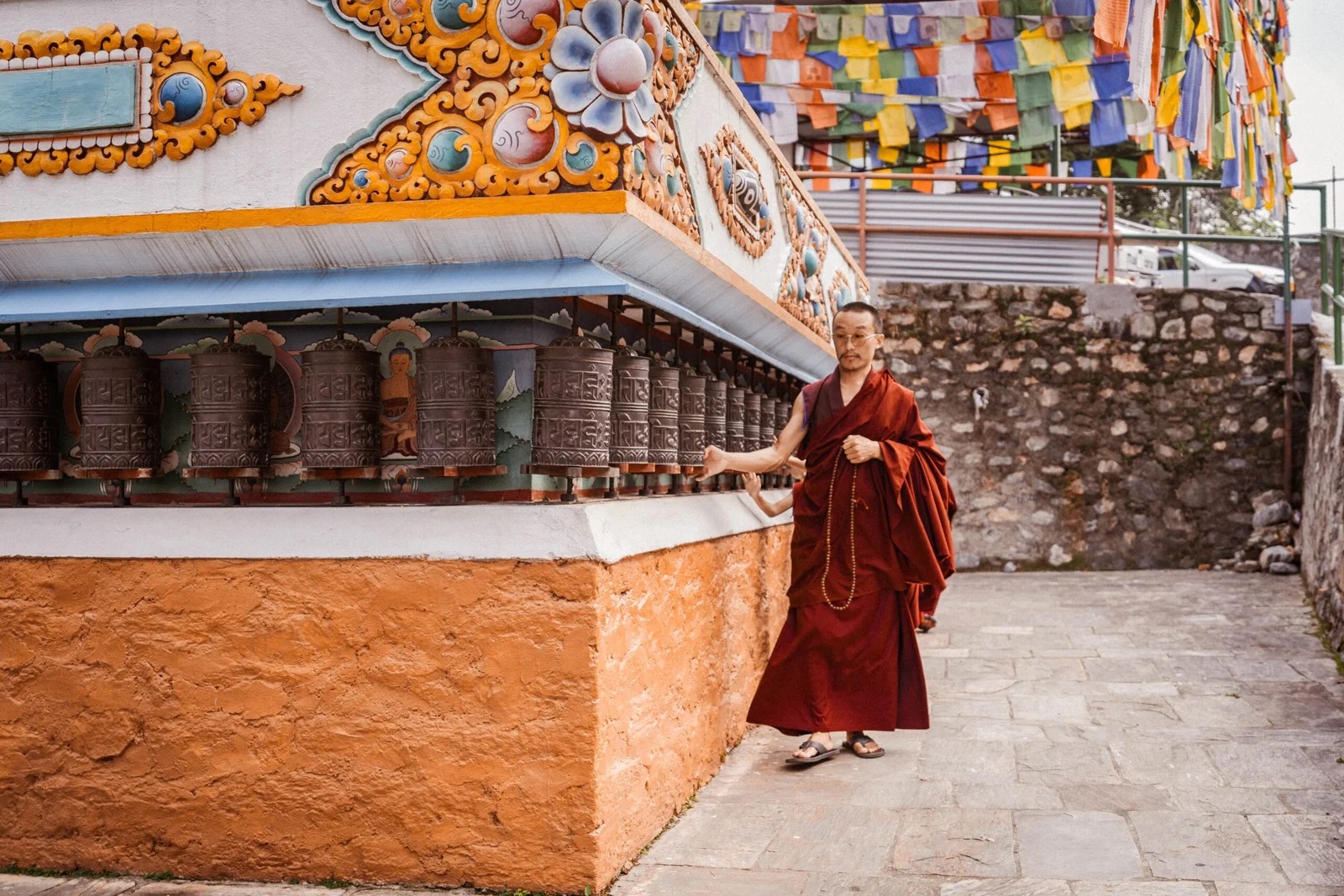
The default starting point for almost every program, and for good reason. The valley contains an extraordinary density of cultural, historical, and contemporary content. Pashupatinath Temple gives students direct access to Hindu cremation rituals and religious practice. Boudhanath is one of the largest Buddhist stupas in the world and the center of Nepal’s Tibetan refugee community. Patan and Bhaktapur offer masterclasses in Newari architecture and urban heritage.
Beyond heritage sites, Kathmandu is Nepal’s center for NGOs, research institutions, government agencies, and international organizations — all typically accessible to academic groups for site visits and guest lectures.
Pokhara
Nepal’s second city sits at the edge of the Annapurna range with views of some of the world’s highest peaks from lakeside. Pokhara is the gateway to Annapurna trekking and a center for sustainable tourism study. The International Mountain Museum covers Himalayan geology, culture, and mountaineering history. Programs focused on tourism management or environmental studies use Pokhara as both a base and a case study in rapid tourism development.
Chitwan and Bardia National Park
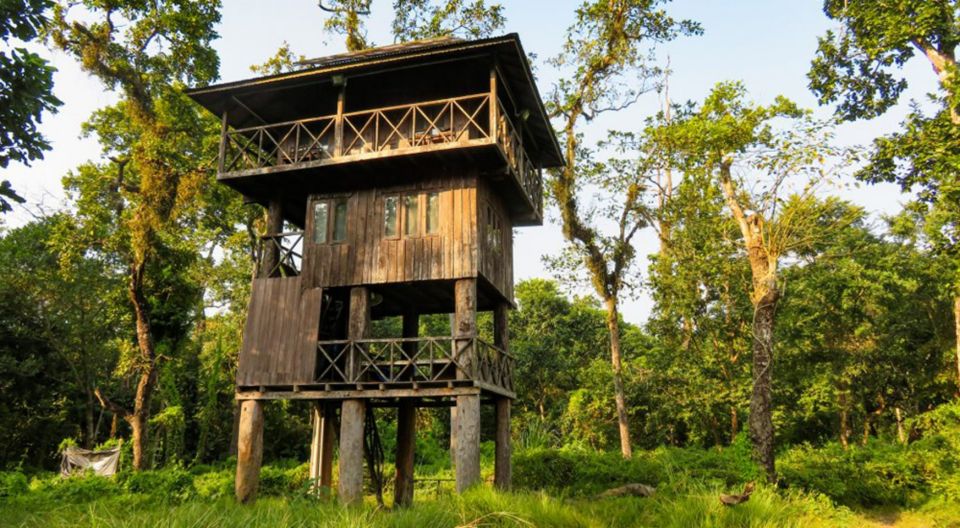
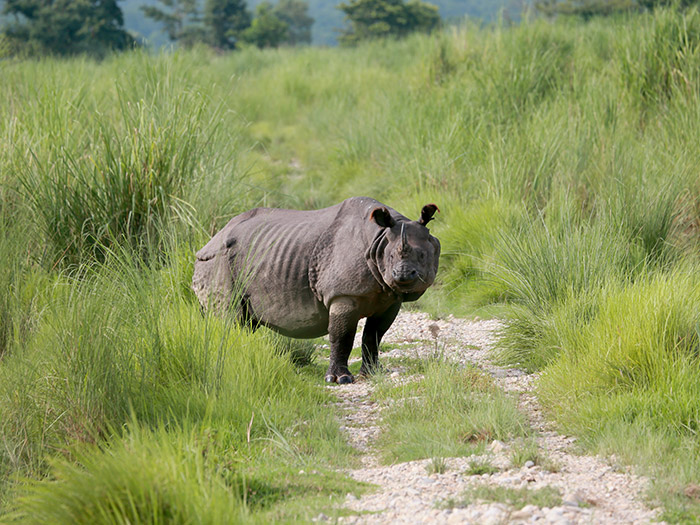
Chitwan is Nepal’s most visited national park — a UNESCO World Heritage Site with documented conservation success in rhino and tiger population recovery. Activities include jeep safaris, canoe rides, birdwatching, and community visits to Tharu villages. Bardia in the far west offers similar wildlife with lower visitor density and a wilder character — preferred by programs prioritizing genuine field research over tourism infrastructure.
Himalayan Regions
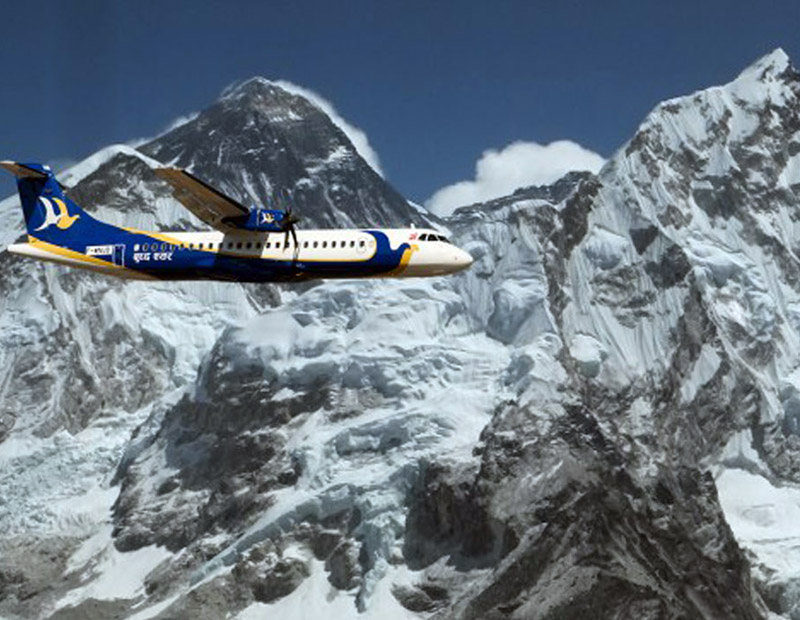
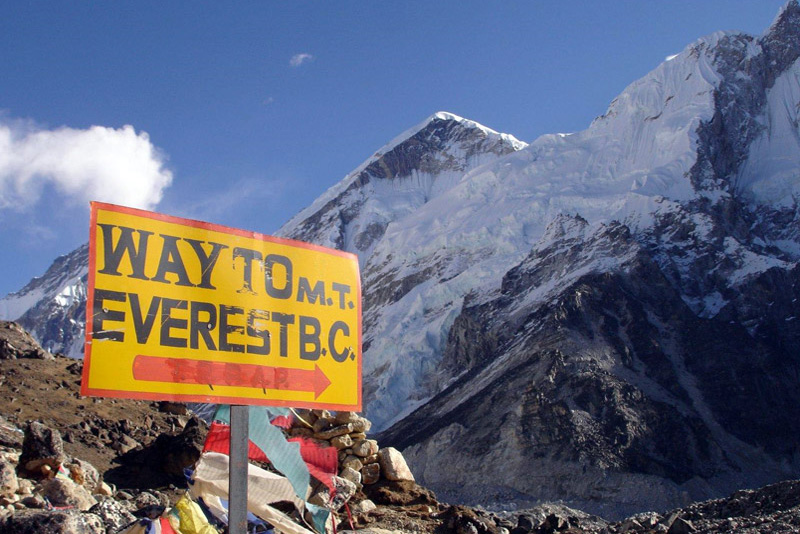
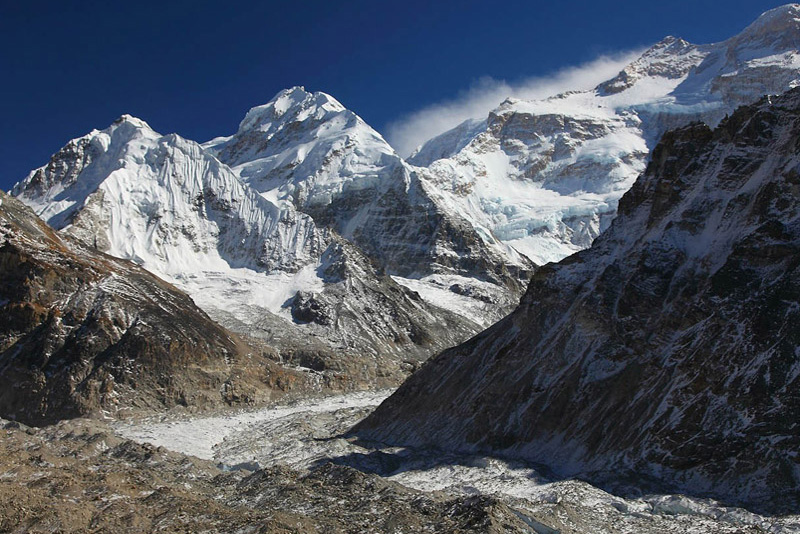
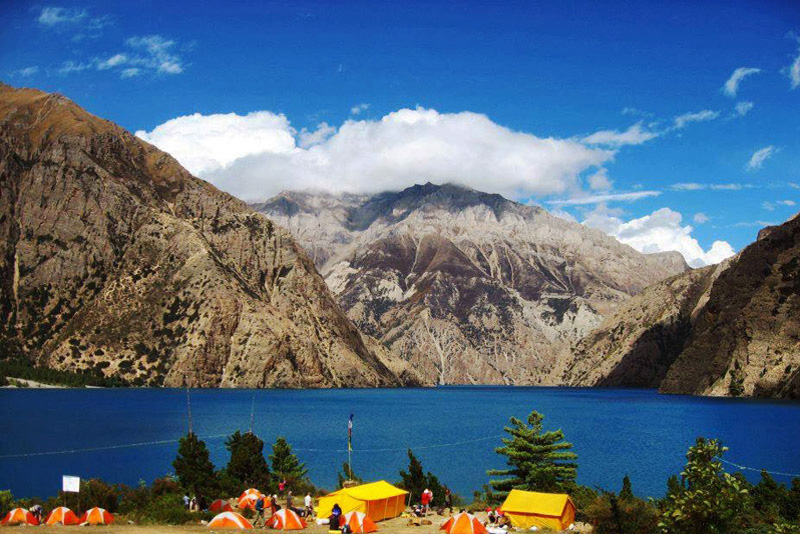
The Annapurna Circuit and Sanctuary, Everest Base Camp, Langtang Valley, Manaslu Conservation Area, and Upper Mustang all offer trekking-based field study opportunities. These regions provide direct exposure to mountain ecosystems, high-altitude farming communities, Tibetan Buddhist culture, and climate change impacts on glaciers and vegetation zones.
Outcomes and Benefits for Students
Students who complete faculty-led programs in Nepal consistently report outcomes that go beyond academic content:
Global perspective and cultural intelligence.
Engaging seriously with a society that operates on fundamentally different assumptions about community, religion, and development forces students to examine their own cultural frameworks.
Applied research skills.
Field data collection, ethnographic observation, expert interviews, and community engagement are hands-on competencies that classroom instruction can describe but not deliver.
Professional networking.
Connections with local researchers, NGO professionals, conservationists, and community leaders give students entry points into international development, conservation, and public health networks.
Personal resilience.
Navigating logistical complexity, cultural difference, and physical challenge in an unfamiliar environment builds the kind of adaptability that employers and graduate programs actively seek.
Academic momentum.
Students who return from international field programs are consistently more engaged in subsequent coursework. The concrete experience gives abstract academic material an anchor.
Experiential Learning Components
The strongest faculty-led programs in Nepal are built around multiple reinforcing learning modalities, not just site visits.
Field research and data collection.
Students conduct systematic observation, surveys, biodiversity transects, or ethnographic interviews depending on their program’s focus. This isn’t tourism — it’s structured inquiry that produces data students analyze and write about.
Community engagement.
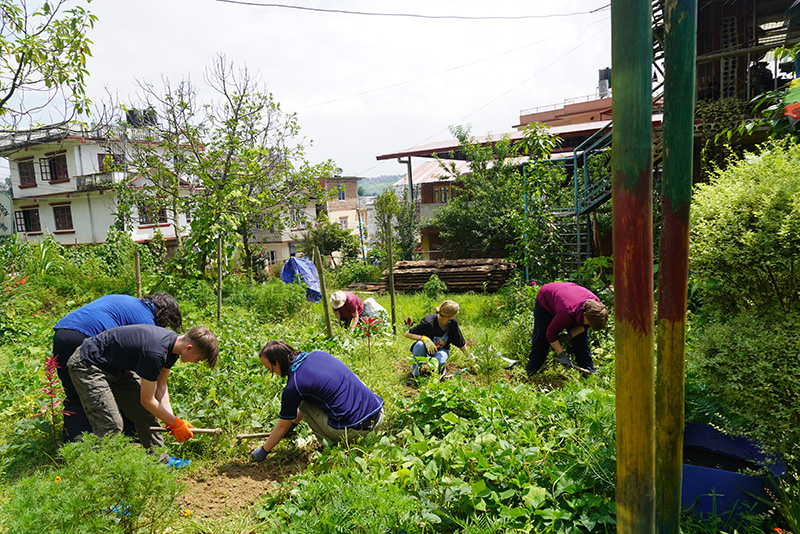
Visits to local schools, health posts, conservation user groups, women’s cooperatives, and NGO project sites put students in direct dialogue with the people their coursework discusses.
Homestays.
Living with Nepali host families — even for two or three nights — changes the texture of learning dramatically. Students experience daily life, food culture, family structure, and hospitality in ways that hotel accommodation cannot approximate.
Expert lectures and site briefings.
Local academics, conservation officers, public health workers, monks, and community leaders provide knowledge that visiting faculty cannot. These guest experts are a core program resource, not an add-on.
Trekking and physical engagement.
Walking through landscapes rather than viewing them from vehicles changes what students notice. A trekking day in the Annapurna foothills or through Chitwan’s buffer zone produces observational data that no classroom map can convey.
Challenges and Honest Considerations
No destination is without complications. Nepal has specific challenges that programs need to plan for, not paper over.
Infrastructure in remote areas.
Road conditions outside major cities range from passable to genuinely difficult. Internet connectivity is unreliable in mountain regions. Medical facilities are concentrated in urban centers. Programs venturing into remote areas need robust emergency protocols, satellite communication capability, and travel insurance that covers altitude evacuation.
Weather and seasonal constraints.
Nepal has two primary seasons favorable for travel: spring (March to May) and autumn (October to November). Monsoon season brings heavy rainfall, landslides, and disrupted transport. Programs should be designed around appropriate seasons for their geographic scope, with contingency plans for weather disruption.
Altitude.
Any program including Himalayan trekking must account for acute mountain sickness. Students and faculty need adequate acclimatization time, clear protocols for recognizing symptoms, and plans for descent if needed. This is a manageable risk with proper planning — but it requires planning.
Cultural adaptation.
The pace of life, concepts of time, social norms around gender, and communication styles in Nepal differ meaningfully from North American and European norms. Pre-departure cultural preparation reduces friction significantly.
Sustainability and Responsible Academic Travel
Academic programs in Nepal carry the same ethical obligations as any international engagement. The questions are worth stating directly: Who benefits from this program? Who bears the cost? How does the group’s presence affect the communities it visits?
Supporting local economies.
Responsible programs hire local guides, use locally-owned accommodation, eat at locally-owned restaurants, and contract with Nepali program operators rather than routing funds through international intermediaries. Every dollar spent locally is economic development in a direct and immediate sense.
Minimizing environmental footprint.
Trail etiquette, plastic reduction, responsible wildlife viewing distances, and avoiding practices that degrade the ecosystems students come to study are baseline requirements.
Ethical community engagement.
Visiting communities as genuine learners — with curiosity and respect, not as charity tourists or photographers — maintains the dignity of community members and produces better learning outcomes.
Long-term relationships over one-time visits.
The best faculty-led programs build relationships with specific communities, NGOs, and local institutions over multiple years. These ongoing partnerships deepen the academic content and create genuine mutual benefit.
Plan Your Faculty-Led Program with Getaway Nepal Adventure
Designing a faculty-led program that delivers genuine academic value while managing logistics in a complex destination takes specialized knowledge. Getaway Nepal Adventure is a Kathmandu-based program operator with deep experience coordinating international academic groups across Nepal’s full range of destinations — from the Kathmandu Valley to Chitwan to the high Himalayan trekking regions.
What Getaway Nepal Adventure Brings to Your Program
Customized academic itinerary design built around your institution’s specific learning objectives, disciplinary focus, and student profile.
Local expert network — guest lecturers, conservation officers, NGO contacts, community leaders, and local scholars available across program themes.
End-to-end logistics — airport transfers, accommodation (heritage hotels to community homestays), domestic transportation, permits, and on-ground coordination.
Safety systems — trained local guides, emergency protocols, altitude management planning, and 24/7 support throughout the program.
Sustainable program design — community-benefit partnerships, local procurement, and responsible engagement practices built into every program.
Whether you’re running a first-time program or looking to strengthen an existing one, Getaway Nepal Adventure provides the ground expertise that makes the difference between a good trip and a genuinely transformative academic experience.
Faculty and study abroad coordinators: Reach out to discuss your program goals, student cohort, and budget. Custom program proposals are available with no obligation. The team works with departments and international education offices to design programs that meet institutional requirements for academic rigor, risk management, and student outcomes.
Nepal is ready. The question is whether your institution is ready to bring its students here.
Get in touch with our team to design a custom program for your group today!
Contact us today to start planning your small group journey!
info@nepal-tours.com
9779851038908 (WhatsApp)
Top Add-on Trips
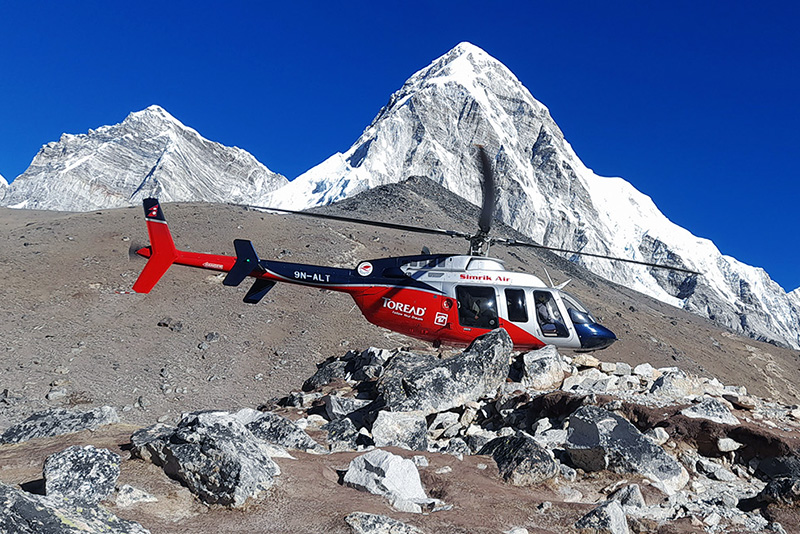
Everest Base Camp Helicopter Tour
Monastery Stay Tour