Spiritual Travel
Nepal does not keep its spirituality behind glass. It is out on the street, on the river ghats, on the hilltops and in the forest and in the narrow temple courtyards of medieval cities that have been conducting the same rituals since before most nations existed. This is what makes spiritual travel here fundamentally different from visiting sacred sites in countries where the religion has become largely historical. In Nepal the religion is still happening — continuously, earnestly, without performance — and the traveller who arrives with genuine curiosity and a willingness to move slowly tends to encounter something that no amount of prior reading quite prepares them for.
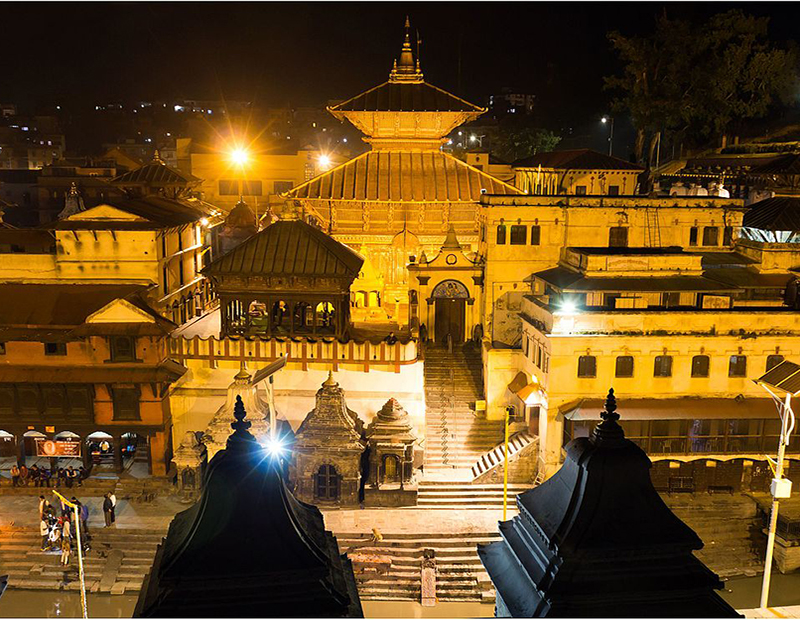
Stand on the steps of Pashupatinath as the evening aarti begins and you will understand what that means in practice. Priests swing brass lamps in slow deliberate arcs above the ghats as the Bagmati River catches the firelight below and the drums fill the air with a rhythm that your body responds to before your mind has processed it. The smell of marigold and incense and river smoke and butter lamps burning in clusters at the shrine niches all arrive simultaneously. Devotees move through the courtyard in their own unhurried orbits. A sadhu sits in ash and complete stillness at the edge of the stone platform, apparently indifferent to everything happening around him, and you find yourself wondering how long he has been sitting there and arriving at the unsettling realisation that the answer is probably longer than you can comfortably imagine. This is a living religious landscape and you are standing inside it rather than observing it from the permitted distance.
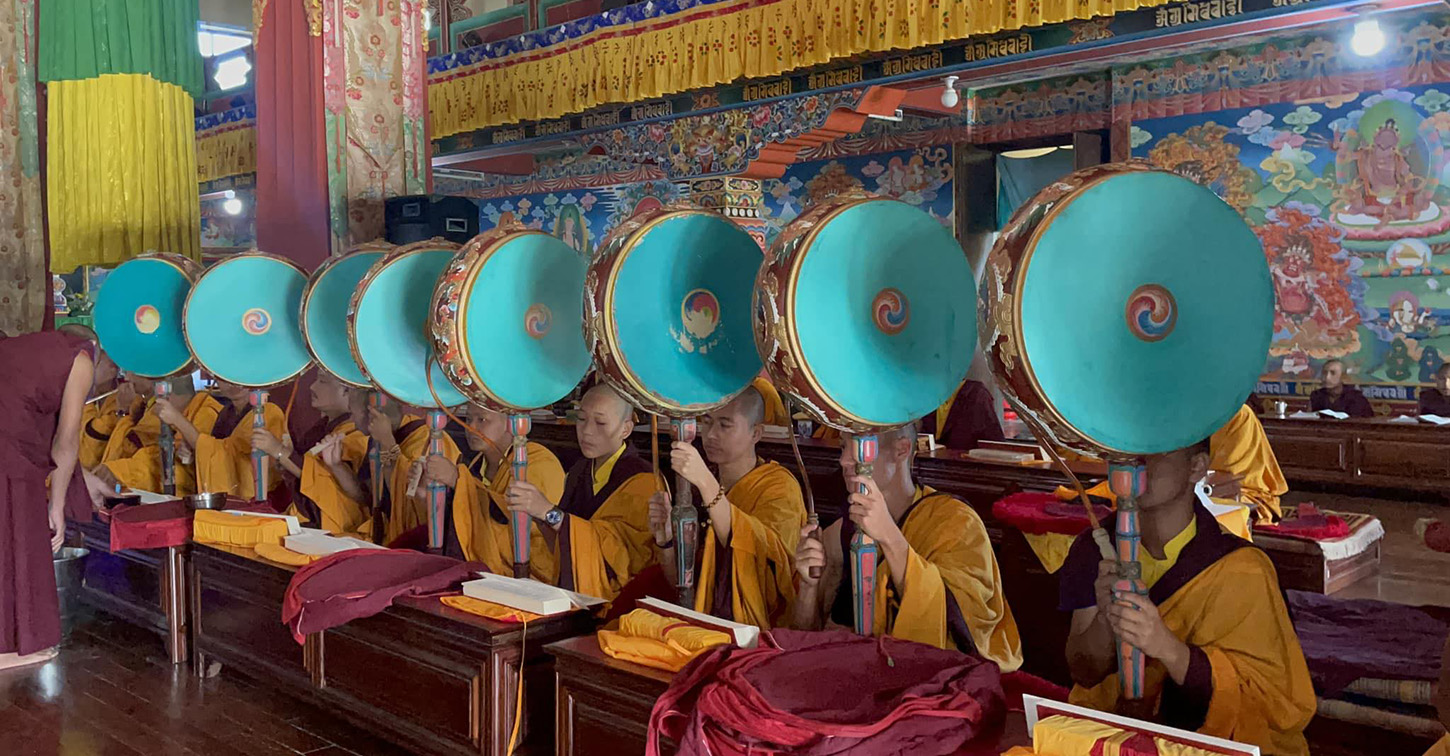
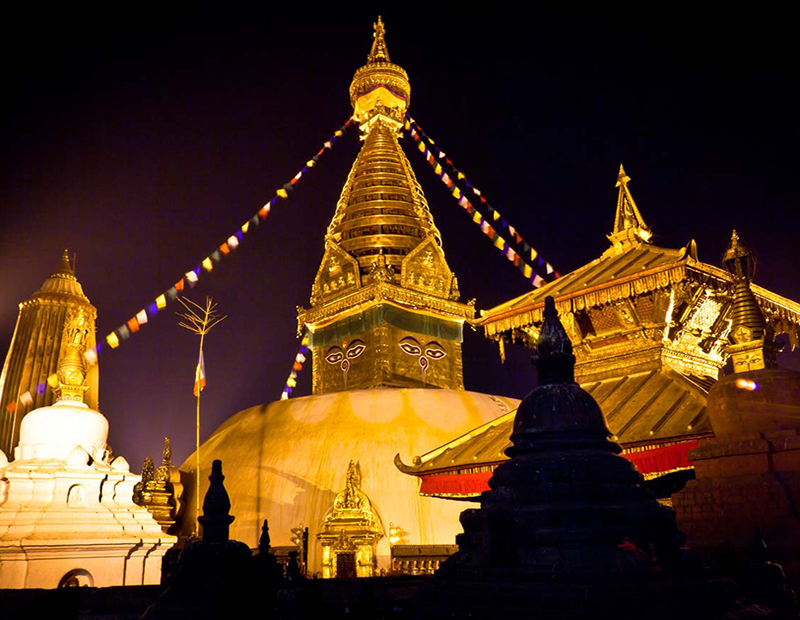
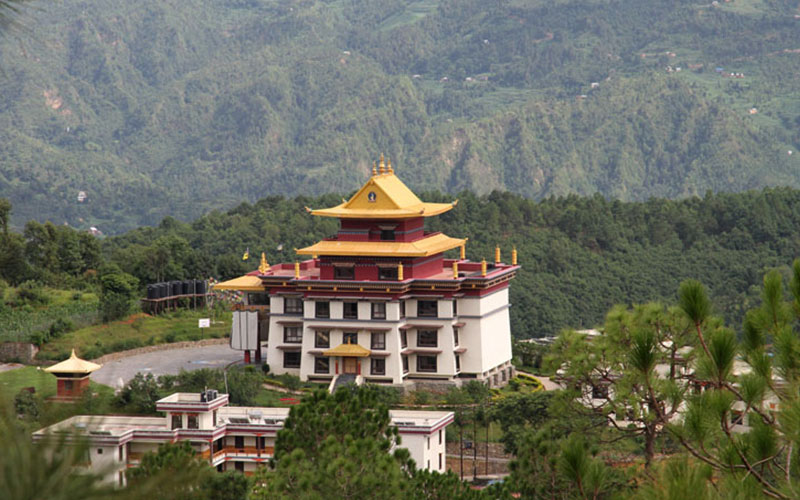
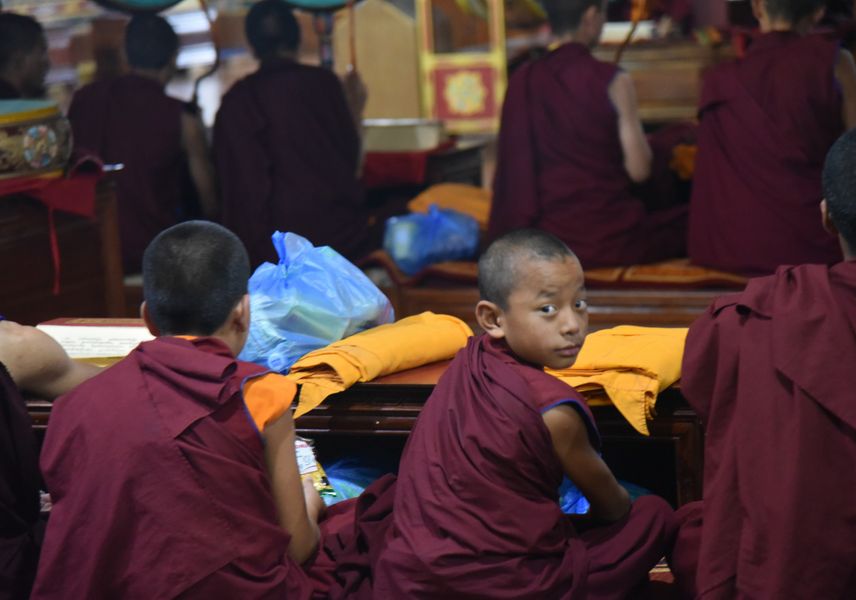
Boudhanath at dawn works differently but produces a similar effect. The great white dome rises above the surrounding rooftops in the morning mist and the circular plaza around its base is already in motion — monks moving in slow clockwise circuits with prayer beads passing through their fingers, old women murmuring mantras with the fluency of people who have been saying the same words every morning for sixty years, the steady soft percussion of turning prayer wheels setting the pace for everything else. The smell of butter lamps warm and slightly sweet in the cool air. And underneath all of it, occasionally, the deep resonant note of a monastery bell above the roofline calling the monks in for the morning puja, which you have been invited to observe from the back of the prayer hall where the chanting, when it fills the room, does something very specific to the nervous system that is difficult to name and impossible to forget.
Lumbini in the far southwest carries a different quality of stillness altogether. This is where Siddhartha Gautama was born in 563 BCE and the sacred garden surrounding the Maya Devi Temple archaeological excavations visible through protective glass in the floor, an ancient pillar erected by Emperor Ashoka still standing at the site holds a quietness that feels less like absence of sound and more like active presence. Buddhist monasteries from Sri Lanka, Japan, China, Myanmar, Korea, and Tibet all stand within the same monastic zone, each one a distinct architectural expression of the same tradition filtered through a different cultural lens. Walking slowly between them in the early morning is one of the most quietly extraordinary things available anywhere in South Asia.
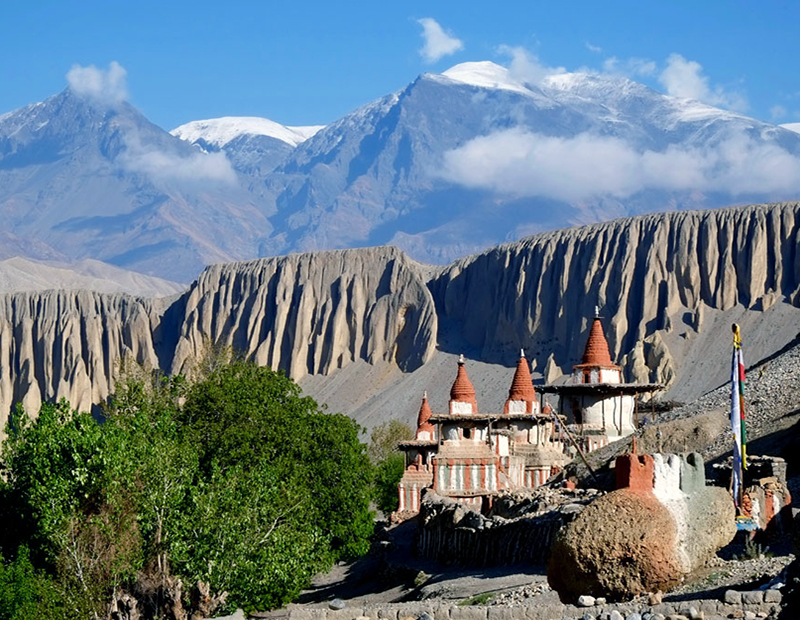
And then there is Upper Mustang which is the former forbidden kingdom above the Annapurna range, where ancient cave monasteries are carved directly into ochre cliffs that turn crimson at sunset and where the wind carries the smell of juniper and cold stone and the particular quality of high altitude air that makes thought feel clearer and slower at the same time. The monks here follow a lineage of Tibetan Buddhist practice that predates most of the monasteries at Boudhanath by centuries, and the painted walls of the Lo Manthang temples hold murals so old and so detailed that conservators from three countries are still working to catalogue them.
Nepal does not ask you to adopt a belief system to access any of this. It simply asks you to arrive slowly, move quietly, and pay genuine attention. The sacred reveals itself to those conditions quite reliably. Everything else we take care of.
Top Add-on Trips
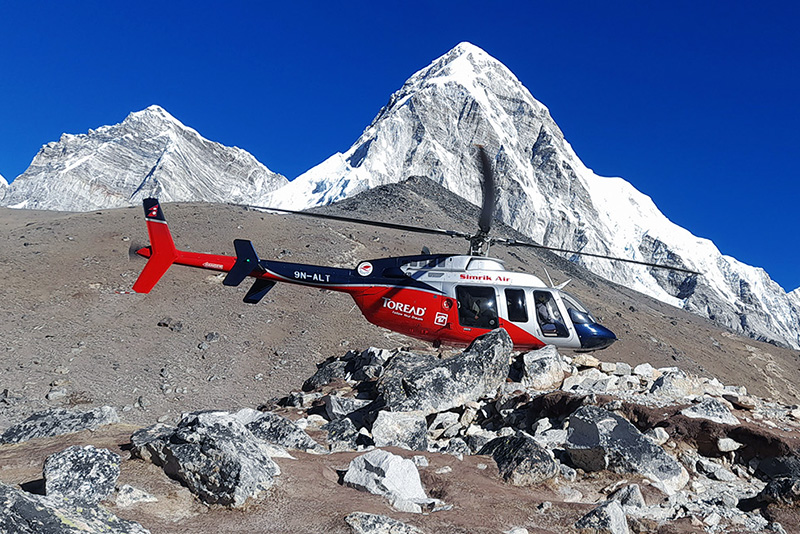
Everest Base Camp Helicopter Tour
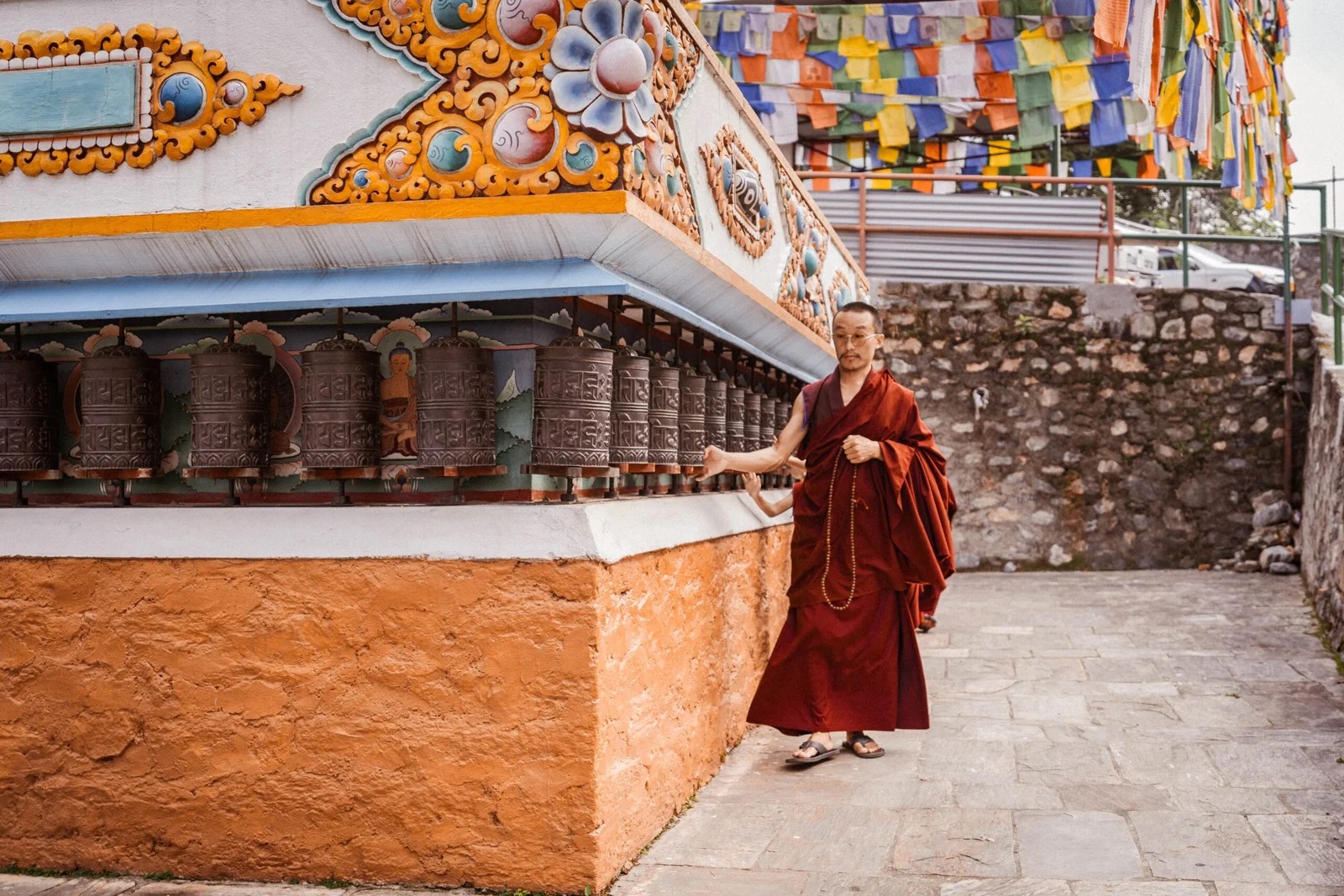
Monastery Stay Tour