6 Days in Nepal Tour
Six days is a short trip, but Nepal is a compact country with remarkable infrastructure for exactly this kind of visit. A three-day Ghandruk or Panchase trek fits cleanly within six days with Kathmandu days on either side. A cultural tour of the Kathmandu Valley can fill six days richly without travelling anywhere else. Or you can combine Kathmandu, Pokhara, and Chitwan on a fast-paced Golden Triangle circuit and still have time to actually be present in each place.
Six days also suits specialist itineraries well: the Kali Gandaki River rafting expedition is one of the finest multi-day white-water experiences in Nepal and fits almost exactly into a six-day window. The Bardia National Park wildlife circuit delivers the most authentic Nepal jungle experience available in six days for travellers willing to make the journey west. The Chisapani-Nagarkot trail gives a rewarding Himalayan trekking experience just an hour from Kathmandu, without any domestic flights.
This guide covers the best activities available in six days, followed by ten distinct itinerary ideas built around different types of travellers. Everything starts and ends in Kathmandu.
Nepal’s Best Activities and Experiences in Six Days
These are the building blocks of any six-day Nepal itinerary. Each section gives an honest picture of what the experience actually involves.
1. Kathmandu Valley Heritage
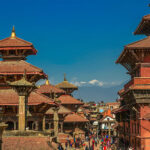
The Kathmandu Valley contains seven UNESCO World Heritage Sites within a 20-kilometre radius. Two to three days here never runs dry on material. Pashupatinath Temple on the Bagmati River is Nepal’s most sacred Hindu site, and the evening aarti ceremony at dusk is one of the most atmospheric moments available to any traveller anywhere in Asia. Boudhanath Stupa, one of the world’s largest Buddhist stupas, is best experienced on the pre-dawn circumambulation walk when monks chant from surrounding monastery windows. Bhaktapur is Nepal’s finest preserved medieval city, with the Nyatapola Temple, the Golden Gate, and the Pottery Square in a compact walkable area. Patan Durbar Square holds the finest Newari temple architecture in the valley and the Patan Museum is among Asia’s outstanding collections of Buddhist and Hindu metalwork. Swayambhunath hilltop stupa and the ancient Changu Narayan temple round out a valley-wide heritage circuit that rewards every hour spent on it.
2. Pokhara
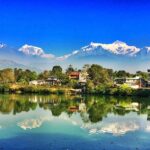
Pokhara sits on the shore of Phewa Lake beneath the Annapurna massif, 45 minutes by air from Kathmandu. For a six-day itinerary, one to two days here is the right allocation. The dawn reflection of Machhapuchhre on Phewa Lake, the Sarangkot sunrise viewpoint, tandem paragliding over the valley at 1,800 metres, the World Peace Pagoda forest walk, and the lakeside evenings are all genuinely enjoyable experiences that work well when condensed into a short Pokhara stay.
3. Ghandruk Trek
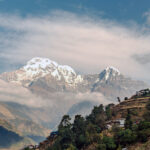
The Ghandruk circuit is Nepal’s finest short village trek and one of the most beginner-friendly options in the country. The trail starts from Kande or Phedi west of Pokhara and climbs through terraced farmland and rhododendron forest to the Gurung village of Ghandruk at 1,940 metres. The views of Annapurna South and Machhapuchhre from the Ghandruk ridge are among the best ground-level Annapurna views available from any accessible trail. The Gurung Museum documents the community’s history, the Gurkha military connection, and the ecology of the region. Daily walking distances are three to five hours and the maximum altitude is below 2,000 metres, making this accessible to beginners, families, and older travellers. A three-day Ghandruk trek fits neatly into a six-day itinerary combined with two Kathmandu days and one Pokhara day.
4. Panchase Trek
The Panchase trek from Pokhara begins with a boat crossing of Phewa Lake and climbs through dense rhododendron and oak forest to the sacred Panchase ridge at 2,517 metres. The Annapurna panorama from the ridge is wide and unobstructed. The trail passes through Gurung and Magar villages with minimal tourist traffic, making encounters with local communities natural and unhurried. The descent through Bhadaure and Naudanda returns to Pokhara by road. For six days the three-day Panchase circuit combines with one or two Kathmandu days and a Pokhara recovery day. Easy to Moderate difficulty, suitable for all ages.
5. Chisapani-Nagarkot Trek
The Chisapani-Nagarkot trek is the best short trekking option available within the Kathmandu Valley itself, with no domestic flight and no long road journey required. The trailhead at Sundarijal is a 45-minute drive from the city centre. The trail enters Shivapuri Nagarjun National Park almost immediately, climbing through forested hills past the Tamang villages of Mulkharka and Chisapani. From Chisapani at 2,175 metres, the panorama includes Langtang Lirung, Ganesh Himal, Manaslu, Gaurishankar, and on clear days Everest in the far east. The following day’s walk to Nagarkot passes through Chauki Bhanjyang on a pleasant forested ridge trail. Nagarkot at 2,175 metres is famous for its sunrise Himalayan panorama from Annapurna to Kanchenjunga. The descent on the third trekking day goes via Changu Narayan, Nepal’s oldest temple, before the road return to Kathmandu. A complete three-day circuit starting and ending in Kathmandu, leaving three days for heritage sightseeing.
6. Ancient Trails of the Kathmandu Valley
For six days staying entirely within the greater Kathmandu region, the ancient trails circuit combines the main heritage sites of the valley with multi-day easy hiking through farming villages, forested ridges, and sacred sites on the valley rim. The route passes through the villages of Balthali and Panauti, the sacred Namobuddha Monastery on its ridge above Kavrepalanchowk, and the Dhulikhel viewpoint with its mountain panorama. No domestic flights are required at any point. This is the right itinerary for cultural travellers who want to walk in rural Nepal, sleep in local teahouses, and see the valley’s heritage beyond the main tourist sites, all without leaving the Kathmandu region.
7. Kali Gandaki River Rafting
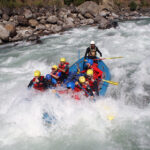
The Kali Gandaki is one of Nepal’s finest multi-day river routes and a self-contained six-day adventure. The river flows through the world’s deepest gorge between Dhaulagiri and Annapurna and descends from the Lower Mustang highlands to the subtropical lowlands in a journey that passes through four distinct ecological zones. The standard rafting section from Nayapul or Ramdi to the Narayanghat confluence offers Class 3 to 4 rapids, riverside beach camping each evening, and the option to kayak on flatter sections. Combine one Kathmandu day at the beginning and a Pokhara transit at the end. Post-monsoon (October to November) and spring (March to April) give the best conditions. This is an excellent standalone six-day trip for travellers who want adventure and river immersion over sightseeing.
8. Bardia National Park
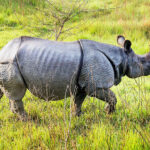
Bardia in western Nepal is the country’s largest national park and receives only a fraction of Chitwan’s visitor numbers, making every wildlife encounter more intimate and the overall experience more genuinely wild. The park is home to more than 125 Bengal tigers, one-horned rhinoceros, Asian elephants, marsh mugger and gharial crocodiles, and the endangered Gangetic river dolphin in the Karnali River. Three full days of wildlife activities gives time for morning and afternoon jeep safaris, a Karnali River canoe and dolphin-spotting session, a full-day jungle walk with a naturalist, and an evening with a Tharu community. The flight from Kathmandu to Nepalgunj and the short transfer to Bardia are the logistics bookends. For travellers who want the most authentic Nepal jungle experience available, this is it.
9. Nepal Multi-Sport Adventure
Nepal compresses an extraordinary range of adventure sports into a small area. In six days it is possible to combine mountain biking, trekking, white-water rafting, and paragliding into a single circuit that moves from Kathmandu through the Trishuli valley corridor, into the Pokhara hills, and ends at the Phewa Lake. Mountain biking can be done on the descent trails from Nagarkot toward the Bhotekoshi valley or on the Pokhara ridge above the lake. The Trishuli River offers a full-day Class 2 to 3 rafting session accessible as a day trip from the Kathmandu-Pokhara highway. Paragliding in Pokhara is the aerial conclusion. One Kathmandu heritage day at the start and a Pokhara final day make the circuit complete.
10. Namche Bazaar Heli-Trek
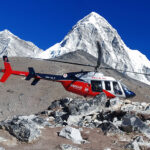
For travellers with a higher budget and a desire to see the Everest region in six days, the Namche Bazaar heli-trek combines three days of walking in the Khumbu with a helicopter return that includes a landing at Everest Base Camp or Kala Patthar for the highest-altitude viewpoint accessible without a full expedition. The walking section covers Lukla to Phakding, Phakding to Namche Bazaar, and an acclimatisation day in Namche. The helicopter on day 5 returns via the Khumbu glacier, Icefall viewpoint, and Gorak Shep for the Everest Base Camp landing before flying directly to Kathmandu. This itinerary delivers the Khumbu trekking experience alongside an aerial Himalayan encounter that most EBC trekkers never get regardless of how many days they spend on the trail.
11. Kathmandu and Pokhara Cultural Tour
Three days in Kathmandu and two days in Pokhara, with no trekking. This is the right choice for cultural travellers, older visitors, and anyone who wants to understand Nepal’s two great cities properly. Kathmandu’s three days cover the spiritual circuit, the medieval cities, the Nagarkot sunrise, and the hidden villages of the valley south. Pokhara’s two days cover the lake, the Sarangkot panorama, the World Peace Pagoda, and paragliding or the zip-line for those who want the adventure dimension. A relaxed, complete six-day cultural itinerary for any age and fitness level.
10 Itinerary Ideas for 6 Days in Nepal
All ten itineraries start and end in Kathmandu. None require technical mountaineering experience. Each is designed for a different type of traveller.
Itinerary 1: Ghandruk Cultural Trek
Nepal’s finest short village trek combined with Kathmandu heritage and a Pokhara lakeside day. The Ghandruk circuit is easy enough for beginners and first-time trekkers, culturally rich enough for experienced travellers, and beautiful enough that neither group is ever disappointed. Easy difficulty. Suitable for all ages and fitness levels.
Itinerary at a glance
Day 01 Arrive Kathmandu, welcome dinner, Boudhanath evening walk (overnight: Kathmandu)
Day 02 Kathmandu: Pashupatinath, Bhaktapur, Patan Museum (overnight: Kathmandu)
Day 03 Fly to Pokhara, drive Kande trailhead, trek to Dhampus (1,650 m) (overnight: Dhampus)
Day 04 Trek Dhampus through Landruk forest to Ghandruk (1,940 m) (overnight: Ghandruk)
Day 05 Explore Ghandruk village and Gurung Museum, trek to Nayapul, drive to Pokhara (overnight: Pokhara)
Day 06 Pokhara: Phewa Lake morning, Sarangkot viewpoint, fly to Kathmandu, departure (overnight: Departure)
Day 2 covers Kathmandu’s two finest heritage destinations: Pashupatinath and Bhaktapur in the morning, the Patan Museum in the afternoon. The evening flight to Pokhara on day 2 or the morning flight on day 3 opens the Annapurna chapter. The Dhampus overnight on day 3 is the gentle start: a hilltop village with good Annapurna views and a relaxed teahouse atmosphere. Ghandruk on day 4 is the destination the whole trek builds toward: the Gurung Museum, the stone-paved village lanes, the close-up view of Annapurna South from the ridge above the village. Day 5 returns to Pokhara by the Nayapul road, leaving the afternoon free for the lakeside. Day 6 uses the Sarangkot viewpoint for the Annapurna sunrise before the Pokhara to Kathmandu flight and the international departure.
Itinerary 2: Kathmandu and Pokhara Cultural Tour
Three Kathmandu heritage days and two full Pokhara days. No trekking, no rush, no tight transfers. This is Nepal’s two greatest cities done properly in six days. Right for cultural travellers, older visitors, those travelling with young children, or anyone who wants beautiful experiences without a backpack. Easy difficulty. Suitable for all ages.
Itinerary at a glance
Day 01 Arrive Kathmandu, welcome, Boudhanath kora walk at dusk (overnight: Kathmandu)
Day 02 Kathmandu: Pashupatinath aarti, Swayambhunath sunrise, Patan Durbar Square (overnight: Kathmandu)
Day 03 Kathmandu: Bhaktapur full day, Nagarkot overnight for Himalayan sunrise (overnight: Nagarkot)
Day 04 Nagarkot sunrise panorama, drive to Pokhara via Bandipur stopover (4.5 hours) (overnight: Pokhara)
Day 05 Pokhara: Sarangkot sunrise, paragliding or zip-line, World Peace Pagoda, lakeside evening (overnight: Pokhara)
Day 06 Pokhara: Phewa Lake morning, boat to island temple, fly to Kathmandu, departure (overnight: Departure)
Bhaktapur on day 3 with a full day rather than the usual half-day reveals the city behind its most photographed facades: the craftsmen’s lanes, the Dattatreya Square, and the Pottery Market at dusk. Nagarkot overnight on day 3 earns its place by setting up the sunrise panorama on day 4 and then converting the Kathmandu to Pokhara transfer into a scenic morning drive with the Bandipur stop. Bandipur’s vehicle-free heritage bazaar at 1,030 metres, with mountain views from the Tundikhel ridge, is one of Nepal’s finest one-hour stops and breaks the drive beautifully. Pokhara on days 5 and 6 gets two full mornings rather than one: Sarangkot sunrise and paragliding on day 5, and a slow Phewa Lake boat morning on day 6 before the departure flight.
Itinerary 3: Chisapani-Nagarkot Trek and Kathmandu Heritage
A rewarding Himalayan trekking circuit starting and ending within the Kathmandu Valley, combined with three days of heritage sightseeing. No domestic flights required at any point in this itinerary. The best six-day option for travellers who want a genuine mountain trekking experience close to Kathmandu without any flight logistics. Easy difficulty. Suitable for beginners and families.
Itinerary at a glance
Day 01 Arrive Kathmandu, welcome, Boudhanath evening walk (overnight: Kathmandu)
Day 02 Kathmandu: Pashupatinath, Bhaktapur, Patan Museum (overnight: Kathmandu)
Day 03 Drive to Sundarijal (45 min), trek through Shivapuri National Park to Chisapani (2,175 m) (overnight: Chisapani)
Day 04 Trek Chisapani to Nagarkot (2,175 m) through Chauki Bhanjyang forest ridge (overnight: Nagarkot)
Day 05 Nagarkot Himalayan sunrise, trek to Changu Narayan temple, drive to Kathmandu (overnight: Kathmandu)
Day 06 Kathmandu: Swayambhunath, Kathmandu Durbar Square, Thamel farewell, departure (overnight: Departure)
The Chisapani-Nagarkot circuit is one of the most satisfying six-day Nepal itineraries for travellers who want trekking without flight dependency. From Sundarijal the trail enters Shivapuri Nagarjun National Park within 20 minutes of walking, transitioning immediately from city to dense forest. Chisapani at 2,175 metres gives the first full Himalayan panorama: Langtang Lirung, Ganesh Himal, Manaslu, Gaurishankar, and Everest visible on a clear day. The forest ridge walk to Nagarkot on day 4 is gentle and beautiful. Nagarkot’s sunrise on day 5 extends the mountain panorama westward to Annapurna. The descent to Changu Narayan, Nepal’s oldest temple (4th century CE), adds the heritage dimension to the trekking circuit before the road return to Kathmandu. Day 6 uses the remaining Kathmandu time for Swayambhunath and Durbar Square before departure.
Itinerary 4: Ancient Trails of the Kathmandu Valley
Six days of cultural trekking, sacred sites, and rural village life without leaving the greater Kathmandu region. This is the best itinerary for travellers who love walking, culture, and authentic Nepal but do not want to rush between cities or manage domestic flights. The entire circuit is reachable by road from Kathmandu. Easy to Moderate difficulty.
Itinerary at a glance
Day 01 Arrive Kathmandu, welcome dinner, Boudhanath evening kora (overnight: Kathmandu)
Day 02 Kathmandu: Pashupatinath, Swayambhunath, Patan Durbar Square and museum (overnight: Kathmandu)
Day 03 Drive to Jarsing Pauwa (1 hour), trek via Namobuddha Monastery to Balthali village (1,730 m) (overnight: Balthali)
Day 04 Trek Balthali through orchards and terraced fields to Panauti (Indreshwar Mahadev Temple) (overnight: Panauti)
Day 05 Panauti riverside morning, drive to Dhulikhel, Dhulikhel viewpoint, drive back to Kathmandu (overnight: Kathmandu)
Day 06 Kathmandu: Bhaktapur, Bungamati and Khokana Newari villages, farewell dinner, departure (overnight: Departure)
This itinerary rarely appears in standard six-day Nepal guides and delivers something genuinely different. The Namobuddha Monastery on day 3 is one of Tibetan Buddhism’s most sacred sites outside Tibet, where a stupa marks the precise location of the Bodhisattva’s sacrifice of his body to a starving tigress. The walk down to Balthali through orchards and terraced fields is one of the most pleasant afternoon walks on the Kathmandu valley rim. Panauti on day 4 is the finest preserved Newari river town in Nepal outside the main valley, with the 13th-century Indreshwar Mahadev Temple at the confluence of two sacred rivers. Dhulikhel on day 5 adds the mountain panorama. Bhaktapur and the Newari villages of Bungamati and Khokana on day 6 close the cultural circuit.
Itinerary 5: Kali Gandaki River Rafting Adventure
Nepal’s finest multi-day river experience in six days. Class 3 to 4 rapids, riverside beach camping each evening, kayaking on smooth stretches, and the extraordinary landscape of the Kali Gandaki gorge between Dhaulagiri and Annapurna. A standalone adventure trip for travellers whose six days are about the river. Suitable for adults with no prior rafting experience. Active but not technically demanding.
Itinerary at a glance
Day 01 Arrive Kathmandu, welcome, Boudhanath evening walk, kit check (overnight: Kathmandu)
Day 02 Kathmandu: Pashupatinath, Bhaktapur, afternoon drive to Pokhara or Nayapul (overnight: Pokhara)
Day 03 Drive to river put-in point, launch on Kali Gandaki, first full day of paddling, riverside camp (overnight: Kali Gandaki camp)
Day 04 Full day Kali Gandaki: Class 3 to 4 rapids, gorge scenery, afternoon kayaking on flat section (overnight: Kali Gandaki camp)
Day 05 Final river section, take-out at Ramdi or Narayanghat, drive toward Kathmandu (overnight: En route)
Day 06 Arrive Kathmandu, Patan or Thamel afternoon, departure (overnight: Departure)
The Kali Gandaki itinerary solves the problem that many six-day travellers face: what to do if you do not want to trek but want genuine adventure and outdoor immersion. The river answers that completely. From the put-in on day 3, the experience is self-contained: the river, the gorge, the camps on the beach, the sound of rapids approaching. The Kali Gandaki flows through the world’s deepest gorge by some measurements, flanked by the Dhaulagiri and Annapurna massifs. The rapids are serious enough to be exciting but not so technical that beginners cannot participate. The riverside camp evenings, under the sky with the sound of the river and the silhouette of the mountains above the gorge walls, are one of Nepal’s finest overnight experiences. The drive back to Kathmandu on day 5 is long but the departure day on day 6 is relaxed.
Itinerary 6: Bardia National Park Wildlife Safari
Nepal’s wildest and most authentic jungle experience in six days. Bardia National Park in western Nepal receives a fraction of Chitwan’s visitors and delivers a wildlife encounter that feels genuinely wild: tigers on trails, rhinos in grass, dolphins in the Karnali River. For serious wildlife travellers who want the full experience rather than a one-night safari add-on. Easy activity level, remote location.
Itinerary at a glance
Day 01 Arrive Kathmandu, welcome, Boudhanath evening (overnight: Kathmandu)
Day 02 Fly Kathmandu to Nepalgunj (1 hour), drive to Bardia National Park (1.5 hours) (overnight: Bardia)
Day 03 Bardia: pre-dawn jeep safari (6:00 AM), afternoon guided nature walk on jungle trails (overnight: Bardia)
Day 04 Bardia: full-day Karnali River canoe and Gangetic river dolphin spotting, evening Tharu village visit (overnight: Bardia)
Day 05 Bardia: early morning elephant breeding centre visit, jeep safari, drive to Nepalgunj (overnight: Nepalgunj)
Day 06 Fly Nepalgunj to Kathmandu, Patan Museum afternoon, departure (overnight: Departure)
Three full days in Bardia is enough time for the tiger-encounter odds to shift meaningfully in your favour. A single overnight gives you one jeep safari. Three nights gives you five or six wildlife sessions across different times of day and different park sectors. Rhino sightings are virtually guaranteed. Tiger sightings occur regularly, particularly in the dry season from October to April when animals concentrate near water sources. The Karnali River dolphin boat trip on day 4 is unique to Bardia: the endangered Gangetic river dolphin is found in very few remaining habitats and the Karnali is one of them. A morning sighting from a low canoe on the river, with the Bardia forest on both banks, is one of the most quietly extraordinary wildlife experiences in Nepal. The Tharu village on day 4 provides the cultural dimension.
Itinerary 7: Nepal Golden Triangle Express
Kathmandu, Pokhara, and Chitwan in six days. The most condensed version of Nepal’s three greatest destinations. Every day is a different landscape and a different experience. This is Nepal at its most efficient without feeling rushed, and the right choice for first-time visitors who want to understand the country broadly. Easy difficulty. Suitable for all ages.
Itinerary at a glance
Day 01 Arrive Kathmandu, welcome, Boudhanath evening walk (overnight: Kathmandu)
Day 02 Kathmandu: Pashupatinath, Bhaktapur, Patan Museum, Swayambhunath (overnight: Kathmandu)
Day 03 Fly Kathmandu to Pokhara, Sarangkot sunrise, paragliding, World Peace Pagoda, Phewa Lake evening (overnight: Pokhara)
Day 04 Drive Pokhara to Chitwan National Park (5 hours), evening lodge briefing (overnight: Chitwan)
Day 05 Chitwan: dawn jeep safari, Rapti River canoe, nature walk, Tharu village evening (overnight: Chitwan)
Day 06 Fly Chitwan to Kathmandu, Patan or Thamel afternoon, departure (overnight: Departure)
Six days is tight for the Golden Triangle but entirely workable if each day is used well. Day 2 covers the full Kathmandu circuit: Pashupatinath at dusk (the spiritual anchor), Bhaktapur in the morning, Patan Museum in the afternoon. The flight to Pokhara on day 3 is 25 minutes. The Sarangkot sunrise before dawn, paragliding in the morning thermals, and the World Peace Pagoda in the afternoon make day 3 one of the best single days of any Nepal itinerary. The drive to Chitwan on day 4 takes 5 hours but descends from the mountains to the subtropical Terai in a way that is genuinely cinematic. The full Chitwan wildlife day on day 5 delivers the jeep safari, the canoe, the nature walk, and the Tharu village. Day 6 uses the morning Bharatpur flight back to Kathmandu and a final Patan afternoon before departure.
Itinerary 8: Multi-Sport Nepal Adventure
Mountain biking, trekking, white-water rafting, and paragliding in six days. Nepal’s finest adventure activities packed into a fast-moving circuit from Kathmandu through the Trishuli corridor to Pokhara. Right for active travellers who want a different kind of Nepal experience. Moderate physical intensity throughout. No trekking above 2,000 metres.
Itinerary at a glance
Day 01 Arrive Kathmandu, welcome, Boudhanath evening, equipment check (overnight: Kathmandu)
Day 02 Kathmandu: Pashupatinath, Bhaktapur, afternoon mountain bike descent from Nagarkot toward Banepa (overnight: Kathmandu)
Day 03 Drive Kathmandu to Trishuli river put-in, full-day Trishuli rafting (Class 2 to 3), camp on riverbank (overnight: Trishuli camp)
Day 04 Morning rafting and riverside breakfast, drive to Pokhara (3 hours), lakeside afternoon (overnight: Pokhara)
Day 05 Pokhara: Sarangkot sunrise trek (2 hours up), paragliding flight over Phewa Lake, zip-line option (overnight: Pokhara)
Day 06 Pokhara: Panchase short morning hike or Phewa Lake boat, fly to Kathmandu, departure (overnight: Departure)
The multi-sport itinerary is built for travellers who want physical variety across every day. The Nagarkot mountain bike descent on day 2 uses the well-established downhill trail from the valley rim toward Banepa, combining the Bhaktapur cultural morning with an afternoon of trail riding. The Trishuli overnight camp on day 3 is genuinely one of Nepal’s most enjoyable night experiences: riverside beach, campfire, stars above the gorge. The drive to Pokhara on day 4 continues along the Prithvi Highway past the Manakamana cable car junction. Paragliding in Pokhara on day 5 is the aerial high point of the circuit, with the Sarangkot dawn walk providing the physical warm-up. Day 6 can finish with the short Panchase forest walk from the western Phewa lakeshore before the departure flight.
Itinerary 9: Namche Bazaar Heli-Trek
The Khumbu experience in six days, combining trekking with a helicopter return via Everest Base Camp. For travellers with a higher budget who want the Everest region in a compact window without the 14-day EBC commitment. The helicopter component adds a dimension that most EBC trekkers never experience regardless of how many days they spend walking. Moderate trekking difficulty. Requires Lukla flight.
Itinerary at a glance
Day 01 Arrive Kathmandu, welcome, Boudhanath evening walk (overnight: Kathmandu)
Day 02 Kathmandu: Pashupatinath, Bhaktapur, Patan, evening preparation for Lukla flight (overnight: Kathmandu)
Day 03 Fly Kathmandu to Lukla (2,860 m), trek to Phakding (2,610 m) (overnight: Phakding)
Day 04 Trek Phakding to Namche Bazaar (3,440 m) via Hillary Suspension Bridge (overnight: Namche Bazaar)
Day 05 Acclimatisation hike to Hotel Everest View (3,880 m), Khumjung village, Sherpa Museum (overnight: Namche Bazaar)
Day 06 Helicopter from Namche: Everest Base Camp landing, Kala Patthar flyby, return to Kathmandu, departure (overnight: Departure)
The heli-trek format makes the Khumbu genuinely accessible in six days by replacing the two-day descent to Lukla with a 45-minute helicopter flight that also delivers one of the most spectacular Himalayan aerial experiences available. The helicopter on day 6 departs Namche in the early morning when visibility is at its best, follows the Khumbu Glacier north, and lands at Gorak Shep near Everest Base Camp at 5,364 metres before flying over Kala Patthar at 5,545 metres and returning to Kathmandu. The landing at Base Camp, with the Khumbu Icefall directly above and the South Col of Everest visible, takes approximately 15 minutes on the ground and is the defining moment of the itinerary. Namche itself on days 4 and 5 delivers the Sherpa culture, the Hillary Bridge, and the Hotel Everest View hike, all of which are fully worthwhile regardless of the helicopter conclusion.
Itinerary 10: Panchase Trek and Best of Central Nepal
The Panchase circuit combined with Kathmandu heritage and the Bandipur stopover. One of the quietest and most rewarding six-day Nepal itineraries available, covering a lake crossing, forest trekking, a UNESCO heritage medieval town, and Annapurna mountain views, all without crowds. Easy to Moderate difficulty. Suitable for families, older travellers, and anyone wanting a relaxed pace.
Itinerary at a glance
Day 01 Arrive Kathmandu, welcome, Boudhanath evening walk (overnight: Kathmandu)
Day 02 Kathmandu: Pashupatinath, Swayambhunath, Bhaktapur or Patan Museum (overnight: Kathmandu)
Day 03 Drive Kathmandu to Pokhara via Bandipur stopover (4.5 hours total), lakeside evening (overnight: Pokhara)
Day 04 Boat across Phewa Lake, begin Panchase trek, forest walk to first teahouse (1,900 m) (overnight: Forest Camp)
Day 05 Trek to Panchase Ridge (2,517 m), Annapurna panorama, descend through Bhadaure Gurung village (overnight: Naudanda)
Day 06 Drive Naudanda to Pokhara, Sarangkot sunrise or lakeside morning, fly to Kathmandu, departure (overnight: Departure)
The Bandipur stopover on day 3 is the choice that makes this itinerary distinctive. Rather than the standard six to seven-hour Kathmandu to Pokhara road transfer in a single sitting, the Bandipur stop adds a 45-minute walk through Nepal’s finest vehicle-free heritage bazaar street with the Annapurna range visible to the north from the Tundikhel viewpoint. It breaks the drive perfectly and is one of Nepal’s most undervisited gems. The Panchase trek on days 4 and 5 uses the most peaceful accessible trail in the Pokhara region. The boat crossing of Phewa Lake to start the trek on day 4 is a genuinely beautiful opening. The Panchase ridge on day 5 delivers the wide Annapurna panorama without any competition from other trekking groups. Bhadaure Gurung village on the descent is a real farming community that trekking infrastructure has not yet fully transformed.
Planning Your Six Days
How to Choose Your Itinerary
Six days forces a clear choice about what you most want from Nepal. The ten itineraries above cover every major type of travel available in this window.
- Itinerary 1 (Ghandruk) is for trekkers wanting easy mountain trail culture in the Annapurna foothills.
- Itinerary 2 (Kathmandu and Pokhara Cultural Tour) is for cultural travellers and anyone who prefers walking in cities to walking on mountain trails.
- Itinerary 3 (Chisapani-Nagarkot) is for trekkers who want a Himalayan experience without any domestic flight dependency.
- Itinerary 4 (Ancient Trails) is for cultural walkers who want rural Nepal alongside Kathmandu heritage.
- Itinerary 5 (Kali Gandaki Rafting) is for adventure travellers whose six days are for the river.
- Itinerary 6 (Bardia) is for serious wildlife travellers who want the most authentic Nepal jungle experience.
- Itinerary 7 (Golden Triangle Express) is for first-time visitors who want the broadest possible Nepal overview.
- Itinerary 8 (Multi-Sport Adventure) is for active travellers who want physical variety across every day.
- Itinerary 9 (Namche Heli-Trek) is for higher-budget travellers who want the Khumbu experience with the aerial Everest dimension.
- Itinerary 10 (Panchase and Central Nepal) is for those who want a quiet, relaxed circuit through Kathmandu, Bandipur, and the Pokhara hills at an unhurried pace.
For families with children aged 10 and above,
- Itineraries 1, 2, 3, and 7 work best. For older travellers or those with limited mobility,
- Itineraries 2, 4, and 7 are the most appropriate. For monsoon travel (June to August),
- Itinerary 2 (valley-based),
- Itinerary 6 (Bardia, which has a dry season character year-round), and
- Itinerary 5 (river rafting in post-monsoon high water) are all viable with appropriate adjustments.
Best Seasons for Six Days
- October and November are the finest months for any six-day Nepal trip. Post-monsoon air is clear, the mountains are freshly snowed, and every trekking and wildlife itinerary operates at its best.
- March and April are excellent for trekking itineraries. The rhododendron forests on the Ghandruk and Panchase circuits bloom magnificently. The Chisapani-Nagarkot forest is beautiful in spring. Mountain views are generally good.
- December through February are cold at altitude but often very clear. Chitwan and Bardia wildlife itineraries are excellent in winter. The Kathmandu heritage itineraries are comfortable year-round. Trekking above 2,000 metres requires proper cold-weather gear.
- May is warm in the valleys and increasingly hazy but workable early in the month before the pre-monsoon cloud builds.
- June through September is monsoon. Trekking trails are wet and leech-prone below 3,000 metres. Bardia (Itinerary 6) is viable year-round. The Kathmandu and Pokhara cultural itineraries operate in all weather. The Kali Gandaki rafting in post-monsoon high water (late September to October) gives the most exciting river conditions.
Getting to Nepal and Around
- International flights arrive at Tribhuvan International Airport in Kathmandu. Main connections: Qatar Airways via Doha, Turkish Airlines via Istanbul, Air India from Delhi and Mumbai, Emirates via Dubai.
- Nepal Tourist Visa on arrival: USD 30 for 15 days, USD 50 for 30 days. Bring two passport photos and USD cash. The online e-Visa through nepalimmigration.gov.np is faster.
- Domestic flights within Nepal: Kathmandu to Pokhara (25 minutes, USD 80 to USD 120), Kathmandu to Lukla (35 minutes, USD 160 to USD 200), Kathmandu to Nepalgunj for Bardia (1 hour, USD 100 to USD 140), Bharatpur for Chitwan (30 minutes, USD 80 to USD 100). Book early in October and November.
- Road times from Kathmandu: Pokhara is 6 to 7 hours. Chitwan is 5 hours. Bandipur is 4.5 hours. Charikot (Kalinchowk) is 4 hours. Sundarijal (Chisapani-Nagarkot trailhead) is 45 minutes.
Guide Requirement
Solo trekking is not permitted for foreign nationals in Nepal from 2025. All trekkers on designated trekking routes must be accompanied by a licensed Nepali guide. This applies to all trekking itineraries in this guide: Ghandruk, Panchase, Chisapani-Nagarkot, Ancient Trails, and Namche. A licensed guide costs USD 25 to USD 50 per day and is included in packages from reputable operators. For cultural and wildlife itineraries, a guide is recommended but not legally required.
Budget Guide
Six days in Nepal ranges from approximately USD 220 to USD 400 at budget level to USD 500 to USD 950 at mid-range. The Namche Heli-Trek (Itinerary 9) is significantly higher due to the helicopter component (USD 400 to USD 800 per person for the Namche to Kathmandu helicopter with Base Camp landing). The Bardia itinerary (Itinerary 6) requires domestic flights both ways and is typically USD 600 to USD 1,000 for a mid-range package including lodge accommodation and all wildlife activities. The Kali Gandaki rafting package including all camping, equipment, and meals runs USD 150 to USD 300 per person for the three river days.
What to Pack
- Moisture-wicking base layers for the temperature range across these itineraries, from 30 degrees Celsius in Bardia and Chitwan to cool evenings in Ghandruk, Nagarkot, and Chisapani.
- Light fleece or down jacket for any night above 1,500 metres on the trekking itineraries.
- Waterproof jacket for all seasons outside deep winter.
- Trekking boots broken in before departure for Ghandruk, Panchase, Chisapani-Nagarkot, and the Ancient Trails. Comfortable walking shoes for cultural and wildlife itineraries.
- Insect repellent. Essential for Bardia, Chitwan, and Lumbini. Not needed above 1,500 metres.
- UV400 sunglasses and SPF 50 sunscreen. Even at lower altitudes the Nepal sun is strong.
- Personal first aid kit with blister pads, Ibuprofen, antihistamine, rehydration salts, and Imodium.
- Portable power bank of at least 10,000 mAh. Essential for river and jungle itineraries.
- Nepali Rupee cash. ATMs are in Kathmandu, Pokhara, and Chitwan. Absent on trekking routes and in Bardia.
- Travel insurance covering trekking activities, medical treatment, and helicopter evacuation for any trekking itinerary. For the Namche Heli-Trek, ensure your policy covers commercial helicopter flights and high-altitude activities.
Final Thought
Six days is enough to fall in love with Nepal. Not enough to see all of it, but more than enough to understand why people come back. The travellers who get the most from six days are those who commit fully to one experience rather than trying to sample five. Pick the itinerary that matches what you came for. Nepal will handle the rest.
Recent Posts