15 Adventure Activities to Experience When You Are in Pokhara
There’s a version of Pokhara that exists only in hotel brochures, a serene lakeside city where travelers sit at rooftop cafes watching paragliders drift past Machapuchare, sip Everest beer at golden hour, and call it an adventure. That version isn’t wrong. It’s just incomplete.
The real Pokhara is one of the most geographically loaded cities on earth for people who actually want to move through it. Sitting at 827 meters in the shadow of the Annapurna range; seven peaks above 7,000 meters visible on a clear morning, the city is flanked by glacial rivers, deep limestone gorges, forested ridgelines, and a network of lakes and valleys that function as a natural arena for virtually every category of outdoor adventure that exists. You can freefall off a cliff, run Class IV rapids before breakfast, rappel down a 75-meter waterfall in a Gurung village, fly in an open-cockpit aircraft at mountain level, and still be back on Lakeside by evening. Not all in one day. But the point stands: Pokhara delivers on volume, variety, and sheer geographic drama in a way that almost no other adventure city anywhere manages to match.
Here are 15 adventure activities that make Pokhara the undisputed adventure capital of the Himalayas — and exactly what you need to know before you do each one.
1. Tandem Paragliding from Sarangkot Ridge
Duration: 20–30 minutes
Cost: NPR 6,000–8,000
Best Season: October–May
At 8:30 on a clear October morning, the Sarangkot ridge is all controlled chaos — pilots checking harnesses, windsocks spinning in the thermal breeze, a queue of trekkers-turned-flyers watching the previous group shrink to colored specks over Phewa Lake. Then it’s your turn. Three running steps off the ridge and the ground drops away. The Annapurna massif; Annapurna South, Hiunchuli, and the perfect pyramid of Machapuchare fills the horizon so completely it takes a moment to process that this is real and not projected. The thermal columns rising off the lake keep you airborne in wide, banking circles for 20 to 30 minutes before a grass-field landing near the southern Lakeside shore.
Pokhara is consistently ranked among the world’s top five paragliding destinations by professional pilots — not because of the spectacle alone, but because the meteorological conditions here are unusually reliable. Consistent thermals, predictable wind patterns from the valley funnel, and an unobstructed approach to the landing zone make this technically excellent flying country.
Insider tip: Book directly with operators on the Sarangkot ridge rather than through hotel desks — you pay the same rate and cut out the commission middleman. Ask specifically for pilots certified by the Nepal Paragliding Association. October through December delivers the sharpest mountain visibility. Avoid flying in November afternoons when upper-level winds can pick up unpredictably.
2. ZipFlyer Nepal — The World’s Steepest Zipline
Duration: 1.5–2 minutes (flight time)
Cost: NPR 11,000–13,000
Best Season: Year-round
The numbers are worth stating plainly: 1.8 kilometers long, 600 meters of vertical descent, speeds peaking at 140 km/h. The ZipFlyer at Sarangkot is not the world’s longest zipline. It is, by official measurement, the world’s steepest — a distinction that becomes viscerally clear the moment you step off the platform and the valley floor rushes up to meet you at roughly the speed of a motorway. The cable runs from the Sarangkot ridge down to a landing zone in the valley below, the Annapurna range visible the entire way, Phewa Lake glinting blue to the west.
Two minutes of flight. The brief is exactly that. But the 30 seconds in the middle — when you’re moving fastest, with nothing but open sky and mountain wall in front of you and a wind that makes conversation physically impossible — are among the most intensely present moments that Pokhara’s adventure menu offers.
Insider tip: HighGround Adventures operates this line and pairs it well with their SkyScreamer (a canyon swing off the same tower) as a combination package. Arrive before 10 AM when the valley haze is thinnest and the mountain views are sharpest. Wear your own clothes — the harness goes over anything.
3. White-Water Rafting on the Upper Seti River
Duration: Half day or full day
Cost: NPR 2,500–4,500
Best Season: October–May
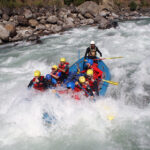
The Seti River runs milky turquoise — colored by glacial flour from the Annapurna snowfields — through a deep limestone gorge that has been cutting through the valley floor for millennia. On the upper section accessible from Pokhara, Grade 3 to 4 rapids alternate with long flat pools where the canyon walls close to barely shoulder-width apart and the sky becomes a narrow strip of blue overhead. It’s intimate, technically interesting water — not the kind of full-bore high-volume rafting the Kali Gandaki offers downstream, but quick, responsive, and set against rock scenery that most rafters don’t expect this close to an urban center.
The full-day option extends further downstream, adding more sustained rapids and a riverside lunch stop on a gravel beach. Half-day trips from Pokhara pick up at Lakeside, drive 30 minutes to the put-in, and return before afternoon.
Insider tip: Paddle Nepal operates the Seti with guides trained to international standards — specifically ask about the full-day option, which takes you past the gorge sections that the half-day trip misses. If you’re an experienced kayaker, the Seti’s calmer upper stretches are also accessible for solo paddling with rented equipment.
4. Canyoning at Lwang Ghalel Village
Duration: Full day
Cost: NPR 4,500–7,000
Best Season: September–June
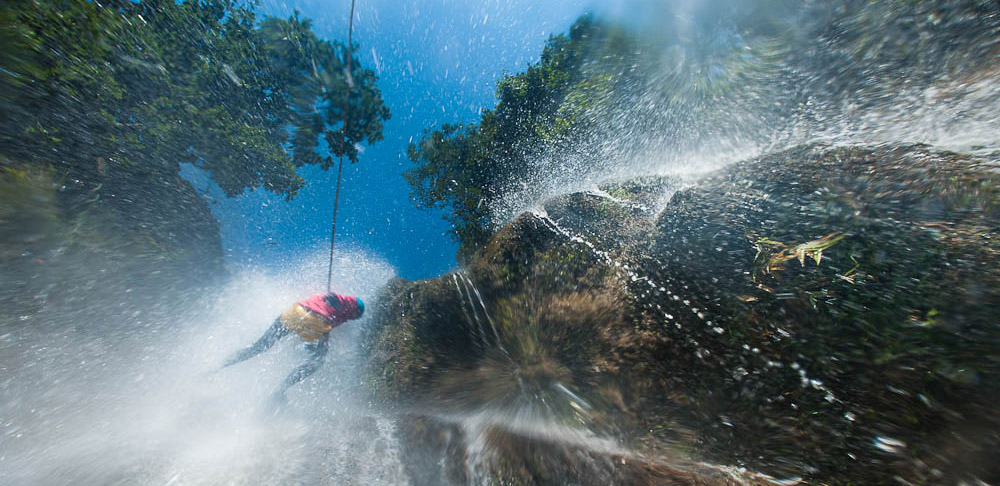
Nobody talks about canyoning in Pokhara the way they talk about paragliding. That’s a mistake that mostly benefits the people who’ve already found it. Twenty-two kilometers northeast of Lakeside, following the Seti River valley through Gurung farming villages, the Kudi waterfalls at Lwang Ghalel drop in four stages — 12 meters, 9 meters, 45 meters, and 75 meters — into deep, cold plunge pools carved from black limestone. Canyoning here involves rappelling each face, swimming through the pools between pitches, and navigating the narrow gorge corridor where the rock walls are close enough to touch on both sides.
The 75-meter face is the main event — a full abseil down a sheet of falling water, your back to the valley and Machapuchare framed perfectly above the gorge rim. The drive out from Pokhara is itself worth the trip: one hour through terraced fields, Seti River gorge views, and the kind of hill country that the Lakeside tourist strip exists entirely to shield visitors from seeing.
Insider tip: Depart by 7 AM from Lakeside — the drive alone takes 2 to 3 hours round trip and the canyon requires 4 to 5 hours on-site. Operators provide helmets, harnesses, wetsuits, and descenders. Wear shoes you don’t mind submersing completely. The overnight homestay option in Lwang village — sleeping in a Gurung household with dinner and breakfast included — is one of Pokhara’s most underrated experiences and worth booking over the standard day-trip.
5. Ultralight Aircraft Flight over the Annapurna Valley
Duration: 15–90 minutes
Cost: NPR 6,000–18,000
Best Season: October–April
A closed aircraft puts glass between you and the mountain. An ultralight removes that glass entirely. You sit in an open tandem cockpit, the wind full in your face, as a trained pilot throttles the engine and the Pokhara airstrip falls away. Below, the city’s six lakes resolve into a blue-and-green mosaic. Ahead, the Annapurna range builds on the horizon — Dhaulagiri to the west, the Manaslu massif to the east — until the aircraft is flying at the base of ridgelines that trekkers spend two weeks reaching on foot.
The 60 and 90-minute options extend the route to cross the Mardi Khola valley and approach the south face of Annapurna South at close enough range that individual couloirs and rock bands are clearly distinguishable. It’s the most physically immediate high-altitude mountain experience available in Nepal that doesn’t require a permit, a guide, or two weeks of acclimatization.
Insider tip: Book the 30-minute option at minimum — the 15-minute flight is too short to get beyond the valley rim. Best visibility is 7 to 10 AM before valley haze develops. Operators are based at Pokhara Regional Airport. Dress warmer than you think you need to at altitude; even in October, the open cockpit at 3,000 meters is genuinely cold.
6. Bungee Jumping over the Seti River Gorge
Duration: 2–3 hours (including transfer and briefing)
Cost: NPR 7,000–9,000
Best Season: Year-round
Pokhara’s bungee jump operates from an 80-meter cantilever tower platform, purpose-built over the gorge where the Seti River has carved a narrow slot through the valley floor. The platform extends over nothing — below is the river, turquoise and fast, bouncing between limestone walls. The jump itself is a standard 80-meter free fall on a dynamic cord that catches you 10 to 15 meters above the water surface and rebounds you twice before the crane lowers you to the gorge floor.
What makes Pokhara’s bungee distinct from the Bhote Koshi jump near Kathmandu — Nepal’s other major platform — is the setting. The Bhote Koshi drops over a raging glacial river in a dramatic but remote gorge. Pokhara’s jump places the Annapurna range in the background and Phewa Lake glinting in the valley behind you. It’s a more visually composed experience. HighGround Adventures also offers a tandem jump option — both people leaping simultaneously — which functions as either a shared commitment or a way of making a difficult decision feel slightly more mutual.
Insider tip: The SkyScreamer pendulum swing at the same tower offers a different fear profile — instead of falling vertically, you swing out over the gorge horizontally at speed. Many visitors do both in one visit on a combination ticket.
7. Kayaking on Phewa Lake and the Seti River
Duration: 2 hours to full day
Cost: NPR 800–3,500
Best Season: Year-round (lake); October–May (river)
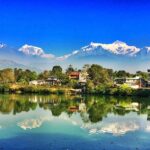
Phewa Lake at 6 AM, before the tourist boats and the paragliders and the Lakeside traffic noise reach operating volume, is a completely different body of water than the one visitors photograph from restaurant terraces. The lake surface is glassed-out still, the Machapuchare reflection so sharp it’s genuinely disorienting which way is up. A rented kayak from the boat station at the southern end of Lakeside puts you in that silence within minutes of departure. Paddle toward the Tal Barahi island temple, cut north along the forested western shore where rhesus monkeys watch from the trees, and return as the lake wakes up.
For paddlers wanting moving water, the upper Seti offers guided kayak sections at Grade 2 to 3 — technically accessible for beginners with a morning’s instruction from qualified guides. Paddle Nepal runs multi-day kayak courses on the Seti and Marsyangdi for those wanting to develop real whitewater skills during a Nepal stay.
Insider tip: The western shore of Phewa Lake — the side without Lakeside’s development — is accessible only by water and delivers views back across the lake to the Annapurna range that the eastern shore cannot match. Paddle there and you’ll have the best mountain-over-water photograph available in Pokhara.
8. Mountain Biking from Pokhara to Naudanda Ridge
Duration: Full day
Cost: NPR 2,500–5,000 (bike rental + guide)
Best Season: October–May
The road network west of Pokhara is one of the most rewarding mountain bike territories in the Himalayan foothills — a sequence of ridgeline tracks, single-trail descents through rhododendron forest, and village lanes connecting Gurung communities that have no other road access. The Naudanda ridge route climbs 700 meters above the valley floor on a mix of paved road and dirt track, the Annapurna range pulling progressively closer ahead as Pokhara shrinks behind.
The descent back toward the valley via the Kaskikot ridge trail is technical enough to be genuinely challenging — loose gravel switchbacks, root-crossed forest sections, and two river crossing points that require careful line choice — but manageable for intermediate riders with proper technique. The full circuit returns to Lakeside via the valley floor with a lunch stop at a local bhatti (roadside food stall) somewhere above Lumle.
Insider tip: Rent from a dedicated bike shop rather than a general equipment hire outfit — the quality difference in suspension bikes is significant on technical terrain. Carry two water bottles minimum. The Kaskikot descent needs dry conditions; wet clay in this area becomes genuinely dangerous.
9. Sunrise Trek to Sarangkot on Foot
Duration: 3–4 hours return
Cost: Free–NPR 500 (entry)
Best Season: October–April
Every visitor to Pokhara sees the Sarangkot sunrise photograph. Almost none of them walk up to get it. The trail from Lakeside climbs 600 vertical meters through pine forest, stone-stepped village lanes, and open agricultural terracing, taking roughly 90 minutes at a comfortable pace and arriving at the ridge viewpoint typically just as the eastern sky starts to differentiate into bands of color behind the Manaslu massif. The mountain panorama from Sarangkot stretches unbroken for nearly 200 kilometers — Dhaulagiri at 8,167 meters in the far west through to the Manaslu range in the east.
Walking up rather than driving delivers the experience in layers rather than all at once — the forest first, then the village sounds, then the emerging view as the treeline thins, and finally the full summit panorama that hits differently when your legs earned it.
Insider tip: Start at 4:30 AM from Lakeside to comfortably reach the summit before first light. Bring a headlamp, warm layers — the ridge is wind-exposed and cold before dawn — and arrive early enough to claim a position before the jeep crowds arrive at the top. The return descent by the northern trail adds variety and passes through a Gurung village rarely visited by trekkers.
10. Multi-Day Ghorepani Poon Hill Trek
Duration: 4–5 days
Cost: $200–$400 (guide, accommodation, permits)
Best Season: October–May
Technically this is a short trek, not a single-day activity — but no list of Pokhara adventure experiences is honest without including it. The Ghorepani Poon Hill circuit is Pokhara’s home trek: a 4 to 5-day loop through the Annapurna foothills that begins and ends within jeep distance of Lakeside, crosses the 3,210-meter Ghorepani pass, and delivers the sunrise mountain panorama from Poon Hill (3,210 meters) that is, by any objective measure, one of the most photographed viewpoints in the Himalayan world — and genuinely deserves to be.
The trail passes through Magar and Gurung villages — Tikhedhunga, Banthanti, Ghorepani, Tadapani, Ghandruk — each one a distinct cultural environment, the rhododendron forest between them running from 1,500 to 3,000 meters in altitude and erupting into crimson and pink bloom through March and April.
Insider tip: Most trekkers rush Poon Hill to get it done. The real payoff is the second morning from Tadapani — a less-visited viewpoint that frames the Annapurna south face at closer range than Poon Hill does, with a fraction of the crowd. The Poon Hill permit (ACAP) is obtainable in Pokhara; no restricted area permit is required for this route.
11. Hot Air Balloon Flight at Dawn
Duration: 1 hour (flight) + 2 hours total
Cost: NPR 16,000–22,000
Best Season: October–April
A hot air balloon over Pokhara operates on physics that feel genuinely implausible — a silk envelope the size of a small building, inflated by propane burners, lifting a wicker basket and six passengers silently off a farm field at the valley edge and into the pre-dawn air. There is no engine noise. No vibration. Just the occasional burst of the burner and the slow rotation of the basket as the balloon drifts north on whatever breeze the valley offers that morning.
At 1,500 meters above the valley floor, the Annapurna range sits at eye level rather than overhead — a shift in perspective that rewires how you understand the scale of what you’ve been looking at from ground level. Phewa Lake below reflects the sky. The city is a grid of lights slowly warming to daylight. The balloon pilot talks quietly about wind currents and occasionally fires the burner, which sounds like a dragon clearing its throat.
Insider tip: Balloon flights are entirely weather-dependent — cancellation rates in Nepal run higher than in desert destinations. Book early in your Pokhara stay so you have a backup date. The flight includes a champagne landing ceremony. Dress in layers — balloon altitude in October feels significantly colder than Lakeside at the same time of day.
12. Overnight Kali Gandaki Rafting Expedition
Duration: 2–3 days
Cost: $80–$150 per person
Best Season: October–December, March–May
The Kali Gandaki is a different beast from the Seti. It drains the world’s deepest river gorge — the canyon between Dhaulagiri (8,167 meters) and Annapurna I (8,091 meters) — carrying the combined snowmelt of two 8,000-meter peaks through a progressively narrowing rock corridor that produces some of the most powerful sustained whitewater in the Himalayan region. The two and three-day expedition sections from Baglung (accessible from Pokhara) run Grade 3 to 5 rapids depending on season and water volume, with beach camping between run days at gravel bars where the gorge walls rise several hundred meters overhead.
This is not a beginner’s river. It requires reasonable fitness, comfort with Class 4 water, and a guide company with genuine safety infrastructure. For experienced rafters or those willing to be stretched, it’s the most technically serious and geographically dramatic river experience available from Pokhara.
Insider tip: October and November deliver optimal water volume — enough for strong rapids without the unpredictable high water that monsoon-season runoff creates. The overnight camping section includes all meals prepared riverside by the support crew. Dry bags are provided; pack everything you bring in them.
13. Guided Rock Climbing at Hemja or the Seti Gorge Cliffs
Duration: Half day to full day
Cost: NPR 3,000–5,000
Best Season: October–May
Pokhara’s limestone geology produces natural rock faces with good holds, varied grades, and — in the case of the Seti River gorge walls — the kind of exposed climbing position where your feet are on vertical stone and nothing but the river is below. Hemja, 13 kilometers north of Lakeside near the Begnas Lake road, has established climbing routes from 5a to 7b on a series of compact limestone crags in a rhododendron forest setting. The Seti gorge cliffs in Ramghat offer more committing multi-pitch routes on looser but more dramatic terrain directly above the gorge.
Guided sessions include all equipment — harness, helmet, shoes, belay devices — and instruction from certified climbing guides who work with beginners to advanced climbers depending on what the client brings. No experience is required for the Hemja beginner routes.
Insider tip: Climbing in Pokhara is significantly underutilized relative to the quality of the rock and the accessibility of the crags. On most days you’ll share the crag with fewer than five other climbers. The guides at several Lakeside agencies are genuinely skilled climbers who will push your grade if you want to be pushed.
14. ATV Off-Road Trail Ride around the Pokhara Valley Rim
Duration: 2–4 hours
Cost: NPR 5,000–9,000
Best Season: October–May
A quad bike doesn’t require explanation. It requires throttle. The ATV trails running northeast of Lakeside into the forested hillsides above Pokhara navigate a mix of red clay track, rock section, river ford, and open ridgeline where the Annapurna massif sits directly ahead and the city spreads across the valley below. Routes are graded by difficulty — beginner trails stay on wider tracks through village farmland; intermediate and advanced routes involve gradient changes, technical rock crossings, and narrow single-track through dense forest where the ATV’s width becomes a navigation problem.
HighGround Adventures and several operators around Sarangkot run guided trail sessions with full safety equipment on well-maintained machines. The 4-hour option covers enough terrain to include both the forested climb sections and the ridgeline views that make the ride visually worthwhile.
Insider tip: Go early — morning light on the mountain faces is better for photography and the clay tracks are firmer before afternoon sun softens them. The Sarangkot ridge option combines an ATV ride to the top with a paraglide back down, which is one of Pokhara’s best combination experiences and covers the same altitude via two completely different physical sensations.
15. Stand-Up Paddleboarding on Begnas Lake at Dawn
Duration: 1–2 hours
Cost: NPR 800–1,500
Best Season: October–April
Phewa Lake gets the postcards. Begnas Lake, 15 kilometers east of Lakeside at the quieter end of the valley, gets the mornings. At 6 AM on a calm October day, Begnas is so flat it looks rendered — the surrounding hills, the Manaslu range to the northeast, and the occasional kingfisher transit all reflected in the same undisturbed surface. Stand-up paddleboarding here is less about the physical challenge — the lake is calm enough for complete beginners — and more about the geometry of standing at water level on a silent board while the Himalayas perform their daily light show overhead.
Renting a board at the Begnas Lake boat station costs a fraction of what the same activity runs at more developed destinations globally. The lake is long enough to paddle its full length in 45 minutes and wide enough to feel genuinely open water. Paddle north toward the treeline and you’ll share the surface with nothing but the local fishermen and the occasional egret moving between reeds.
Insider tip: This is the single most underrated morning activity in Pokhara. Combine it with a Begnas lakeside breakfast at one of the small local tea shops on the eastern bank — fresh bread, eggs, and milk tea for under NPR 300 — and you have a complete morning before the adventure day even properly begins.
Planning Your Pokhara Adventure: Practical Information
Best overall season: October and November are Pokhara’s prime adventure months — stable weather, post-monsoon-clean air, sharp mountain visibility, and all operators running at full capacity. March and April are excellent for activities at lower and mid-elevation with the bonus of rhododendron bloom on the hillsides. December through February is cold but clear — paragliding, ultralight, and balloon flights deliver their best mountain views in winter.
Booking: Paragliding, ZipFlyer, hot air balloon, and multi-day rafting should be booked at least 48 hours in advance during peak season. Everything else is bookable same-day from Lakeside. Avoid booking adventure activities through hotel desks — walk to the operators directly on the Sarangkot road or at Lakeside’s dedicated adventure booking strip for better rates and more accurate information.
Safety standards: Nepal’s adventure sports industry is unregulated in comparison to Western markets. Choose operators who are members of the Nepal Paragliding Association, Nepal Association of Rafting Agencies (NARA), or TAAN — these affiliations indicate at minimum that the operator has met baseline equipment and guide certification standards. Ask specifically whether guides hold current first aid certification. For high-stakes activities like bungee and canyoning, choose established operators with multi-year operational track records over whoever is offering the cheapest price on the day.
Combining activities: The most efficient adventure day in Pokhara starts with a 4:30 AM paraglide booking from Sarangkot, transitions to a midmorning Seti River rafting session, and ends with a sunset SUP on Begnas Lake. That’s three completely different physical and sensory registers in a single day — vertical, horizontal whitewater, and still water — and it’s entirely doable from a single Lakeside hotel base without a vehicle of your own.
Pokhara doesn’t perform its adventure offering. It simply exists in the terrain it was built on — and the terrain, in every direction, is extraordinary.
Recent Posts