Why Nepal Should Be Your Next Adventure Destination
Some countries earn their reputation on a single landmark. Nepal earns its on everything else.
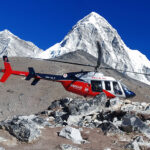
Yes, Everest is here. Yes, it’s the tallest point on earth at 8,848.86 meters, and yes, the moment you first see it — whether from a morning flight out of Kathmandu, from a ridge above Namche Bazaar, or from the Kala Patthar viewpoint at pre-dawn with a headlamp and a heartbeat faster than usual — it delivers precisely what every superlative about it promises. But Nepal’s power as a travel destination doesn’t live at the summit. It lives in the staggering, layered, relentless variety of everything between the subtropical jungles of the southern Terai, at an elevation as low as 59 meters, and the permanent glaciers at 8,000 meters. In a strip of land roughly the size of England and Wales combined, Nepal packs more geographic, cultural, biological, and experiential range per square kilometer than almost any country on the planet.
In 2024, over 1.14 million international travelers made that calculation for themselves and arrived in Nepal. April 2025 set an all-time monthly record with 116,490 international arrivals — the highest April figure in Nepal’s tourism history. These are not people chasing the same photograph. They are arriving for wildly different reasons: to stand at the roof of the world, to sit inside a 5th-century Hindu temple that’s still in active use, to watch a one-horned rhinoceros graze 40 meters from a canoe, to eat fermented greens in a Gurung teahouse above the treeline, to paraglide above a Himalayan lake reflecting a mountain that has never been legally climbed. Nepal accommodates all of them, simultaneously, without any of those experiences diminishing the others.
Here is why Nepal should be your next adventure destination — and why no single reason is close to sufficient on its own.
The Geography Is Unlike Anything Else on Earth
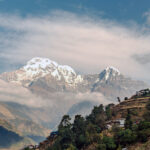
Nepal’s single most defining characteristic is not Everest. It’s the vertical range. The country spans from 59 meters above sea level at Kechana Kalan in the eastern Terai to 8,848.86 meters at the Everest summit — a difference of nearly 8,800 meters within a horizontal distance of roughly 200 kilometers. No country on earth packs a comparable altitude gradient into such a compact area, and that gradient creates something extraordinary: five distinct climate zones, from tropical to arctic, existing within a single nation. The ecological consequence of this compression is that Nepal hosts ecosystems and species that, in other parts of the world, would be separated by thousands of kilometers of travel.
The Kali Gandaki gorge, which trekkers on the Annapurna Circuit walk through as a matter of course, is the deepest canyon on earth by vertical measurement — more than 5,500 meters from the riverbed to the summits of Dhaulagiri and Annapurna on either side. Most trekkers walk through it without knowing what they’re standing inside. Nepal has over 6,000 rivers, 3,250 glaciers, and more than 5,000 lakes scattered across its terrain. It contains eight of the world’s fourteen peaks above 8,000 meters — Everest, Kanchenjunga, Lhotse, Makalu, Cho Oyu, Dhaulagiri, Manaslu, and Annapurna I — a concentration of extreme altitude unmatched anywhere on the planet. Pakistan comes closest with five. China has one.
What this geography delivers for the traveler is not just spectacle. It’s the practical reality that a single Nepal trip can move you from jungle safari terrain to alpine tundra in the same week. One day you’re watching a gharial crocodile surface on a river in Chitwan National Park at 200 meters elevation. Four days later you’re crossing a 5,400-meter pass in the Himalayas with prayer flags snapping in wind that makes speech difficult. The variety is not manufactured for tourism. It’s simply the landscape, doing what it does.
The Mountains Are a Trekking World Unto Themselves
Nepal’s trekking network is the most developed and varied in the Himalayan world, covering everything from gentle valley walks achievable in a day from Pokhara to multi-week high-altitude expeditions in restricted zones that require months of planning and specific permit approvals. The range means something important: Nepal’s mountains are not exclusively for mountaineers. The vast majority of people who experience them do so on foot, on trails that have been used for trade, pilgrimage, and daily village life for centuries, at elevations and fitness requirements that accommodate a remarkably wide spectrum of travelers.
The Everest Base Camp trek — the most famous in the world — ends at 5,364 meters, reaches the base of the highest mountain on earth, and passes through Sherpa communities, Buddhist monasteries, glacial moraines, and ridge viewpoints that make the argument for trekking in Nepal with absolute authority. The Annapurna Circuit, which circumnavigates a massif containing Annapurna I (8,091 meters) and crosses the 5,416-meter Thorong La Pass, is widely considered one of the world’s greatest long-distance walks, delivering cultural and geographic diversity across its full length that few other trekking routes anywhere approach. The Manaslu Circuit, following a restricted-area route around the world’s eighth-highest peak, offers comparable drama with a fraction of the crowd.
But the lesser-known routes are where Nepal’s trekking landscape gets genuinely remarkable. Mardi Himal puts you within arm’s length of Machapuchare — the sacred, unclimbed Fishtail peak — in five days from Pokhara. The Nar Phu Valley, a restricted area north of the Annapurna Circuit that opened to foreigners only in 2002, delivers a landscape and culture more Tibetan than Nepali, completely untouched by mass tourism. The Kanchenjunga Base Camp trail in Nepal’s far northeast receives fewer than 2,000 trekkers per year despite leading to the base of the world’s third highest mountain. Upper Dolpo — made famous by Peter Matthiessen’s “The Snow Leopard” — holds a trans-Himalayan desert landscape around the Shey Phoksundo Lake, Nepal’s deepest at 145 meters, that bears no resemblance to anything most travelers associate with Nepal.
What makes all of these routes genuinely accessible is Nepal’s teahouse infrastructure. Family-run guesthouses providing accommodation, hot meals, and often WiFi exist at regular intervals along virtually every established trekking route in the country — a hospitality network built not for tourism but from centuries of providing shelter to traders, pilgrims, and travelers moving between Nepal’s interior and its mountain frontiers.
The Wildlife Story Is One of Conservation’s Great Triumphs
Nepal has been quietly running one of the most successful wildlife conservation programs in Asia for decades, and the results are a matter of record rather than promotional claim.
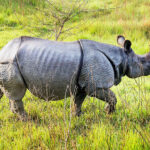
The greater one-horned rhinoceros — a species that had dwindled to an estimated 200 individuals in Nepal by the late 20th century — now numbers over 645, making Nepal home to the world’s second-largest rhino population after India. Nepal achieved zero poaching of rhinos for six consecutive years, a record that conservationists worldwide cite as a benchmark for what community-involved anti-poaching programs can accomplish. The Bengal tiger population doubled within a decade, driven by intensive protection, prey recovery programs, and the Terai Arc Landscape corridor — a network connecting 14 protected areas between Nepal and India that allows wildlife to move, breed, and establish viable populations across a continuous habitat zone. Both recoveries happened while Nepal simultaneously managed growing human-wildlife boundary pressure, through wildlife corridors that reduce conflict by allowing species to move through the landscape safely.
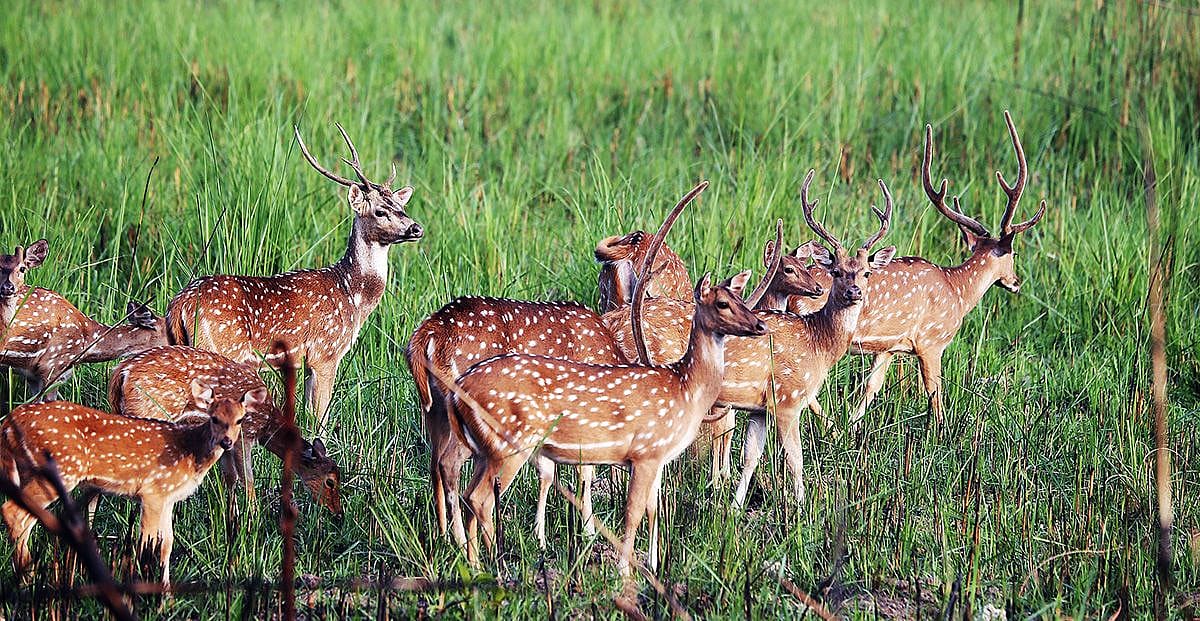
The practical consequence for travelers is access to wildlife encounters that would have been unthinkable fifty years ago. Chitwan National Park, a UNESCO World Heritage Site covering 932 square kilometers of sal forest, elephant grassland, and river floodplain, offers jeep safaris and canoe rides where rhino sightings are virtually guaranteed and tiger encounters, while never certain, are among the most realistic available anywhere in Asia. Bardia National Park in western Nepal — quieter and less-visited than Chitwan — has the highest tiger density in the country and an intimacy of wildlife encounter that Chitwan’s larger visitor volumes make harder to find.
Beyond the Terai, Nepal’s mountain ecosystems support the snow leopard across protected areas from Sagarmatha to Shey Phoksundo, the red panda in the mid-elevation forests of the Annapurna Conservation Area and Langtang National Park, the Himalayan tahr on rocky ridgelines above 3,000 meters, and over 650 recorded bird species — a list that has earned the country the informal title “Amazon of Asia” among ornithologists. The Koshi Tappu Wildlife Reserve in the far east records over 485 bird species, making it one of the critical wetland habitats on the Central Asian Flyway, used by hundreds of migratory species annually.
Nepal has protected 23.23% of its total land area within a network of national parks, wildlife reserves, and conservation areas — a proportion that reflects a genuine national commitment to maintaining the biodiversity that its dramatic geography makes possible.
The Cultural Depth Is Staggering and Completely Alive
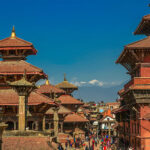
Nepal is home to 10 UNESCO World Heritage Sites distributed across four locations — the Kathmandu Valley, Lumbini, Sagarmatha National Park, and Chitwan National Park — but the number undersells the reality. The Kathmandu Valley inscription alone covers seven individual monument zones: three medieval royal squares at Kathmandu, Patan, and Bhaktapur, and the sacred complexes of Swayambhunath, Boudhanath, Pashupatinath, and Changu Narayan. These are not museums. They are functioning religious and civic spaces where daily worship, cremation rituals, community festivals, and 5th-century architecture all exist in the same physical moment.
What makes Nepal’s cultural landscape genuinely different from most heritage destinations is that it hasn’t been preserved behind glass. The Newari artisans who produce the carved wooden windows and gilded metal temple ornaments that define Kathmandu Valley’s architecture are still working in backstreet workshops in Patan. The guthi system — a network of community organizations that have maintained temples, organized festivals, and provided social infrastructure in Newari communities for over a thousand years — still functions. The Kumari, the living goddess selected from the Newari community to embody a divine force in human form, still resides in the Kumari Ghar in Kathmandu Durbar Square and appears at festivals as she has for centuries.
Lumbini, in Nepal’s southern Terai, is the birthplace of Siddhartha Gautama — a geographic and religious fact confirmed by Emperor Ashoka’s inscribed pillar erected at the site in 249 BCE, during his pilgrimage here. The Maya Devi Temple marks the precise birth spot. The surrounding sacred garden contains monasteries built by Buddhist communities from Thailand, Japan, Sri Lanka, Myanmar, China, Korea, Germany, and more than a dozen other countries — a physical map of Buddhism’s global reach, centered on this quiet Nepali plain.
Nepal’s festival calendar runs year-round: Dashain and Tihar in autumn, Holi in spring, Indra Jatra in Kathmandu, Tiji Festival in Upper Mustang, Chhath Puja at the ponds of Janakpur, Losar in the Tibetan Buddhist communities of the Sherpa highlands. These are not performances staged for visitors. They are the living rhythm of a culture that has never been interrupted by colonization — Nepal is one of the very few nations in South Asia that maintained its sovereignty throughout the colonial era — and which continues to operate on its own inherited social and spiritual logic.
The country also speaks 123 distinct languages. Not dialects — languages, many with no written form, representing ethnic communities as culturally distinct from each other as they are from the outside world. Moving through Nepal’s vertical geography is simultaneously moving through its human geography, from Tharu communities in the Terai lowlands through Gurung and Magar hill communities to Sherpa, Tamang, and Tibetan-heritage communities in the high Himalayas.
The Adventure Portfolio Goes Far Beyond Trekking
Nepal’s adventure landscape extends well past its mountain trails into an activity portfolio that covers nearly every category of outdoor experience that exists.
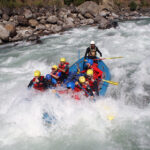
White-water rafting is available on 16 major rivers calibrated to every level of experience, from the Grade 2 to 3 gentle stretches of the Upper Seti accessible from Pokhara to the sustained Class 4 to 5 intensity of the Bhote Koshi near the Tibetan border. The Kali Gandaki, draining the world’s deepest gorge, runs multi-day expedition-grade rapids through a canyon that puts geological time in direct physical proximity. The Sun Koshi — running 270 kilometers from its source near the Tibetan border to the Terai plains — is widely considered one of the world’s great long-distance river expeditions.
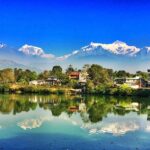
Paragliding from Sarangkot ridge above Pokhara consistently ranks among the world’s top five paragliding experiences by professional pilots, due to a combination of reliable thermal conditions, an unobstructed Annapurna range panorama, and a flight corridor over Phewa Lake that delivers visual drama at every altitude. Pokhara’s ZipFlyer, at 1.8 kilometers with 600 meters of vertical descent, holds the title of world’s steepest zipline. The bungee jump at Bhote Koshi — a 160-meter free fall over a raging glacial river — is one of the tallest in the world. Canyoning at Lwang Ghalel village near Pokhara involves rappelling a 75-meter waterfall in a narrow gorge. Mountain biking routes from the Annapurna foothills to the Mustang desert traverse terrain that professional riders describe as among the most technically diverse and visually rewarding on earth. Hot air ballooning at dawn over the Pokhara Valley, with the Annapurna range at eye level, represents one of the most genuinely extraordinary visual experiences Nepal places in front of visitors.
The entry point for all of this is Kathmandu or Pokhara. No internal flights required for most activities. No restricted permits for standard adventure sports. Nepal’s proximity — its geographic compression — means that a Sarangkot paraglide, a Seti River half-day rafting session, and a sunset over Phewa Lake can occupy a single day without logistical strain.
Nepal Is Remarkably Affordable Without Sacrificing Quality
Nepal’s exchange rate and cost structure place it among the world’s most accessible adventure destinations by price. A dollar converts to approximately 130 Nepali rupees, meaning that standard daily expenses — accommodation in a clean guesthouse, three local meals, transport, and entry fees to heritage sites — can be managed comfortably for $30 to $50 per day in Kathmandu and Pokhara, and for less than that along most trekking routes where teahouse accommodation is provided in exchange for eating meals at the lodge.
A full plate of dal bhat — Nepal’s complete staple meal of lentil soup, rice, vegetable curry, pickle, and assorted sides with unlimited refills — costs NPR 250 to 400 at a local restaurant, roughly $2 to $3. A glass of chiya, the spiced milk tea that the country runs on, is NPR 20, approximately fifteen cents. A ride-share across central Kathmandu via Pathao or InDrive costs NPR 100 to 200.
For trekking, the ACAP permit covering the Annapurna Conservation Area costs NPR 3,000 — about $23. The full Mardi Himal Trek, a 7-day route that delivers close-range Machapuchare views and genuine Himalayan terrain, can be completed for under $400 including guide, permits, accommodation, and meals when booked through a registered local agency. The Everest Base Camp trek package, including domestic flights, certified guide, permits, and all teahouse accommodation and meals, starts from approximately $1,200 to $1,800 — a price that, compared to what a comparable multi-day guided wilderness experience costs in New Zealand, Iceland, or Patagonia, represents extraordinary value.
Nepal Rewards Every Travel Style and Every Budget
This is the point that most destination articles about Nepal bury or miss entirely: Nepal is not a single-audience destination. The assumption that Nepal is “for trekkers” or “for mountaineers” or “for spiritual seekers” is a profound misreading of a country that simultaneously operates multiple entirely distinct travel worlds within its compact geography.
The traveler who wants nothing more than to sit on a rooftop in Bhaktapur’s old town, drink tea, photograph the medieval pagoda architecture, and eat juju dhau — the thick, sweet, buffalo-milk yogurt that Bhaktapur has been making for centuries — can do exactly that without ever hiking above 1,400 meters. The traveler who wants three weeks of progressive high-altitude challenge culminating at Everest Base Camp can have that. The family traveling with children can do a Chitwan jungle safari, a Phewa Lake boat ride, and a Kathmandu Valley cultural circuit without any activity exceeding their physical capacity. The luxury traveler can book boutique lodges in the Annapurna foothills, helicopter flights to Everest Base Camp for morning tea, and private cultural guides in Patan. Every version of Nepal is genuinely available.
The Moment Is Right
Nepal’s tourism sector is in recovery and growth simultaneously, which means the infrastructure is improving — airport capacity at Tribhuvan International Airport increased by 25% following the 2025 taxiway upgrade — while the trails and cultural sites have not yet absorbed the full volume that will eventually come. The trekking routes outside the Everest and Annapurna main corridors are quieter than they will be in five years. The community teahouses along newer routes like Mardi Himal, Manaslu Circuit, and the Tsum Valley receive far fewer visitors than the quality of the experience warrants. The cultural neighborhoods of Kirtipur, Panauti, and Dhankuta have all the character of Bhaktapur with almost none of the tour groups.
The travelers who arrive in Nepal now are arriving at a moment when the full richness of the country is available — the mountains, the culture, the wildlife, the food, the people, the incomparable geographic drama — without the saturation that the most popular destinations tend to acquire once the word fully spreads.
The word is spreading. The record April 2025 arrivals confirm it. The question is whether you get there before the trails look more like corridors.
Plan Your Nepal Journey with Getaway Nepal Adventure
The gap between a good Nepal trip and an extraordinary one almost always comes down to the same variable: who is handling the ground operations. Nepal’s permit system, weather windows, domestic flight logistics, altitude considerations, and the specific local knowledge needed to move through its cultural and geographic layers with real understanding — these are not things you optimize through a booking platform. They’re optimized through people who live and work in Nepal every season, who know which Bhaktapur restaurant cooks the most authentic Newari feast, which October morning has the best Annapurna visibility from Sarangkot, and what to do at 4 AM at High Camp when someone shows altitude symptoms before a base camp push.
Getaway Nepal Adventure is a Kathmandu-based travel company registered with the Nepal Tourism Board, TAAN, the Nepal Mountaineering Association, and KEEP — the full range of institutional credentials that separate professional operators from the Thamel desk agencies. The company builds personalized itineraries for solo travelers, families, groups, and international travel agency partners, covering the full range of Nepal’s offerings from short cultural circuits in the Kathmandu Valley to extended restricted-area treks in Upper Dolpo and Kanchenjunga. Every guide is certified, locally experienced, and carries genuine knowledge of the terrain and communities the route passes through.
Nepal will give you an extraordinary experience. The question is how much of it you access. Getaway Nepal Adventure helps you access all of it.
Recent Posts