7 Days in Nepal Tour
Seven days is a week. It is the minimum amount of time that delivers a genuine Nepal experience rather than a transit impression, and the most common trip length for travellers with a standard working week of annual leave available. The country scales well to this window. A four-day trek fits cleanly with two days in Kathmandu and a final day in Pokhara. Or seven days covers the Golden Triangle of Kathmandu, Pokhara, and Chitwan at a steady pace. Or it takes you deep into Newari culture, medieval temple cities, and the farming villages on the valley rim without leaving the Kathmandu region at all.
Seven days also suits specialized interests particularly well. Wildlife travellers can use it for a focused Chitwan itinerary with genuine depth rather than a single overnight. Adventure travellers can combine Kathmandu with the Kalinchowk bungee and rafting circuit. Cultural travellers can spend seven days in the Kathmandu Valley alone and never run out of material.
This guide follows the same structure as the series. Section one covers Nepal’s most rewarding activities and experiences, written specifically for a seven-day timeframe. Section two presents ten distinct itinerary ideas. Everything starts and ends in Kathmandu. None of it requires technical mountaineering experience.
Nepal’s Best Activities and Experiences
These are the building blocks of any seven-day Nepal itinerary. Understanding what each region and activity genuinely offers makes choosing the right combination much easier.
1. Kathmandu Valley
The Kathmandu Valley is the cultural core of Nepal and the only destination in the world where seven UNESCO World Heritage Sites sit within a 20-kilometre radius. The valley has been continuously inhabited for over a thousand years and holds the most concentrated collection of ancient Hindu and Buddhist architecture anywhere in Asia. For seven-day itineraries, two days here is the standard allocation. Three days is available for itineraries that do not travel to Pokhara or the southern Terai.
- Pashupatinath Temple on the Bagmati River is Nepal’s most sacred Hindu site. The evening aarti ceremony at dusk, with priests performing the river ritual as butter lamps are lit along the Arya Ghat, is one of the most atmospheric moments available to any visitor. The cremation area on the river’s sacred banks is sobering and beautiful simultaneously. Arrive at dusk and stay for the full ceremony.
- Boudhanath Stupa is one of the world’s largest Buddhist stupas and the single most important Tibetan Buddhist site outside Tibet itself. The circumambulation walk at dawn, with monks chanting from the surrounding monasteries and incense smoke drifting across the plinth, is Kathmandu’s finest morning experience. The area around Boudha is also the best place in Nepal for sound healing, singing bowl workshops, and Tibetan Buddhist meditation sessions.
- Swayambhunath, the hilltop stupa on the western rim of the valley, dates from the 5th century CE. Best at sunrise. The resident monkey population makes the stone staircase ascent an entertainment in itself. From the summit platform the view of the Kathmandu Valley spreading below, framed by the watching eyes of the Buddha on the gilded tower, is one of Nepal’s most enduring images.
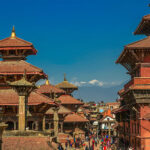
- Bhaktapur is Nepal’s finest preserved medieval city, 13 kilometres east of Kathmandu. The Pottery Square, the 55-Window Palace, Nyatapola Temple (Nepal’s tallest pagoda-style temple, five tiers, built 1702), and the Golden Gate form the most concentrated collection of ancient Newari architecture in the world. The yoghurt sold in earthenware pots throughout the city has been a protected local speciality for centuries. A full half-day is the minimum to walk Bhaktapur properly.
- Patan Durbar Square holds the finest Newari temple architecture in the valley and the Patan Museum, one of Asia’s outstanding collections of Buddhist and Hindu metalwork and stone sculpture. Patan is also Nepal’s centre for traditional metalworking, thangka painting, and pashmina weaving, and the workshops on the lanes behind the Durbar Square are open to visitors during working hours.
- Changu Narayan is the oldest temple in the Kathmandu Valley, built in the 4th century CE and the first UNESCO World Heritage Site inscribed in Nepal. It sits on a forested hilltop in the eastern valley with some of the finest stone and wood carvings of the Lichchhavi period anywhere in the country. It is also the least visited of the valley’s major heritage sites, meaning you are likely to have the courtyards largely to yourself.
- Namobuddha Monastery at 1,750 metres sits on a ridge 38 kilometres east of Kathmandu in Kavrepalanchowk district and is one of the most sacred sites in Tibetan Buddhism. The stupa marks the location where the Bodhisattva (the Buddha in a previous life) offered his body to a starving tigress to save her cubs, a story depicted in the carved stone panels around the stupa. The view of the valley and surrounding hills from the monastery ridge is exceptional.
- Nagarkot on the eastern rim of the valley at 2,175 metres is Nepal’s most famous sunrise viewpoint accessible by road. On clear mornings, the panorama extends from Annapurna in the west to Everest and Kanchenjunga in the east. Best combined with an overnight stay for the sunrise, paired with a Bhaktapur visit on the same day.
2. Pokhara
Pokhara is 45 minutes by air from Kathmandu and sits directly beneath the Annapurna massif on the shore of Phewa Lake at 827 metres. It is Nepal’s adventure capital and one of its most restful cities simultaneously. For seven-day itineraries, one to two days here is the right allocation depending on whether a trek is included.
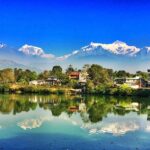
- Phewa Lake at dawn is one of Nepal’s most reliably beautiful daily experiences. The reflection of Machhapuchhre (Fishtail Mountain) in the still surface of the lake in the first light, before the wind arrives, is a sight that no photograph fully conveys. Hire a wooden rowboat, cross to the Tal Barahi island temple, or simply sit at a lakeside cafe and let the mountains come to you.
- Paragliding from Sarangkot is one of the world’s finest tandem paragliding experiences, with the full Annapurna range visible throughout the flight. Thermals carry pilots to 1,800 metres above the valley before spiralling down toward the lakeside landing zone. Book the first morning slot for the clearest mountain views. The flight typically lasts 20 to 60 minutes.
- Sarangkot viewpoint at 1,590 metres is the best pre-dawn mountain viewpoint accessible by road in Nepal. Dhaulagiri at 8,167 metres anchors the western horizon. The full Annapurna massif fills the north. Machhapuchhre’s double peak catches the first light directly ahead. Arrive before 5:30 AM to secure a clear position on the ridge before the tour groups.
- The World Peace Pagoda is a Japanese-built Buddhist stupa on a forested hilltop south of Phewa Lake, reached by a 20-minute boat crossing and a forest walk. The terrace gives panoramic views of Pokhara, the lake, and the mountains. An excellent addition to a Pokhara afternoon when the light is best in the west-facing direction.
3. Ghorepani Poon Hill Trek
Nepal’s most popular short trek fits cleanly into a seven-day itinerary. The four-day circuit from Nayapul (90 minutes west of Pokhara) climbs through Tikhedhunga, up the famous Ulleri stone staircase, through rhododendron forest to Ghorepani at 2,860 metres, and then to the pre-dawn summit of Poon Hill at 3,210 metres. The panoramic arc of Dhaulagiri, Annapurna I, Annapurna South, Hiunchuli, Nilgiri, Lamjung Himal, and Machhapuchhre lit in the first sun is Nepal’s most celebrated mountain sunrise viewpoint. In spring the rhododendron forests bloom red, pink, and white. In autumn they are golden and the views from the ridge are at their clearest. Easy to Moderate difficulty, suitable for first-time trekkers.
4. Ghandruk Trek
The Ghandruk loop is Nepal’s finest short cultural trek and one of the best options for travellers who want mountain views alongside a genuinely inhabited village experience rather than just a viewpoint. Ghandruk at 1,940 metres is the largest Gurung village in western Nepal and home to the Gurung Museum documenting the Gurkha military heritage, traditional stone-paved lanes, a working gompa, and the closest close-up ground-level view of Annapurna South available from any Annapurna region trail.
The standard four-day Ghandruk circuit from Pokhara goes through Dhampus or Kande to Pothana, descends to Landruk, and climbs to Ghandruk before returning to Nayapul. The daily walking times are comfortable: three to five hours per day with frequent village stops and teahouse lunches. The view of Annapurna South and Hiunchuli from the village ridge at Ghandruk on a clear morning is one of Nepal’s best-loved mountain panoramas. Easy difficulty. Suitable for beginners, families, and older age groups.
5. Panchase Trek
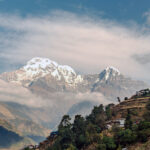
The Panchase circuit is one of Nepal’s most underrated short treks and one of the best-suited to a seven-day itinerary from Pokhara. The trail begins with a boat crossing of Phewa Lake, which provides one of the finest openings to any short trek in Nepal, and climbs through dense rhododendron and oak forest to the sacred Panchase ridge at 2,517 metres. Annapurna, Dhaulagiri, Machhapuchhre, and the full arc of the Pokhara Valley panorama spread across the northern horizon from the ridge, with views that the main Annapurna trails rarely match for 360-degree completeness.
The trail passes through several Gurung and Magar villages with minimal tourist infrastructure, making encounters with local communities more natural and less performative than on the main Ghandruk or Poon Hill routes. The trail descends through Bhadaure and Naudanda to return to Pokhara by road. For seven days the Panchase circuit uses four days of trekking, combined with one day in Kathmandu and two days of Pokhara time around it.
6. Namche Bazaar Trek
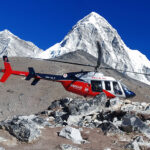
The Namche Bazaar trek in seven days is possible but tightly structured. It requires a Lukla flight and leaves no buffer days for weather delays. The circuit is: Kathmandu one day, fly to Lukla, Phakding overnight, Namche Bazaar (two nights with one acclimatisation day), return to Monjo, Lukla, fly to Kathmandu. For travellers comfortable with the Lukla flight and willing to accept that any weather delay will compress the schedule, the Khumbu experience in seven days is entirely viable and the Namche Bazaar destination itself is one of the most remarkable places in Nepal.
7. Pikey Peak Trek
Pikey Peak at 4,065 meters in the Solu Khumbu requires no Lukla flight and delivers seven of the world’s fourteen 8,000-metre peaks from a single viewpoint. Sir Edmund Hillary declared it his finest Everest view. The trailhead at Dhap is an 8 to 9-hour drive from Kathmandu through the Solu foothills. For seven days: one Kathmandu day, drive to Dhap, trek to Jhapre, trek to Pikey Base Camp, pre-dawn summit and descent to Junbesi, drive return. The visit to Thupten Chholing Monastery above Junbesi on the final trekking day adds the cultural dimension. Moderate difficulty.
8. Nepal Golden Triangle
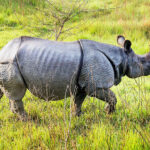
Kathmandu, Pokhara, and Chitwan in seven days. Two days in Kathmandu, two days in Pokhara, one night in Chitwan, and the transit days between. This is the right itinerary for first-time visitors who want to understand Nepal in its three main forms: sacred ancient city, lakeside mountain view, and subtropical jungle wildlife. Easy throughout and suitable for all ages. The compressed Chitwan allocation (one night) means a single jeep safari and river canoe session rather than the multi-day wildlife experience, but both the rhino sighting and the morning on the Rapti River are reliably delivered in a single day.
9. Kathmandu and Pokhara Cultural Tour
Three days in Kathmandu and three days in Pokhara, connected by domestic flight or road. No trek, no wildlife, no rush. The right itinerary for travellers who want cultural depth and lakeside relaxation without any physical exertion beyond comfortable walking. Three Kathmandu days allow Pashupatinath and Boudhanath, Bhaktapur and Patan, Swayambhunath and Changu Narayan, and the Nagarkot sunrise, all without feeling pressured. Three Pokhara days allow the Sarangkot sunrise, a morning on Phewa Lake, paragliding or the zip-line, the World Peace Pagoda walk, and a lakeside yoga or spa afternoon. This is Nepal done slowly and properly.
10. Balthali Village Trek and Newari Culture
The Balthali Village circuit is the finest short cultural trek available without leaving the Kathmandu Valley region. The route begins with a drive from Kathmandu to Jarsing Pauwa (one hour), passes through the sacred Namobuddha Monastery and its ridge-top Tibetan Buddhist gompa, continues through orchards and terraced fields to Balthali village at 1,730 metres, and descends the following day through farmland to the ancient Newari city of Panauti on the Roshi and Punyamati rivers.
Panauti is one of the best-preserved Newari towns in the valley, built in the traditional brick-and-carved-wood style at the confluence of two sacred rivers, and home to the 13th-century Indreshwar Mahadev Temple. The circuit can be extended to include a ridge walk to Dhulikhel and Namobuddha for an additional day, making it a genuinely complete three to four-day trek that fits naturally into a seven-day itinerary combined with three Kathmandu heritage days. No domestic flights required at any point.
11. Kalinchowk Temple Trek
The Kalinchowk Bhagwati Temple at 3,842 metres in the Dolakha district sits above the Bhotekoshi River corridor northeast of Kathmandu. The temple is one of Nepal’s most significant Shakti pilgrimage sites, with extraordinary views of Gaurishankar (7,134 metres), the Rolwaling range, and Langtang Himal from the ridge. The Bhotekoshi valley approach from Charikot passes through the Gaurishankar Conservation Area with forested gorge scenery that is among the most dramatic road journeys in the country.
For seven days: two Kathmandu heritage days, drive to Charikot (four hours), trek to Kuri (3,400 metres), ascent to Kalinchowk Temple the following morning, descent and drive back to Kathmandu, final Kathmandu day. The optional Bhotekoshi bungee jump (160 metres, one of Asia’s most dramatic) can be combined on the drive day for those who want the adventure dimension alongside the spiritual one. Moderate difficulty.
12. Lower Mustang Trek
The Jomsom-Muktinath corridor through Lower Mustang is Nepal’s finest rain-shadow trek and the best choice for monsoon-season visitors (June to August). The route follows the ancient Kali Gandaki trading corridor north from Jomsom airport (reached by a 20-minute flight from Pokhara) through the world’s deepest river gorge to the sacred pilgrimage site of Muktinath at 3,800 metres. The landscape is Tibetan in character despite being in Nepal: wind-carved desert terrain, medieval walled villages, ancient caravanserai, and the distinctive flat-roofed architecture of Mustang.
Muktinath Temple combines a Hindu shrine and a Tibetan Buddhist gompa in the same compound, and draws pilgrims from across Nepal, India, and Tibet annually. The Kali Gandaki is the world’s deepest gorge by some measurements, flanked by Dhaulagiri (8,167 metres) to the west and Annapurna I (8,091 metres) to the east. The medieval village of Kagbeni at the confluence of the Kali Gandaki and Mustang rivers is one of the finest surviving walled villages in Nepal. For seven days: one Kathmandu day, fly to Pokhara, fly Pokhara to Jomsom, three trekking days up the valley to Muktinath and back, fly Jomsom to Pokhara, fly Pokhara to Kathmandu. Easy to Moderate difficulty, monsoon-safe.
10 Itinerary Ideas for 7 Days in Nepal
All ten itineraries start and end in Kathmandu. None require technical mountaineering experience. Each is shaped around a different type of traveller and a different version of Nepal.
Itinerary 1: Nepal Golden Triangle
Nepal’s three most iconic destinations in seven days. The Golden Triangle covers Kathmandu’s sacred heritage, Pokhara’s Himalayan lake, and Chitwan’s subtropical wildlife in a single trip without any trekking. The right choice for first-time visitors who want the broadest possible overview of the country. Easy difficulty. Suitable for all ages.
Itinerary at a glance
Day 01 Arrive Kathmandu, city orientation, welcome dinner in Thamel (overnight: Kathmandu)
Day 02 Kathmandu: Pashupatinath, Boudhanath, Swayambhunath (overnight: Kathmandu)
Day 03 Kathmandu: Bhaktapur, Patan Museum, Kathmandu Durbar Square rickshaw tour (overnight: Kathmandu)
Day 04 Fly Kathmandu to Pokhara, Phewa Lake afternoon, Sarangkot sunset (overnight: Pokhara)
Day 05 Pokhara: Sarangkot sunrise, paragliding, World Peace Pagoda, lakeside evening (overnight: Pokhara)
Day 06 Drive Pokhara to Chitwan National Park (5 hours), evening at lodge (overnight: Chitwan)
Day 07 Chitwan: dawn jeep safari, Rapti River canoe, Tharu village, fly to Kathmandu for departure (overnight: Departure)
This is Nepal in its most legible form. Days 2 and 3 give two full Kathmandu days: the spiritual circuit on day 2 (Pashupatinath at dusk is the anchor, Boudhanath in the morning for the kora walk, Swayambhunath for the hilltop view), and the medieval cities on day 3 (Bhaktapur in the morning, Patan in the afternoon, Durbar Square by rickshaw in the evening). The flight to Pokhara on day 4 takes 25 minutes and arrives into mountain country. Day 5 is the Pokhara adventure day: Sarangkot before dawn, paragliding over the lake, the World Peace Pagoda forest walk, lakeside sunset. The drive to Chitwan on day 6 descends from the hills to the subtropical plains in an afternoon. Day 7 is the Chitwan wildlife day: a 6:00 AM jeep safari, a canoe drift along the Rapti River at dawn, and the Tharu village in the afternoon before the flight back to Kathmandu for the international departure.
Itinerary 2: Ghorepani Poon Hill Trek
The classic Annapurna short trek combined with one Kathmandu day and a Pokhara recovery afternoon. Seven days gives exactly enough time for the four-day Poon Hill circuit with the cultural and recovery days around it. Nepal’s most popular short trek for very good reasons. Easy to Moderate. Suitable for first-time trekkers and all reasonably fit adults.
Itinerary at a glance
Day 01 Arrive Kathmandu, welcome, Boudhanath evening walk (overnight: Kathmandu)
Day 02 Kathmandu: Pashupatinath, Bhaktapur, Patan, fly to Pokhara in the evening (overnight: Pokhara)
Day 03 Drive Nayapul, trek to Ghorepani (2,860 m) via Tikhedhunga and Ulleri (overnight: Ghorepani)
Day 04 Poon Hill sunrise (3,210 m), trek to Tadapani (2,630 m) (overnight: Tadapani)
Day 05 Trek Tadapani to Ghandruk (1,940 m), Gurung Museum, village evening (overnight: Ghandruk)
Day 06 Trek Ghandruk to Nayapul, drive to Pokhara, lakeside afternoon (overnight: Pokhara)
Day 07 Fly Pokhara to Kathmandu, departure (overnight: Departure)
Day 2 is the most compressed day of the itinerary: Pashupatinath and Bhaktapur in the morning and early afternoon, Patan briefly, then an evening flight to Pokhara. This pace is workable because the Pokhara flight is 25 minutes and the evening arrival still gives time for a lakeside dinner before the early start on day 3. The Ulleri stone staircase on day 3 is the trek’s most demanding section: more than 3,000 stone steps from the Modi Khola valley to Ulleri village, then a forest walk to Ghorepani. The sunrise at Poon Hill on day 4 is the payoff. The traverse from Tadapani to Ghandruk on day 5 is the cultural highlight: forest walking, Gurung village teahouses, and the most intimate ground-level view of Annapurna South available from any trail in the region. Day 6 is the comfortable descent and drive to Pokhara for a lakeside afternoon before departure.
Itinerary 3: Ghandruk Cultural Trek
Nepal’s finest short village trekking experience, prioritising cultural encounters over summit views. The Ghandruk circuit is easier than Poon Hill, more culturally rich, and equally beautiful in terms of mountain scenery. The best seven-day trekking itinerary for families, older travellers, and those who want to understand Gurung village life rather than simply walk through it. Easy difficulty. Suitable for beginners of all ages.
Itinerary at a glance
Day 01 Arrive Kathmandu, welcome, Thamel orientation walk (overnight: Kathmandu)
Day 02 Kathmandu: Pashupatinath, Boudhanath, Patan Durbar Square (overnight: Kathmandu)
Day 03 Fly Kathmandu to Pokhara, drive Kande trailhead, trek to Dhampus (1,650 m) (overnight: Dhampus)
Day 04 Trek Dhampus to Landruk (1,565 m) through rhododendron and oak forest (overnight: Landruk)
Day 05 Trek Landruk to Ghandruk (1,940 m), Gurung Museum, village evening (overnight: Ghandruk)
Day 06 Trek Ghandruk to Nayapul, drive to Pokhara, Phewa Lake afternoon (overnight: Pokhara)
Day 07 Fly Pokhara to Kathmandu, departure (overnight: Departure)
The Ghandruk circuit takes the opposite aesthetic to Poon Hill. There is no push above 2,000 metres, no pre-dawn summit, no stone staircase of 3,000 steps. Instead, there are three days of comfortable walking through terraced farmland and rhododendron forest, with Annapurna South appearing and disappearing behind ridgelines as you walk, and Ghandruk on day 5 as the destination that justifies the whole circuit. The Gurung Museum in Ghandruk documents the community’s history with Nepal’s Gurkha regiments, their traditional spiritual practices, and the ecology of the Annapurna foothills in a way that gives the surrounding landscape genuine context. The village itself, with its stone-paved lanes, old water mills, and the sound of children from the school at the top of the hill, is the kind of place that most trekkers are reluctant to leave on the morning of day 6.
Itinerary 4: Panchase Trek and Pokhara
Nepal’s finest quiet short trek combined with a generous Pokhara stay. The Panchase circuit begins with a boat crossing of Phewa Lake and climbs to a 2,517-metre ridge with panoramic Annapurna views, with no crowds and no crowds-built infrastructure. For travellers who want the Pokhara mountain experience done properly, away from the main trekking routes. Easy to Moderate difficulty.
Itinerary at a glance
Day 01 Arrive Kathmandu, welcome dinner, Boudhanath evening (overnight: Kathmandu)
Day 02 Kathmandu: Pashupatinath, Bhaktapur, Patan, evening flight to Pokhara (overnight: Pokhara)
Day 03 Boat across Phewa Lake, begin Panchase trek, through forest to first teahouse (overnight: Dhampus or Forest Camp)
Day 04 Trek to Panchase Ridge (2,517 m), full Annapurna panorama (overnight: Panchase Bhanjyang)
Day 05 Trek through Bhadaure Gurung village, descend toward Naudanda (overnight: Naudanda)
Day 06 Reach Naudanda, drive to Pokhara, lakeside afternoon, Sarangkot sunset (overnight: Pokhara)
Day 07 Fly Pokhara to Kathmandu, departure (overnight: Departure)
The Panchase itinerary begins on the water. The boat crossing of Phewa Lake on day 3, before the trail has even begun, is one of Nepal’s finest travel moments: Machhapuchhre reflected in the lake surface, the temple island slipping by on the right, and the forested hillside ahead where the trail starts. The ridge at 2,517 metres on day 4 delivers a complete Annapurna panorama that most trekkers on the main routes simply do not get because the main routes are narrow valley ascents rather than open ridgelines. Bhadaure village on day 5 is a real Gurung community where trekking infrastructure is minimal and daily life continues on its own terms. The Pokhara lakeside recovery on day 6, with Sarangkot for the sunset, closes the Pokhara chapter before the departure flight on day 7.
Itinerary 5: Namche Bazaar Trek
The Khumbu experience in seven days. Namche Bazaar at 3,440 metres, the Hillary Bridge, the Sagarmatha National Park forests, the first sighting of Everest on the Namche ridge. This is the most time-pressured itinerary in the guide and requires accepting zero weather buffer days at Lukla. For travellers committed to the Khumbu and comfortable with that constraint. Moderate difficulty. Requires Lukla flight.
Itinerary at a glance
Day 01 Arrive Kathmandu, welcome, Boudhanath evening walk (overnight: Kathmandu)
Day 02 Kathmandu: Pashupatinath, Patan, Bhaktapur (overnight: Kathmandu)
Day 03 Fly Kathmandu to Lukla (2,860 m), trek to Phakding (2,610 m) (overnight: Phakding)
Day 04 Trek Phakding to Namche Bazaar (3,440 m) via Hillary Suspension Bridge (overnight: Namche Bazaar)
Day 05 Acclimatisation: hike to Hotel Everest View (3,880 m) and Khumjung village (overnight: Namche Bazaar)
Day 06 Trek Namche to Lukla via Monjo (long day, two stages) (overnight: Lukla)
Day 07 Fly Lukla to Kathmandu, departure (overnight: Departure)
Seven days is the minimum for the Namche circuit and it requires the return from Namche to Lukla to be done in a single long day (day 6), combining what would normally be two comfortable descent days into one. This is physically manageable because the terrain is predominantly downhill, but it does make day 6 the most tiring day of the itinerary. The acclimatisation day at Namche on day 5 is not negotiable: at 3,440 metres, the body requires it. The hike to Hotel Everest View and Khumjung village uses the day well. The Everest view from the hotel terrace at 3,880 metres, and the Hillary school in Khumjung still operating since its founding in 1961, together make the acclimatisation day one of the itinerary’s highlights. The Lukla flight on day 7 must be treated as a fixed constraint when booking the international return.
Itinerary 6: Balthali Village Trek and Newari Culture
Seven days of cultural immersion without leaving the greater Kathmandu region. The Balthali Village circuit combines three Kathmandu heritage days with a three-day valley-rim trek through Namobuddha Monastery, Balthali village, and the ancient Newari town of Panauti. No domestic flights required. The right itinerary for travellers who want genuine rural Nepal combined with the best of Kathmandu heritage. Easy to Moderate difficulty.
Itinerary at a glance
Day 01 Arrive Kathmandu, welcome, Boudhanath evening kora walk (overnight: Kathmandu)
Day 02 Kathmandu: Pashupatinath, Swayambhunath, Kathmandu Durbar Square (overnight: Kathmandu)
Day 03 Kathmandu: Bhaktapur, Patan Museum, Bungamati and Khokana Newari villages (overnight: Kathmandu)
Day 04 Drive to Jarsing Pauwa (1 hour), trek via Namobuddha Monastery to Balthali village (1,730 m) (overnight: Balthali)
Day 05 Explore Balthali: terraced farmland, temple, mountain views, optional Dhulikhel ridge walk (overnight: Balthali)
Day 06 Trek Balthali to Panauti (Indreshwar Mahadev Temple, riverside Newari town), drive back to Kathmandu (overnight: Kathmandu)
Day 07 Kathmandu: Changu Narayan temple, Nagarkot sunrise, departure (overnight: Departure)
This itinerary is built for the traveller who came to Nepal for culture rather than altitude. The first three days give the full Kathmandu heritage circuit: the spiritual sites, the medieval cities, and the hidden villages of Bungamati and Khokana on the valley’s southern rim. The Balthali trek on days 4 to 6 adds rural texture. Namobuddha Monastery on day 4 is one of Tibetan Buddhism’s most sacred sites, with a stupa marking the exact location of the Bodhisattva’s sacrifice of his own body to feed a tigress and her cubs. Balthali village at 1,730 metres is a working farming community with mountain views that most guided day trips from Kathmandu miss entirely. Panauti on day 6, built at the confluence of two sacred rivers in the traditional Newari crimson-brick style with a 13th-century temple, is the finest best-preserved Newari town outside the main valley, and deserves the two to three hours available on the walk-in from Balthali. Changu Narayan on day 7 closes the cultural circuit with Nepal’s oldest temple.
Itinerary 7: Pikey Peak Trek
Seven 8,000-metre peaks visible from a single summit, with no Lukla flight required. Sir Edmund Hillary’s declared finest Everest panorama is accessible in seven days via a long jeep drive from Kathmandu and a three-day trekking circuit through the Solu Khumbu foothills. One Kathmandu heritage day and a visit to Thupten Chholing Monastery complete the circuit. Moderate difficulty.
Itinerary at a glance
Day 01 Arrive Kathmandu, welcome dinner, Boudhanath evening (overnight: Kathmandu)
Day 02 Kathmandu: Pashupatinath, Bhaktapur, Patan — afternoon drive toward Solu Khumbu foothills (overnight: Okhaldhunga or Salleri)
Day 03 Continue drive to Dhap trailhead (2,850 m), trek to Jhapre (2,900 m) (overnight: Jhapre)
Day 04 Trek Jhapre to Pikey Peak Base Camp (3,640 m) (overnight: Pikey Base Camp)
Day 05 Pre-dawn summit Pikey Peak (4,065 m), seven-peak panorama, descend to Junbesi (2,700 m) (overnight: Junbesi)
Day 06 Morning: Thupten Chholing Monastery (3,020 m) above Junbesi, afternoon drive from Phaplu (overnight: En route to Kathmandu)
Day 07 Arrive Kathmandu early morning or fly from Phaplu, departure (overnight: Departure)
The Pikey Peak itinerary compresses the drive and the trek to make seven days work. Day 2 splits between Kathmandu heritage in the morning and the first stage of the drive toward Solu Khumbu in the afternoon, breaking what would otherwise be a punishing single 8 to 9-hour drive into two more comfortable stages. Jhapre on day 3 is already at 2,900 metres with the Khumbu peaks visible to the northeast at sunset. Day 4 to base camp and day 5 to the summit follow the rhythm of the mountain. The sunrise from Pikey Peak on day 5, with Everest, Lhotse, Makalu, Cho Oyu, Kanchenjunga, Dhaulagiri, and Manaslu all visible from a single standing point, is the experience around which the whole itinerary is designed. Thupten Chholing Monastery above Junbesi on day 6 is founded by the late His Holiness Trulshik Rinpoche and home to several hundred monks and nuns in a monastery complex that feels self-contained and spiritually alive in a way that many more famous Kathmandu Valley temples do not. It is a genuinely moving place to end the trekking section.
Itinerary 8: Kalinchowk Temple Trek and Bhotekoshi Adventure
Sacred temple ridge, white-water rapids, and Kathmandu heritage in seven days. The Kalinchowk circuit combines a meaningful pilgrimage and mountain viewpoint trek with the option of the Bhotekoshi bungee jump (160 metres) and white-water rafting on one of Nepal’s most technical accessible rivers. The best seven-day adventure and culture combination available. Moderate difficulty on the trek, intense on the adventure activities.
Itinerary at a glance
Day 01 Arrive Kathmandu, welcome, Boudhanath evening walk (overnight: Kathmandu)
Day 02 Kathmandu: Pashupatinath, Bhaktapur, Patan (overnight: Kathmandu)
Day 03 Drive to Charikot via Bhotekoshi gorge (4 hours), optional bungee jump, trek to Kuri (3,400 m) (overnight: Kuri)
Day 04 Trek Kuri to Kalinchowk Bhagwati Temple (3,842 m), mountain panorama, pilgrimage atmosphere (overnight: Kuri)
Day 05 Descend Kalinchowk, drive to Bhotekoshi put-in, afternoon rafting (Grade 4 to 5) (overnight: Riverside camp or Kathmandu)
Day 06 Return to Kathmandu, Changu Narayan or Nagarkot afternoon, farewell dinner (overnight: Kathmandu)
Day 07 Kathmandu morning, departure (overnight: Departure)
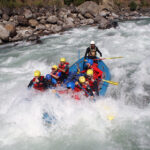
The Bhotekoshi corridor is one of Nepal’s most dramatic road journeys: the highway clings to a gorge above the river with cliffs dropping away on one side and forested walls rising on the other. The bungee jump on day 3 (160 metres above the river on a single-span bridge, one of Asia’s most dramatic installations) is an optional addition to the drive day for those who want it. Kalinchowk Temple at 3,842 metres on day 4 is a genuinely sacred place. The Shakti deity worshipped here draws thousands of Hindu pilgrims during Dashain and Tihar. Outside festival periods the ridge is quiet, the mountain views of Gaurishankar and the Rolwaling range are extraordinary, and the combination of trekking effort and spiritual atmosphere gives this viewpoint a quality that purely touristic summits lack. The Bhotekoshi rafting on day 5 is Nepal’s most technically demanding readily available river experience, with Class 4 to 5 rapids through a narrow canyon that sees very few recreational visitors.
Itinerary 9: Lower Mustang Trek
Nepal’s finest rain-shadow route in seven days, and the best choice for monsoon-season travel between June and August. The Kali Gandaki gorge, the medieval walled village of Kagbeni, the sacred pilgrimage site of Muktinath, and the stark Tibetan-character desert landscape of Lower Mustang are all accessible within the seven-day window via short domestic flights. Easy to Moderate difficulty. Monsoon-safe.
Itinerary at a glance
Day 01 Arrive Kathmandu, welcome, Boudhanath evening (overnight: Kathmandu)
Day 02 Kathmandu: Pashupatinath, Bhaktapur, Patan, fly to Pokhara in the evening (overnight: Pokhara)
Day 03 Fly Pokhara to Jomsom (2,720 m), trek toward Kagbeni (2,810 m) (overnight: Kagbeni)
Day 04 Trek Kagbeni to Muktinath (3,800 m) via the Kali Gandaki gorge and Upper Mustang trail (overnight: Muktinath)
Day 05 Muktinath Temple morning visit, descend to Jomsom, afternoon in Jomsom village (overnight: Jomsom)
Day 06 Fly Jomsom to Pokhara, Phewa Lake afternoon, Sarangkot sunset (overnight: Pokhara)
Day 07 Fly Pokhara to Kathmandu, departure (overnight: Departure)
The Mustang itinerary solves the monsoon problem that affects almost every other Nepal trekking option. The Annapurna-Dhaulagiri massif acts as a weather barrier, keeping the rain to the south while the Mustang plateau to the north stays dry and clear. This is not a consolation prize: it is a genuinely distinct and beautiful landscape that deserves to be visited on its own terms. Kagbeni on day 3 is one of Nepal’s most perfectly preserved medieval walled villages, with a labyrinth of dark lanes between stone-walled houses, a central chorten, and the dramatic backdrop of the Kali Gandaki gorge. Muktinath on day 4 is one of the holiest pilgrimage sites in the Himalayan world for both Hindus and Tibetan Buddhists, with 108 stone spouts from which sacred water flows year-round. The flight back from Jomsom to Pokhara on day 6, crossing the Annapurna massif in a small aircraft, is one of the most spectacular domestic flight experiences in Nepal.
Itinerary 10: Kathmandu and Pokhara Cultural Tour
Three days in Kathmandu and three days in Pokhara, with no trekking and no wildlife. This itinerary is for cultural travellers who want depth rather than distance, for older visitors who prefer gentle walking over mountain trails, and for anyone who wants to understand what Nepal actually is rather than just what it looks like from a viewpoint. Easy throughout. Suitable for all ages and fitness levels.
Itinerary at a glance
Day 01 Arrive Kathmandu, welcome, Boudhanath kora walk at dusk (overnight: Kathmandu)
Day 02 Kathmandu: Pashupatinath aarti ceremony at dusk (visit earlier in day), Swayambhunath sunrise, Patan Museum (overnight: Kathmandu)
Day 03 Kathmandu: Bhaktapur full day, Nagarkot overnight for sunrise (overnight: Nagarkot)
Day 04 Nagarkot Himalayan sunrise, drive to Pokhara via Bandipur stopover (4.5 hours) (overnight: Pokhara)
Day 05 Pokhara: Sarangkot sunrise, boat on Phewa Lake, World Peace Pagoda forest walk (overnight: Pokhara)
Day 06 Pokhara: paragliding or zip-line morning, lakeside afternoon, Pokhara Museum or meditation centre (overnight: Pokhara)
Day 07 Fly Pokhara to Kathmandu, departure (overnight: Departure)
This itinerary does something the trekking-focused options cannot: it goes properly deep in each city rather than using them as bookends around a trail. Bhaktapur on day 3, with a full day rather than the usual half-day allocation, reveals the city behind its most photographed facades: the Dattatreya Square that most visitors miss, the craftsmen’s lanes with their woodcarvers and metalworkers, and the pottery market at the end of the day when the potters are finishing their work and the light falls on the rows of earthenware pots. Nagarkot overnight on day 3 sets up the sunrise panorama on day 4 and then the Bandipur stopover on the drive to Pokhara: the vehicle-free heritage bazaar at 1,030 metres with its mountain views and carved-wood shopfronts is one of Nepal’s finest one-hour stops. Pokhara on days 5 and 6 gets genuine breathing room rather than a rushed day-trip. Paragliding on day 6 is the physical punctuation mark before the departure.
Planning Your Seven Days
How to Choose Your Itinerary
The key question for seven days is what you most want to feel at the end of it. The ten options above cover every major type of Nepal travel.
- Itinerary 1 (Golden Triangle) is for the first-time visitor who wants the broadest possible Nepal overview.
- Itinerary 2 (Poon Hill) is for trekkers who want the classic Annapurna mountain sunrise.
- Itinerary 3 (Ghandruk) is for trekkers who want cultural villages over summit viewpoints.
- Itinerary 4 (Panchase) is for trekkers who want quiet trails and open ridge panoramas.
- Itinerary 5 (Namche Bazaar) is for Khumbu devotees who accept the Lukla flight constraint.
- Itinerary 6 (Balthali Village) is for cultural travellers who want rural Nepal alongside Kathmandu heritage.
- Itinerary 7 (Pikey Peak) is for those who want the finest Everest viewpoint without a Lukla flight.
- Itinerary 8 (Kalinchowk) is for adventurous travellers who want physical intensity alongside spiritual landscape.
- Itinerary 9 (Lower Mustang) is for monsoon travellers and those drawn to desert and pilgrimage.
- Itinerary 10 (Kathmandu and Pokhara) is for cultural depth without trekking.
For families with children aged 10 and above, Itineraries 1 and 3 are the most appropriate. For older travellers, Itineraries 1, 6, and 10 work best. For monsoon travel between June and August, Itinerary 9 (Mustang) is the safest trekking option and Itinerary 10 (valley-based) is suitable for any season.
Best Seasons for Seven Days
- October and November are the finest months for any seven-day Nepal trip. Post-monsoon air is clear, the mountains are freshly snowed, and all ten itineraries work at their best. October is the peak month for mountain visibility and trail conditions.
- March and April bring the rhododendron bloom across the Annapurna region. The forests on the Poon Hill, Ghandruk, and Panchase routes are at their most spectacular. April is the best spring month overall.
- December through February are cold above 2,500 metres but often exceptionally clear. Kathmandu heritage itineraries and the Balthali Village trek are excellent. The Mustang itinerary works well in winter as the rain-shadow climate continues year-round.
- May is workable but warmer in the valleys. Mountain views are clear early in the month before pre-monsoon cloud builds in the afternoons.
- June through September is monsoon. Itinerary 9 (Mustang) is designed for this season. Itinerary 10 (Kathmandu and Pokhara) is viable with appropriate rain expectations. All other trekking itineraries are wet, leech-prone, and significantly harder.
Getting to Nepal and Around
- International flights arrive at Tribhuvan International Airport in Kathmandu. Main connections: Qatar Airways via Doha, Turkish Airlines via Istanbul, Air India from Delhi and Mumbai, Emirates via Dubai.
- Nepal Tourist Visa on arrival: USD 30 for 15 days, USD 50 for 30 days. Bring two passport photos and USD cash. The online e-Visa through nepalimmigration.gov.np speeds up arrival significantly.
- Domestic flights: Kathmandu to Pokhara is 25 minutes (USD 80 to USD 120). Kathmandu to Lukla is 35 minutes (USD 160 to USD 200). Book well in advance in October and November.
- Road times from Kathmandu: Pokhara is 6 to 7 hours. Charikot (Kalinchowk) is 4 hours. Syabrubesi (Langtang) is 7 to 8 hours. Dhap (Pikey Peak) is 8 to 9 hours.
Guide Requirement
Solo trekking is not permitted for foreign nationals in Nepal from 2025. All trekkers on designated trekking routes must be accompanied by a licensed Nepali guide. This applies to every trekking itinerary in this guide: Poon Hill, Ghandruk, Panchase, Namche, Pikey Peak, Balthali, Kalinchowk, and Mustang. A licensed guide costs USD 25 to USD 50 per day and is included in packages from reputable operators. For non-trekking itineraries (Golden Triangle and Kathmandu-Pokhara cultural tour), a guide is recommended but not legally required.
Budget Guide
Seven days in Nepal ranges from approximately USD 250 to USD 450 at budget level (shared teahouses, local transport, self-arranged guide) to USD 550 to USD 1,000 at mid-range (private accommodation, domestic flights, operator-arranged guide). The Namche trek (Itinerary 5) is typically at the higher end of mid-range due to Lukla flight costs and Sagarmatha National Park permit fees (USD 30 per person). The Mustang itinerary (Itinerary 9) requires additional domestic flights (Pokhara to Jomsom, USD 120 to USD 160) and ACAP and Mustang Conservation Area permits. The Kalinchowk bungee jump is USD 70 to USD 100. Paragliding in Pokhara is USD 80 to USD 120. Luxury options for lodges in Pokhara or private cultural guides in Kathmandu can add USD 100 to USD 200 per day to the base cost.
What to Pack
- Moisture-wicking base layers in merino wool or synthetic. The temperature range across these itineraries runs from 30 degrees Celsius in Chitwan to single figures overnight in Ghorepani, Namche Bazaar, and Pikey Peak Base Camp.
- Fleece mid-layer and a down jacket for any overnight stay above 2,000 metres on the trekking itineraries.
- Waterproof jacket and trousers for all seasons outside deep winter.
- Trekking boots broken in before departure for all trekking itineraries. Comfortable walking shoes for the Golden Triangle and cultural tour itineraries.
- Trekking poles for any circuit involving significant daily elevation change, particularly valuable on the Poon Hill descent and the Pikey Peak return.
- Sleeping bag rated to minus 5 degrees Celsius for any teahouse night above 2,500 metres. A liner adds warmth and hygiene flexibility.
- UV400 sunglasses and SPF 50 sunscreen. UV intensity increases significantly with altitude.
- Insect repellent. Essential in Chitwan. Not required on mountain trekking routes above 1,500 metres.
- Water purification tablets or a UV Steripen. Treat all water consumed above the main towns on all trekking routes.
- Personal first aid kit with blister pads, Ibuprofen, antihistamine, rehydration salts, and Imodium.
- Portable power bank of at least 10,000 mAh. Electricity is unreliable above the main towns on trekking routes.
- Nepali Rupee cash for personal expenses. ATMs in Kathmandu, Pokhara, and Chitwan. Absent above all trekking trailheads.
- Travel insurance covering trekking activities, medical treatment, and helicopter evacuation. Mandatory for all trekking itineraries.
Frequently Asked Questions
Can I do the Poon Hill trek if I have never trekked before?
Yes. The Poon Hill circuit is Nepal’s most beginner-friendly mountain trek and is specifically designed with first-time trekkers in mind. The daily walking distances are three to five hours, the maximum altitude of 3,210 metres is below the threshold where serious altitude sickness is a common concern for healthy adults, and the trail is well marked with teahouses every 30 to 90 minutes. The Ulleri stone staircase on day one is the most demanding section and is genuinely steep, but it is not dangerous, and the majority of trekkers who do it have never trekked before.
What happens if the Lukla flight is delayed or cancelled?
Lukla is the most weather-affected domestic airport in Nepal. Delays of one to three days are common in the shoulder seasons (late October, February, May). For a seven-day itinerary, a single Lukla delay is very likely to compress the entire trekking circuit. The pragmatic solution is to book the Namche trek (Itinerary 5) only in October or November when Lukla weather is at its most stable, to purchase comprehensive travel insurance that covers flight delays, and to accept that the Namche circuit in seven days carries more scheduling risk than the Annapurna itineraries that do not require a Lukla flight. Alternatively, Itinerary 7 (Pikey Peak) delivers a comparable Khumbu-region experience with no Lukla flight dependency at all.
Is the Golden Triangle itinerary suitable for families with young children?
Yes, it is one of the best family itineraries in the series. Kathmandu’s heritage sites are engaging for children (Swayambhunath’s monkeys, Bhaktapur’s Pottery Square, and the Pashupatinath ceremony are all naturally interesting to young visitors). Pokhara’s boat on Phewa Lake and the paragliding observation from Sarangkot (children watching rather than flying) work well for families. Chitwan’s jeep safari is one of the most exciting experiences a child can have in Nepal. The only consideration is the full day of travel on day 6 (the Pokhara to Chitwan road transfer), which takes five hours. Breaking this with a Manakamana cable car stop on the way adds an excellent 90-minute family activity and reduces the effective driving time.
What is the weather like in Pokhara in the monsoon?
Pokhara receives significant monsoon rainfall from June through August, with July being the wettest month. The city functions normally during monsoon and the lakeside and mountain views appear between rain showers. Most domestic flights continue to operate. Paragliding is not available in heavy rain but often operates in the morning before the afternoon storms build. For monsoon visitors who want mountain views, the Jomsom-Muktinath itinerary (Itinerary 9) is a better choice: the north side of the Annapurna-Dhaulagiri massif is substantially drier than Pokhara and offers clear skies on most monsoon days.
Final Thought
Seven days is a complete trip. Not a taste or a sample. Nepal is a country with a long tradition of welcoming people who arrive with limited time, and the infrastructure, the trail system, the teahouse network, and the domestic flight routes all reflect centuries of practice in helping visitors experience something genuine in a short window.
What changes between a seven-day trip and a fourteen-day trip is not the quality of the experiences. It is the number of them. One version of Nepal done properly in seven days is more valuable than five versions done superficially. Pick the itinerary that matches what you came for. Let the rest wait for next time.
Recent Posts