10 Days in Nepal Tour
The Most Common Nepal Holiday
Ten days is the most common duration for a Nepal trip, and for good reason. It sits squarely within the annual leave allowance most working people have available, includes enough buffer days for jet lag and acclimatization, and crucially is long enough to see Nepal properly. Not rushed. Not a highlight reel. Properly.
In ten days you can complete the Poon Hill circuit or the Everest View Trek, explore the UNESCO heritage sites of the Kathmandu Valley, spend two nights in a Chitwan jungle lodge with jeep safaris and river canoes, and still have time in Pokhara to sit by the lake and do nothing for an afternoon. Or you can go deeper in a single direction — ten days in the Annapurna foothills, ten days covering southern Nepal from Chitwan to Lumbini to Bardia, or ten days combining river rafting with cultural heritage and wildlife. The options scale well.
This guide follows the same structure as the 11 Days guide. The first section covers Nepal’s best activities and experiences — the building blocks available to any 10-day itinerary. The second section presents six distinct itinerary ideas, each designed for a different type of traveller. Everything starts and ends in Kathmandu. None requires technical mountaineering experience.
Nepal’s Best Activities and Experiences
These are the core building blocks of any 10-day Nepal itinerary. Understanding what each region and activity type offers helps you make deliberate choices about how to spend your time.
1. Kathmandu Valley — Seven UNESCO Sites in One Valley
The Kathmandu Valley is one of the most culturally dense areas on earth. Seven UNESCO World Heritage Sites sit within a 20-kilometre radius: Pashupatinath, Boudhanath, Swayambhunath, Kathmandu Durbar Square, Patan Durbar Square, Bhaktapur Durbar Square, and Changu Narayan. Two full days here is a minimum. Three is better for anyone who wants to go beyond surface visits.
Essential Kathmandu experiences
- Pashupatinath Temple — Nepal’s most sacred Hindu temple on the Bagmati River. The evening aarti ceremony and the riverbank cremation ghats at Arya Ghat offer the most direct encounter with the Hindu cycle of life and death available to any traveller. Arrive at dusk. Stay for the ceremony.
- Boudhanath Stupa — One of the world’s largest Buddhist stupas, ringed by Tibetan monasteries, meditation centres, and butter-lamp shrines. The pre-dawn kora (circumambulation walk) is Kathmandu’s most serene experience. The sound healing and singing bowl centres clustered around Boudha are the finest in Nepal.
- Swayambhunath (Monkey Temple) — A 5th-century hilltop Buddhist stupa with panoramic views of the Kathmandu Valley. Best at sunrise. The prayer wheel corridor and the watching eyes of the Buddha on the gilded tower are among Nepal’s most photographed images — and genuinely moving in person.
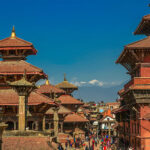
- Bhaktapur Durbar Square — Nepal’s finest medieval city, 13 km east of Kathmandu, with the 55-Window Palace, the Golden Gate, the Nyatapola Temple, and the Pottery Square where traditional potters still work at hand-turned wooden wheels. Plan a full half-day minimum.
- Patan Durbar Square — Considered by art historians to contain the finest concentration of Newari temple architecture in the valley. The Patan Museum is exceptional — one of Asia’s best collections of Buddhist and Hindu metalwork. Across the street from a neighbourhood of stone-paved alleys with courtyards that most tourists never find.
- Kathmandu Durbar Square — The historic royal plaza with the Kumari Ghar (home of the Living Goddess), Hanuman Dhoka Palace complex, and extraordinary carved woodwork on every surface. A cycle rickshaw ride through the surrounding old-city lanes is the ideal way to arrive and explore.
- Changu Narayan — The oldest temple in the Kathmandu Valley (4th century CE), on a hilltop east of Bhaktapur with some of Nepal’s finest stone carvings and a village setting that is entirely free of the tourist infrastructure of the other heritage sites.
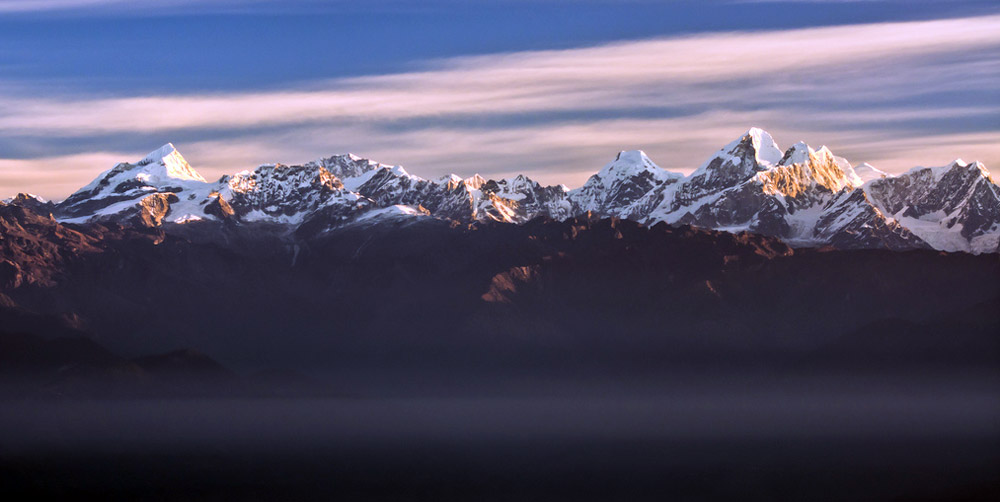
- Nagarkot — The hill town on the eastern rim of the Kathmandu Valley (2,175 m) with famous Himalayan sunrise views from Annapurna to Kanchenjunga. Easily combined with Bhaktapur as a day trip or overnight from Kathmandu.
2. Pokhara — Nepal’s Lakeside Adventure Capital
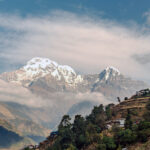
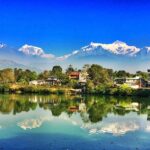
Pokhara is 45 minutes by air or 6–7 hours by road from Kathmandu. The lakeside city at 827 m sits directly beneath the Annapurna massif with Phewa Lake in the foreground and Machhapuchhre (Fishtail Mountain) at 6,993 m in the northern sky. Every Annapurna region trek begins and ends here. It is also, independently, one of Nepal’s finest places to spend time.
- Phewa Lake — The centrepiece of Pokhara. Hire a wooden rowboat, cross to Tal Barahi Temple on the island, or simply watch the mountains reflect in the still water from a lakeside cafe at dawn. Sunset on Phewa Lake is one of Nepal’s most reliably beautiful daily experiences.
- Sarangkot sunrise viewpoint — The hilltop at 1,590 m above Pokhara delivers the most dramatic Annapurna sunrise viewpoint accessible by road. The full massif from Dhaulagiri to Machhapuchhre spread across the northern sky in the first light. Arrive before 5:30 AM.
- Paragliding over Phewa Lake — One of the world’s finest tandem paragliding destinations. Thermals above the lake carry you to 1,800 m with the Annapurna range as a continuous backdrop. 20–60 minutes in the air. Book the first morning slot for best mountain visibility. USD $80–$120.
- Zip-line from Sarangkot — At 1.8 km long and speeds reaching 120 km/h, one of the world’s fastest and longest zip-lines. The landing zone is the lakeside. Annapurna views throughout the flight. USD $60–$90.
- World Peace Pagoda — A gleaming white Japanese-built Buddhist stupa on the southern hillside, reached by a short forest walk from the boat landing. Panoramic views of the lake, city, and mountains from the terrace.
- White-water rafting — Half-day and full-day rafting trips on the Seti River (Grade 2–3, beginner-friendly) or as part of the Trishuli corridor from Kathmandu. See the dedicated rafting section below.
- Gupteshwor Cave and Davis Falls — Two geological curiosities 30 minutes from Lakeside. Davis Falls plunges underground through a sinkhole; the adjacent cave holds a naturally formed Shiva shrine.
3. Bandipur — Nepal’s Most Perfectly Preserved Hill Town
Bandipur sits on a ridge at 1,030 m between Kathmandu and Pokhara — a natural stopping point on the Prithvi Highway that most travellers drive past without stopping. Those who do stop typically wish they had stayed longer. The old bazaar is a UNESCO-linked heritage street of traditional Newari merchant houses with carved wooden windows and stone-paved lanes entirely closed to vehicles. No traffic noise. No honking. Just birdsong, the views, and the unhurried rhythm of a hill town that has resisted modernisation with remarkable success.
- Tundikhel viewpoint — The wide open ridge at the northern end of the bazaar street, with Annapurna, Manaslu, Himalchuli, and Baudha peak spread across the northern horizon. One of the finest mountain views in central Nepal without needing to trek to it.
- Siddha Cave — The largest cave in Nepal (about 600 m deep), accessible via a short downhill walk from Bandipur. Natural stalagmite and stalactite formations in a cathedral-scale cavern. The cave holds significant religious importance and the walk through the surrounding forest is pleasant.
- Khadga Devi Temple — The main temple at the centre of Bandipur’s bazaar, housing a sword (khadga) believed to be the protective deity of the town. The annual Dashain festival celebrations here are extraordinary.
- Bandipur as a stopover — The town works perfectly as an overnight stop between Kathmandu and Pokhara on a road itinerary, breaking what is otherwise a long single-day drive into two pleasant days and adding genuine cultural depth to the journey.
4. Trishuli River Rafting — Nepal’s Most Accessible River Adventure
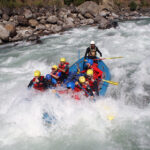
The Trishuli River is Nepal’s most popular and most accessible rafting destination. It runs along the Prithvi Highway between Kathmandu and Pokhara, making it a natural addition to any road-based itinerary without requiring a detour. The river offers Class 2–4 rapids through dramatic gorge scenery with Ganesh Himal and Langtang range visible from the water on clear days.
- Grade and access — The standard Trishuli rafting section runs from Charaudi (80 km from Kathmandu, 3-hour drive) to Kurintar or further. Class 2–3 rapids suitable for all ages and experience levels. Class 3–4 sections further downstream for more experienced paddlers. Can be done as a day trip from Kathmandu or Pokhara, or as an overnight river camp experience.
- Day trip from Kathmandu — Depart Kathmandu at 7:00 AM, drive 3 hours to the put-in point at Charaudi, raft 18–38 km (3–6 hours), riverside picnic lunch included, arrive at take-out point by late afternoon, return to Kathmandu or continue to Pokhara or Chitwan. USD $40–$70 per person.
- Overnight Trishuli experience — Camp on the riverside beach between sessions, evening bonfire, morning bird watching before the second day’s rafting. A genuinely beautiful two-day experience with minimal effort. USD $80–$120 per person for the full package including camping, meals, and equipment.
- Trishuli to Chitwan combination — The Trishuli flows into the Narayani River, which borders Chitwan National Park. Several operators run combined itineraries: raft the Trishuli for 2 days, ending at the Chitwan boundary, then transfer directly into a jungle lodge for 2 nights. One of Nepal’s most satisfying multi-activity sequences.
- Notable rapids — ‘Upset’, ‘Surprise’, ‘S-Bend’, and ‘Pin Ball’ are the named rapids most frequently mentioned by guides. None are technically extreme, but each provides a genuine whitewater rush in spectacular gorge scenery.
5. Chitwan National Park — Asia’s Finest Accessible Wildlife Park
Chitwan is Nepal’s most visited national park and one of Asia’s finest wildlife destinations. The UNESCO World Heritage Site covers 932 km² of subtropical grassland, riverine forest, and sal jungle in the Terai lowlands, and holds extraordinary concentrations of large mammals alongside over 650 bird species.
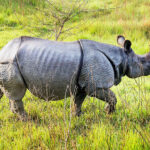
- 4WD jeep safari — Early morning departures (6:00 AM) into the park’s interior offer the best wildlife visibility. One-horned rhino sightings are virtually guaranteed. Bengal tiger sightings occur regularly and Chitwan offers better tiger encounter odds than almost any other accessible park in Asia. Wild elephants, sloth bears, gharial crocodiles, and deer herds are encountered throughout.
- Canoe ride on the Rapti River — A paddle-powered drift along the river corridor at dawn, passing within metres of gharial crocodiles basking on the banks. Exceptional birdwatching from water level — great hornbills, kingfishers, sarus cranes, and Siberian migratory species pass through this corridor.
- Nature walk with a naturalist — A guided walk through the buffer zone and jungle edges at a pace that allows tracking, plant identification, and close observation of smaller wildlife. More intimate than a jeep safari and often more enlightening.
- Tharu cultural village and dance — An evening programme at Tharu community lodges, with traditional stick dance, dhol drumming, and cultural storytelling by the indigenous people of the Terai. The Tharu have farmed and lived within this jungle landscape for centuries.
- Elephant interaction — Community elephant breeding centres allow ethical observation of Asian elephants without riding. Morning grass-cutting sessions alongside mahouts are one of Chitwan’s most immersive experiences.
6. Bardia National Park — Nepal’s Wilder and Quieter Alternative
Bardia National Park in western Nepal is, in the opinion of many serious wildlife travellers, the finer of Nepal’s two major Terai parks. It covers 968 km² — slightly larger than Chitwan — and receives a fraction of the visitor numbers, making wildlife encounters more intimate, the infrastructure more personalised, and the jungle atmosphere more genuinely wild. The tradeoff is distance from Kathmandu: Bardia is 10–12 hours by road from the capital or 1 hour from the nearest domestic airport at Nepalgunj.
- Bengal tiger sightings — Bardia has a growing tiger population (over 125 tigers as of recent counts) and some safari operators report higher per-day tiger encounter rates than Chitwan, partly because the smaller visitor numbers mean tigers are less habituated to constant jeep traffic and therefore behave more naturally.
- Karnali River rafting — One of the finest half-day or full-day river experiences in the Terai. The Karnali flows through the western edge of the park, and a raft or canoe trip on the river offers excellent birdwatching, crocodile sightings (both marsh mugger and gharial), and the possibility of spotting the endangered Gangetic river dolphin — one of the world’s rarest freshwater dolphin species.
- Gangetic river dolphins — Bardia’s Karnali River is one of the last remaining habitats of the endangered Gangetic river dolphin (Platanista gangetica). A dedicated early-morning river boat trip gives a genuine chance of sighting them. The dolphins are smaller than ocean species and somewhat elusive, but a sighting is a genuinely rare wildlife privilege.
- Tharu culture in Bardia — The Tharu communities around Bardia are less commercialised than those near Chitwan and offer a more authentic cultural encounter. Village homestays, traditional cooking demonstrations, and guided community walks are available through most lodges.
- Elephant breeding centre — A working elephant conservation centre adjacent to the park that welcomes visitor observation of the mahout programme. An early-morning visit (5:00–8:00 AM) coincides with the elephants’ morning feed and bath.
7. Lumbini — The Birthplace of the Buddha
Lumbini is approximately 2 hours east of Bardia by road and 1 hour west of Chitwan, placing it naturally on any southern Nepal circuit. As the birthplace of Siddhartha Gautama (approximately 563 BCE) and a UNESCO World Heritage Site since 1997, it is one of the most significant pilgrimage destinations in the Buddhist world.
- Maya Devi Temple and the sacred garden — The exact birth site, with ancient ruins, the sacred Puskarini pond (where the Buddha’s mother bathed before giving birth), and the Ashoka Pillar erected in 249 BCE as the world’s oldest recognised monument marking the birth site.
- International monastic zone — Over 30 monasteries built by Buddhist nations from Japan to Germany to Sri Lanka surround the sacred garden, each in their national architectural tradition. The juxtaposition of a Thai temple beside a Japanese pagoda beside a Tibetan monastery within walking distance is unique in the world.
- Tilaurakot — 27 km west of Lumbini, the archaeological site of ancient Kapilavastu — the city where the historical Buddha spent his first 29 years before renouncing royal life. The excavated ruins of the city gates and palace foundations, largely unvisited by tourists, carry an extraordinary sense of history.
- Meditation in the sacred garden — Several retreat centres and individual meditation teachers offer guided sitting within the sacred garden itself. Dawn meditation beside the Maya Devi Temple, before the tourist groups arrive, is among the most profound experiences available to any traveller in Asia.
8. Manakamana Temple — The Wish-Fulfilling Goddess
Manakamana Temple sits at 1,302 m in the Gorkha district, roughly halfway between Kathmandu and Pokhara. The temple is dedicated to the goddess Bhagwati (a form of Parvati) and is one of the most significant Hindu shrines in Nepal, believed to grant the wishes of devotees who make the pilgrimage. Reached by a spectacular 2.8 km cable car over forested gorges — the oldest in Nepal — it makes an excellent stop on the Kathmandu-to-Pokhara road journey.
- Cable car ride — 10 minutes each way over forested hillsides and deep river gorges, with views of the Marsyangdi valley and the lower Himalaya range. The cable car stations are at Kurintar on the Prithvi Highway and at the temple ridge above.
- The temple and festival atmosphere — Inside the temple compound, the combination of pilgrims from across Nepal performing puja rituals, the incense smoke, the priests, and the mountain views from the ridge creates a living picture of Hindu devotional life that no museum could replicate.
- Practical note — Can be visited as a stop on the drive between Kathmandu and Pokhara (add 2–3 hours to the journey). Best visited on non-festival days for manageable crowds, or on Dashain and Tihar festival days for extraordinary cultural spectacle.
9. Trekking Options That Fit 10 Days
Ten days allows for a complete, satisfying trek in the 5 to 7-day range when combined with 2 days in Kathmandu and 1 day in Pokhara. The best options are:
- Poon Hill Circuit (4–5 days) — Nepal’s most popular short trek. Ghorepani, Ulleri stone steps, Poon Hill sunrise at 3,210 m, Ghandruk Gurung village. Beginner-friendly, well-serviced, and genuinely spectacular.
- Ghandruk Loop (3–4 days) — A shorter Annapurna foothills circuit combining Pothana, Landruk, and Ghandruk, with outstanding views of Annapurna South and Hiunchuli and rich Gurung cultural encounters. Easy to moderate.
- Khopra Ridge (6–7 days) — An off-the-beaten-path Annapurna route reaching 3,660 m at Khopra Danda, with optional sacred lake hike to Khayer Lake (4,700 m), and natural hot spring relaxation at Tatopani on the descent. Moderate.
- Tengboche Trek / Everest View Trek (7 days) — Into the Khumbu from Lukla: Phakding, Namche Bazaar, acclimatisation day, Tengboche Monastery (3,870 m). The Khumbu experience in 7 days. Requires Lukla flight.
- Mardi Himal Trek (5–6 days) — A quiet Annapurna ridge trek reaching 4,500 m with exceptional close-up views of Machhapuchhre and the Annapurna range. Less crowded than Poon Hill. Moderate.
6 Complete Itinerary Ideas for 10 Days in Nepal
All six itineraries start and end in Kathmandu and are designed for travellers without prior technical mountaineering experience. Each is built for a different traveller profile — read the opening paragraph of each to find the one that matches your interests.
Itinerary 1: The Nepal Triangle — Culture, Trekking, and Wildlife
Nepal’s three great experiences in ten days. Two days in Kathmandu’s sacred city, a scenic road journey via Bandipur and Pokhara, four days on the Ghandruk trekking circuit in the Annapurna foothills, and two nights in Chitwan’s jungle. The most balanced and complete 10-day Nepal experience available. Easy to Moderate difficulty.
Outline Itinerary:
Day 01: Arrive Kathmandu — welcome, transfer, city orientation
Day 02: Kathmandu: Pashupatinath, Boudhanath, Patan Durbar Square
Day 03: Drive Kathmandu → Bandipur (4.5 hrs) — old bazaar walk, mountain views
Day 04: Drive Bandipur → Pokhara (2 hrs) — lakeside afternoon, guide briefing
Day 05: Drive Nayapul — trek Pothana (1,860 m)
Day 06: Trek Pothana → Landruk (1,565 m)
Day 07: Trek Landruk → Ghandruk (1,940 m) — Gurung Museum, village explore
Day 08: Trek Ghandruk → Nayapul — drive to Chitwan National Park
Day 09: Full day Chitwan: jeep safari, canoe ride, Tharu village evening
Day 10: Fly Chitwan → Kathmandu — Swayambhunath, departure
The Bandipur overnight on day 3 is what makes this itinerary distinct from the standard Kathmandu-Pokhara road transfer. Rather than a single 7-hour drive, it splits into a comfortable 4.5-hour leg to Bandipur (with the Trishuli river gorge scenery en route) and a 2-hour leg the following morning with spectacular mountain views from the Bandipur ridge on arrival. Ghandruk on days 5–7 is the Annapurna circuit’s most culturally rich short section — Pothana’s forest views, Landruk’s rhododendron corridor, and Ghandruk’s Gurung village life constitute a complete Annapurna experience without pushing above 2,000 m. Chitwan on days 8–9 provides the jungle counterpoint. Day 10 uses the Bharatpur–Kathmandu flight and a final Swayambhunath visit before departure.
Itinerary 2: Trekking Focus — Poon Hill and Pokhara
For trekkers who want to maximise time on the trail. Two days in Kathmandu for cultural grounding, the full Poon Hill circuit in five days including the iconic sunrise at 3,210 m, and two days of well-earned Pokhara lakeside time. The most popular single-activity 10-day Nepal itinerary for first-time trekkers. Easy to Moderate.
Outline Itinerary:
Day 01: Arrive Kathmandu — welcome and rest
Day 02: Kathmandu: Bhaktapur, Boudhanath, Thamel cultural walk
Day 03: Fly Kathmandu → Pokhara — Phewa Lake, guide briefing
Day 04: Drive Nayapul — trek to Tikhedhunga (1,540 m)
Day 05: Trek Tikhedhunga → Ghorepani (2,860 m) via Ulleri stone steps
Day 06: Poon Hill sunrise (3,210 m) → trek to Tadapani (2,630 m)
Day 07: Trek Tadapani → Ghandruk (1,940 m) — Gurung village evening
Day 08: Trek Ghandruk → Nayapul — drive to Pokhara
Day 09: Pokhara free day: paragliding, Sarangkot sunrise, spa, boat on Phewa Lake
Day 10: Fly Pokhara → Kathmandu — departure
This is the straightforward, well-optimised trekking 10-day itinerary. Days 4–8 cover the full Poon Hill loop — Tikhedhunga, Ulleri, Ghorepani, Poon Hill sunrise, Tadapani forest traverse, Ghandruk — at a comfortable pace with one outstanding day (day 6, Poon Hill sunrise) that justifies the entire trip. The Pokhara free day on day 9 is intentionally unstructured. After five days on the trail, the natural response is to want to do nothing specific — take the paragliding if you have energy, take the boat if you don’t, take the spa if your legs need it. Day 10 is an easy 30-minute flight back to Kathmandu with time for a final lunch before the international departure.
Itinerary 3: Everest Region — Tengboche Monastery Trek
The Khumbu experience in 10 days. You will not reach Everest Base Camp in this time — that takes 12–16 days — but you will reach Tengboche Monastery at 3,870 m, walk through Namche Bazaar (the Sherpa capital of the world), cross the Hillary Bridge suspension over the Dudh Koshi gorge, and see Everest, Lhotse, Nuptse, and Ama Dablam from the monastery courtyard. This is the Khumbu without the 5,000 m push. Moderate difficulty. Requires Lukla flight.
Outline Itinerary:
Day 01: Arrive Kathmandu — welcome and city orientation
Day 02: Kathmandu: Pashupatinath, Swayambhunath, Boudhanath, Patan
Day 03: Fly Kathmandu → Lukla (2,860 m) — trek to Phakding (2,610 m)
Day 04: Trek Phakding → Namche Bazaar (3,440 m) — first Everest glimpse
Day 05: Acclimatisation: hike to Hotel Everest View (3,880 m), Khumjung village
Day 06: Trek Namche → Tengboche Monastery (3,870 m) — afternoon puja
Day 07: Trek Tengboche → Monjo (2,835 m)
Day 08: Trek Monjo → Lukla (2,860 m)
Day 09: Fly Lukla → Kathmandu — afternoon: Bhaktapur or Thamel
Day 10: Kathmandu final morning — departure
The acclimatisation day in Namche (day 5) is not optional — at 3,440 m, the body needs it. The hike to Hotel Everest View and Khumjung village uses the day productively: Hotel Everest View holds a Guinness World Record as the highest-altitude hotel on the planet, and the view from its terrace of Everest and the Khumbu peaks over a cup of coffee is one of Nepal’s great experiences. Tengboche Monastery on day 6 is the emotional high point of the itinerary — the building sits at the confluence of the Khumbu’s greatest peaks with the sound of monks chanting in the gompa below. If the timing of arrival allows, the late-afternoon puja ceremony is something that stays with you. The return to Lukla on days 7–8 retraces the route but with the relaxed perspective of the descent — quicker, easier, and equally beautiful in the opposite direction.
Itinerary 4: Trishuli Rafting, Bandipur, and Chitwan Wildlife
Nepal’s finest combination of river adventure, heritage culture, and jungle wildlife — without any mountain trekking. Perfect for travellers who want maximum variety in 10 days or those for whom multi-day hiking is not the priority. Suitable for all ages and fitness levels. Easy overall.
Outline Itinerary:
Day 01: Arrive Kathmandu — welcome, Thamel walk, welcome dinner
Day 02: Kathmandu: Bhaktapur, Pashupatinath, Boudhanath
Day 03: Drive Kathmandu → Trishuli river put-in — full-day rafting → overnight camp
Day 04: Morning rafting, riverside breakfast — drive to Bandipur
Day 05: Bandipur: bazaar walk, Tundikhel viewpoint, Siddha Cave, sunset mountain views
Day 06: Drive Bandipur → Pokhara (2 hrs) — Phewa Lake, World Peace Pagoda
Day 07: Pokhara: Sarangkot sunrise, paragliding, lakeside afternoon
Day 08: Drive Pokhara → Chitwan National Park (5–6 hrs)
Day 09: Full day Chitwan: jeep safari, canoe ride, Tharu cultural evening
Day 10: Fly Chitwan → Kathmandu — departure
This itinerary is Nepal at its most varied — river adventure on day 3 and 4, medieval hilltop heritage on day 5, lakeside adventure activities on day 7, and jungle wildlife on days 8–9. The Trishuli overnight camp (day 3) is one of the most enjoyable nights of any Nepal trip — riverside beach, campfire, stars over the gorge, and the sound of the river. Bandipur on day 5 is the cultural punctuation mark between the river corridor and Pokhara — an afternoon walk through its vehicle-free streets and a sunset over the Himalaya from Tundikhel is one of the most peaceful moments available on any Nepal itinerary. The Pokhara free day on day 7 gives space for paragliding or the zip-line, or simply a morning on Phewa Lake and an afternoon at a Lakeside spa.
Itinerary 5: Southern Nepal — Chitwan, Lumbini, and Bardia
Nepal’s southern Terai belt in 10 days — jungle wildlife, Buddhist pilgrimage, and remote wild forest in sequence. This itinerary visits three UNESCO World Heritage Sites across two national parks and the birthplace of the Buddha. It suits wildlife enthusiasts, cultural travellers, and pilgrims. The Bardia section is particularly rewarding for those who want a wildlife experience away from the Chitwan crowds. Easy to Moderate.
Outline Itinerary:
Day 01: Arrive Kathmandu — welcome, city walk
Day 02: Kathmandu: Boudhanath, Pashupatinath, Kathmandu Durbar Square
Day 03: Fly Kathmandu → Bharatpur — arrive Chitwan National Park
Day 04: Chitwan: morning jeep safari + afternoon canoe on Rapti River
Day 05: Chitwan: nature walk, elephant breeding centre — drive to Lumbini (3 hrs)
Day 06: Lumbini: Maya Devi Temple, sacred garden meditation, monastic zone walk
Day 07: Lumbini: Tilaurakot ruins (ancient Kapilavastu) — drive to Bardia (2 hrs)
Day 08: Bardia: morning jeep safari + Karnali River dolphin and crocodile boat trip
Day 09: Bardia: full-day jungle walk with naturalist — Tharu village evening
Day 10: Fly Nepalgunj → Kathmandu — departure
This itinerary works as a coherent south-to-west journey through the Terai’s three most significant destinations. Chitwan delivers the accessible, well-organised wildlife experience with guaranteed rhino sightings. Lumbini provides the sacred and historical counterpoint — arriving from Chitwan by road takes 3 hours and the contrast between jungle and sacred garden is startling and moving. Bardia is the revelation for most travellers who encounter it: quieter, wilder, and more authentic than Chitwan, with the Karnali River dolphin boat trip adding a genuinely rare wildlife encounter not available anywhere else on the circuit. Tilaurakot on day 7 — the ruins of the ancient city where the historical Siddhartha Gautama spent his first 29 years before his enlightenment journey — is one of Nepal’s most historically significant and least crowded heritage sites. The return flight from Nepalgunj closes the western loop back to Kathmandu.
Itinerary 6: Khopra Ridge Trek with Tatopani Hot Springs
An off-the-beaten-path Annapurna trek for travellers who want something quieter and more challenging than Poon Hill, with a natural hot spring reward at the end. The Khopra Ridge offers panoramic Dhaulagiri and Annapurna views from 3,660 m, an optional sacred lake hike to Khayer Lake (4,700 m), and a long descent to the geothermal springs at Tatopani. Moderate difficulty.
Outline Itinerary:
Day 01: Arrive Kathmandu — welcome and orientation
Day 02: Kathmandu: Swayambhunath, Pashupatinath, Patan Durbar Square
Day 03: Fly Kathmandu → Pokhara — lakeside afternoon
Day 04: Drive Kimche — trek to Tadapani (2,630 m) via Ghandruk
Day 05: Trek Tadapani → Dobato (3,420 m) — optional Muldai Peak summit at dawn
Day 06: Trek Dobato → Upper Chistibung (2,975 m) via high pastures
Day 07: Trek Chistibung → Khopra Danda (3,660 m)
Day 08: Optional: Khayer Lake hike (4,700 m) OR rest — descend to Tatopani (1,190 m)
Day 09: Soak in Tatopani hot springs — drive to Pokhara — fly to Kathmandu
Day 10: Kathmandu: Bhaktapur or free time — departure
The Khopra Ridge is the Annapurna region’s most rewarding quieter alternative to Poon Hill. The trail diverges from the main circuit above Ghandruk and quickly enters territory where you may walk for hours without encountering another trekking group. Dobato on day 5 sits at 3,420 m with views that begin to feel genuinely alpine — the optional pre-dawn ascent of Muldai Peak (3,637 m) from here is a 2-hour round trip in the dark, rewarded by a sunrise that many trekkers describe as superior to Poon Hill due to the absence of crowds. Khopra Danda at 3,660 m on day 7 delivers the full Dhaulagiri, Nilgiri, and Annapurna South panorama that this ridge is famous for. The Khayer Lake extension on day 8 adds 4,700 m and a sacred glacial lake to the experience for those who want it. Tatopani’s natural hot springs on day 9 — geothermal pools beside the Kali Gandaki River — are the perfect physical recovery from five days of mountain trail.
Best Season Month by Month
- October — The single finest month. Post-monsoon clarity, fresh snow on all peaks, stable warm days, cool nights. All six itineraries work at their best.
- November — Continuing autumn clarity. Slightly colder at altitude. Excellent for all itineraries. Less crowded than October on main routes.
- March — Rhododendron forests begin blooming. Good visibility building after winter. Best for Annapurna trekking itineraries (1, 2, 6). Chitwan pleasant.
- April — Peak rhododendron bloom on all Annapurna trails. Warm valleys. The best spring month for all trekking itineraries.
- May — Late spring. Warmer in valleys. Evenings can be hazy. Good for high-altitude treks before monsoon arrives. Chitwan hot but wildlife excellent.
- December–February — Cold at altitude but often spectacularly clear. Best for Chitwan (Itinerary 5) and Lumbini visits. Trekking routes above 3,000 m are quiet and cold. Kathmandu comfortable.
- June–August (monsoon) — Heavy rain on most trekking routes. Lower Mustang, Bardia, and the Trishuli corridor remain viable. Itinerary 4 (rafting with Trishuli in spate) and Itinerary 5 (Terai-only wildlife) work in monsoon with adjustments.
Getting There and Around
- International flights arrive at Tribhuvan International Airport (KTM), Kathmandu. Major connections include Qatar Airways (via Doha), Turkish Airlines (via Istanbul), Air India (direct from Delhi and Mumbai), and Emirates (via Dubai).
- Nepal Tourist Visa on arrival: USD $30 (15 days), USD $50 (30 days), USD $125 (90 days). Bring two passport photos and USD cash. Online e-Visa available at nepalimmigration.gov.np — speeds up arrival process significantly.
- Domestic flights: Kathmandu to Pokhara (30 min, USD $80–$120), Kathmandu to Bharatpur/Chitwan (30 min, USD $80–$100), Kathmandu to Lukla (35 min, USD $160–$200), Kathmandu to Nepalgunj for Bardia (1 hr, USD $100–$140). Book in advance in peak season.
- Road distances: Kathmandu to Pokhara 200 km (6–7 hrs), Kathmandu to Bandipur 160 km (4.5 hrs), Pokhara to Chitwan 160 km (5 hrs), Chitwan to Lumbini 120 km (3 hrs), Lumbini to Bardia 200 km (4 hrs).
Guide Requirement
Solo trekking is no longer permitted for foreign nationals in Nepal from 2025. All trekkers must be accompanied by a licensed Nepali guide. This applies to all designated trekking areas including all routes in this guide. A licensed guide costs USD $25–$50 per day and is included in most reputable operator packages. For non-trekking itineraries (4 and 5), guides are recommended but not legally mandated in urban and cultural areas, though a local naturalist guide is essential for Chitwan and Bardia wildlife activities.
What to Pack
- Moisture-wicking base layers (merino wool or synthetic) — essential for the temperature range from Chitwan (30°C) to Ghorepani at night (5°C)
- Fleece mid-layer and down jacket for trekking itineraries — nights above 2,000 m require real insulation
- Waterproof jacket and trousers — afternoon cloud possible in all seasons
- Trekking boots (broken in) for trekking itineraries; comfortable walking shoes for cultural and wildlife-focused itineraries
- Trekking poles — strongly recommended for descents above 2,500 m
- Sleeping bag rated to -5°C for any teahouse nights above 2,500 m
- UV400 sunglasses and SPF 50+ sunscreen
- Insect repellent — essential in Chitwan, Bardia, and Lumbini
- Water purification tablets or Steripen — treat all water above main towns
- Personal first aid kit: blister pads, Ibuprofen, antihistamine, Imodium, re-hydration salts
- Portable power bank (20,000 mAh) — electricity unreliable in teahouses and jungle lodges
- Nepali Rupee cash — ATMs in Kathmandu and Pokhara; limited in smaller towns and absent on trail and in Terai lodges
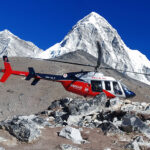
- Travel insurance covering trekking activities, medical treatment, and helicopter evacuation — mandatory for trekking itineraries
Frequently Asked Questions
Is 10 days enough to see the best of Nepal?
Yes — if the itinerary is well designed. Ten days is the right amount of time to go deep into one version of Nepal or to cover the triangle of culture, mountains, and wildlife at a comfortable pace. The travellers who feel they didn’t see enough in 10 days are almost always those who tried to do too much and ended up rushing. Choose one of the six itineraries above, commit to it fully, and ten days will feel exactly right.
Can I do the Everest Base Camp trek in 10 days?
No. The standard Everest Base Camp trek requires 12–16 days minimum when including two days in Kathmandu and accounting for the Lukla flight. The Tengboche Monastery Trek (Itinerary 3 above) is the best 10-day Everest region option — it reaches 3,870 m, takes in Namche Bazaar and Tengboche, and gives you the full Khumbu experience without the EBC commitment.
Is the Trishuli River rafting safe for non-swimmers or older travellers?
The standard Trishuli day-trip section (Class 2–3) is safe for all ages and experience levels including non-swimmers, as life jackets and helmets are provided and the guides are experienced. Most operators accept participants from age 10 upward with no upper age limit provided general health is reasonable. Avoid the Class 4 sections if you have any concerns about physical ability.
When is the best time to see Bengal tigers in Chitwan or Bardia?
The best wildlife visibility in both parks is October to March, when water sources in the park dry up and animals concentrate near rivers, making encounters more predictable. February and March offer excellent conditions — dry, cool, and good vegetation visibility. April and May are warmer but still good. Monsoon (June–September) is least reliable for tiger sightings due to heavy vegetation and high water levels.
Can children do any of these itineraries?
Itineraries 1 and 4 are both highly suitable for families with children aged 8 and above. The Ghandruk loop trek in Itinerary 1 reaches only 1,940 m maximum altitude and involves moderate daily walking distances. Chitwan’s wildlife activities are excellent for children. Itinerary 4 (Trishuli rafting, Bandipur, Pokhara, Chitwan) is essentially a family adventure circuit. The Tengboche trek (Itinerary 3) is feasible for fit children aged 12+ with proper pacing and guide support.
Final Word — The Right Ten Days
Nepal is generous with what it offers in ten days. Most first-time visitors arrive expecting mountains and leave having been changed by something they didn’t expect — the light on Boudhanath at 6:00 AM, the moment a rhino turns and looks directly at their jeep, the pre-dawn quiet on Poon Hill before the mountains catch fire, the sound of monks chanting in Tengboche’s gompa with Ama Dablam outside the window. None of these experiences require weeks of preparation or extreme fitness. They require showing up and being present.
Ten days is enough for all of them, though not all at once. Pick the version of Nepal that you came for. Trust the itinerary. Then allow the country to surprise you with whatever it decides to add.
Recent Posts