11 Days in Nepal Tour
The Complete Guide to Activities, Experiences & Itinerary Ideas
Eleven days is a travel sweet spot. It is long enough to experience Nepal properly, to trek into the mountains, visit ancient temples, and watch rhinos wade through jungle rivers at dawn but short enough to work within a standard two-week holiday allowance. It is also, notably, more than enough. Nepal is a small country geographically, but it is extraordinarily dense in experiences. In eleven days you can see Himalayan peaks up close, cross UNESCO-listed temple squares, sleep in teahouses above 3,000 meters, and sit beside one of the world’s great glacial lakes. The challenge is not filling the time. It is choosing which version of Nepal you most want to explore.
This guide is built around that choice. It opens with a full overview of Nepal’s best activities and experiences. The things that make eleven days here so rewarding then presents seven distinct itinerary options, each designed for a different type of traveler. Whether you want to spend the full eleven days on a mountain trail, split your time between culture and wildlife, find stillness in a monastery, or combine a short trek with Pokhara’s lakeside calm and Chitwan’s jungle, there is an itinerary here shaped for you.
All seven itineraries start and end in Kathmandu. All are achievable without prior technical mountaineering experience. All have been designed by people who know Nepal well, with the kind of specific, honest detail that generic travel articles rarely provide.
Nepal’s Best Activities and Experiences
Before choosing your itinerary, it helps to understand what Nepal offers across its different regions. The experiences below are the building blocks of every itinerary in this guide. Mix and match according to your interests and available time.
1. Trekking — Nepal’s Defining Experience
Nepal is the birthplace of Himalayan trekking and still the world’s finest destination for it. Over 60 designated trekking routes cover the country, ranging from 3-day village walks accessible to beginners to 3-week technical traverses above 5,000 metres. For 11 days, the most rewarding options are the moderate routes that push above 3,000 metres without requiring glacier crossings or technical equipment.
From 2025, solo trekking is no longer permitted for foreign nationals. All trekkers must be accompanied by a licensed Nepali guide. This regulation was introduced for safety reasons and to support local guide communities. Most reputable operators build guide fees into their package costs.
Best trekking options for 11 days
- Poon Hill Circuit (4–5 days) — Nepal’s most popular short trek. Ghorepani, the Ulleri stone steps, and the famous Poon Hill sunrise viewpoint at 3,210 m. Perfectly combined with 2–3 days in Kathmandu and Chitwan or Pokhara.
- Muldai Peak and Mohare Danda (7–8 days) — An off-the-beaten-path Annapurna circuit combining the popular Poon Hill sunrise with the less-visited Muldai Peak (3,637 m) and Mohare Danda ridge. Outstanding mountain views with fewer crowds than the main EBC routes.
- Langtang Valley (7–8 days) — Nepal’s most accessible mountain valley trek from Kathmandu, no flights required. Tamang Buddhist villages, glaciers, and day hikes to 4,700+ m viewpoints from Kyanjin Gompa. Supports communities rebuilding after the 2015 earthquake.
- Pikey Peak (7–8 days) — Sir Edmund Hillary’s declared favourite Everest viewpoint, accessible with no Lukla flight. Seven 8,000 m peaks visible from the summit at 4,065 m, combined with the culturally rich Solu valley and Thupten Chholing Monastery.
- Khopra Ridge (7–8 days) — A quieter Annapurna alternative to Poon Hill, with panoramic Dhaulagiri and Annapurna views, an optional sacred lake hike to Khayer Lake (4,700 m), and natural hot spring relaxation at Tatopani on the descent.
- Ghandruk Circuit (3–4 days) — The shortest full cultural trek in the Annapurna region, centred on the largest Gurung village in Nepal. Front-row views of Annapurna South and Hiunchuli, the Gurung Museum, and traditional village hospitality.
- Everest View Trek (7 days) — The Khumbu region in seven days, reaching Tengboche Monastery and the Hotel Everest View at 3,880 m. No EBC commitment required. Requires a Lukla flight.
2. Kathmandu Valley — Temples, History and Sacred Sites
Kathmandu is not just an airport hub or a logistical overnight stop. It is one of the most culturally dense cities in Asia — a valley that contains seven UNESCO World Heritage Sites within a 20-kilometre radius and has been continuously inhabited since the 1st century CE. Two days here is a minimum; three is better for anyone with genuine cultural curiosity.
Essential Kathmandu experiences
- Boudhanath Stupa — One of the largest Buddhist stupas in the world, surrounded by Tibetan monasteries and butter-lamp shrines. The pre-dawn kora (circumambulation walk) is one of Kathmandu’s most serene experiences. The sound healing and meditation centres clustered around Boudha are among Nepal’s finest.
- Pashupatinath Temple — Nepal’s most sacred Hindu temple on the Bagmati River, a UNESCO World Heritage Site since 1979. The evening aarti ceremony and the riverside cremation ghats offer a frank and profound engagement with life, death, and Hindu ritual. Visit in the late afternoon for the best light and atmosphere.
- Swayambhunath (Monkey Temple) — A hilltop Buddhist stupa dating back to the 5th century CE, with panoramic views of the Kathmandu Valley. Best visited at sunrise. The resident rhesus monkey population adds an entirely different energy to the climb.
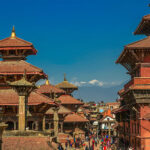
- Bhaktapur Durbar Square — The finest preserved medieval city in Nepal, 13 km east of Kathmandu. The Pottery Square, the 55-Window Palace, the Nyatapola Temple, and the Golden Gate are all remarkable. Plan a full half-day minimum.
- Patan Durbar Square — Considered by many historians to contain the finest concentration of Newari temple architecture in the Kathmandu Valley. The Patan Museum is exceptional — one of Asia’s best collections of Buddhist and Hindu metalwork and religious art.
- Kathmandu Durbar Square — The historic royal plaza at the heart of the old city, with the Kumari Ghar (home of the Living Goddess), the Hanuman Dhoka Palace, and extraordinary carved woodwork. A cycle rickshaw ride through the surrounding old-city lanes is the ideal way to arrive.
- Chandragiri Hills — A cable car ride from Kathmandu’s southwestern edge to a hilltop with views of the Langtang range and, on exceptionally clear days, Everest to the east. A pleasant half-day add-on.
- Cooking classes and cultural experiences — Several Kathmandu operators offer authentic Nepali cooking classes, Newari cultural tours, thangka painting workshops, and guided street food walks through the old bazaars.
3. Pokhara — Nepal’s Adventure and Relaxation Capital
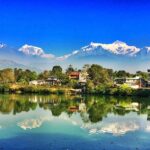
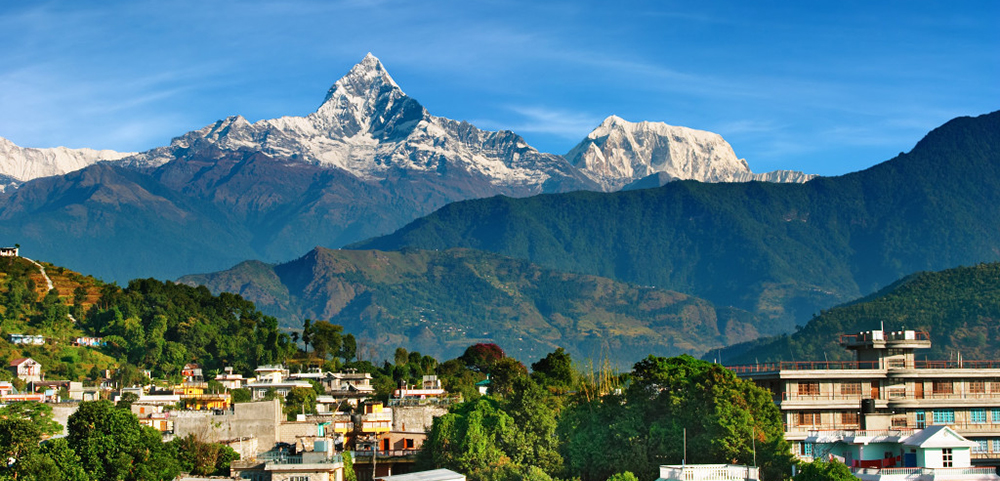
Pokhara is 45 minutes by air from Kathmandu and a world apart in pace and character. The lakeside city at 827 m sits directly beneath the Annapurna massif, with Phewa Lake in the foreground and Machhapuchhre (Fishtail Mountain) at 6,993 m filling the northern sky. It is the pre-trek preparation hub for all Annapurna region routes and equally the post-trek recovery centre — with excellent restaurants, spas, and the most relaxed atmosphere in Nepal.
Best things to do in Pokhara
- Phewa Lake — The centrepiece of Pokhara. Hire a wooden rowboat and drift across the lake to Tal Barahi Temple on the island at the centre, or simply spend the morning watching Machhapuchhre reflected in the still water with a coffee at a lakeside cafe. Sunset on the lake is one of Nepal’s most reliably beautiful experiences.
- Paragliding from Sarangkot — One of the world’s great paragliding destinations, with thermals above Phewa Lake carrying you to 1,800 m with the Annapurna range as backdrop. Takes off from Sarangkot hill (1,590 m) and lands at the lakeside. 20–60 minutes in the air depending on conditions. Book the earliest morning slot for the best mountain visibility.
- Sunrise from Sarangkot Viewpoint — The hilltop at 1,590 m above Pokhara delivers the most dramatic Annapurna sunrise viewpoint accessible by road. Dhaulagiri (8,167 m) to the west, the full Annapurna massif, and Machhapuchhre’s double peak perfectly positioned. Arrive before 5:30 AM for clear skies.
- World Peace Pagoda — A gleaming white Buddhist stupa on a hilltop south of Phewa Lake, reached by a 45-minute forest walk or a short boat ride and steep staircase. Panoramic views of Pokhara, the lake, and the Himalaya from the terrace.
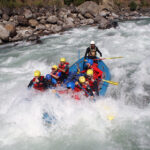
- White-water rafting on the Seti or Trishuli River — Half-day and full-day rafting trips from Pokhara on the Seti River (beginner-friendly, Grade 2–3) or the Trishuli (more demanding, Grade 3–4). The Trishuli gorge scenery is spectacular.
- Ultralight aircraft flight — 15 to 30-minute low-level flights from Pokhara Airport over the lake, the World Peace Pagoda, and the Annapurna foothills. A unique aerial perspective that sits between a helicopter flight and paragliding in terms of experience.
- Yoga and wellness retreats — Pokhara has approximately 15 dedicated yoga centres, several Ayurvedic treatment clinics, and a well-developed spa scene. A single yoga session at a lakeside centre with Annapurna as the backdrop costs USD $10–$20. Full-day wellness packages are widely available.
- Gupteshwor Mahadev Cave and Davis Falls — Two geological curiosities 30 minutes from Lakeside. Davis Falls plunges underground into a sinkhole; the adjacent cave holds a naturally formed Shiva shrine. Unusual and genuinely impressive.
4. Chitwan National Park — Jungle Wildlife and the Terai
Chitwan is one of Asia’s finest wildlife parks and the complete opposite of the mountain experiences that define most Nepal itineraries. The UNESCO World Heritage national park covers 932 km² of subtropical grassland, riverine forest, and sal jungle in the inner Terai lowlands, and holds extraordinary concentrations of large mammals and over 650 bird species.
Best Chitwan experiences
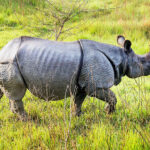
- 4WD jeep safari — The most effective way to access the park’s interior. Early morning safaris (departing at 6:00 AM) offer the best wildlife visibility as animals are active before the heat builds. One-horned rhino sightings are virtually guaranteed; Bengal tiger sightings are frequent and more likely here than in almost any other accessible wildlife park in Asia.
- Canoe ride on the Rapti River — A paddle-powered drift along the river corridor at dawn, within metres of gharial crocodiles on the bank. Exceptional bird watching from water level — great hornbills, kingfishers, storks, and migrating species from Siberia pass through this corridor. Arguably the most peaceful experience at Chitwan.
- Nature walk with a naturalist — A guided walk through the buffer zone and jungle edges, reading animal tracks, identifying plant species, and understanding the park’s ecology at ground level. More intimate than a jeep safari.
- Tharu cultural village visit — The Tharu are Nepal’s indigenous Terai people, with a distinctive architecture, weaving tradition, and a relationship with the forest that predates the national park. Evening cultural dance performances at Tharu lodges bring the community’s history and customs to life.
- Bird watching — Chitwan’s bird list of 650+ species includes Bengal florican, giant hornbill, sarus crane, lesser adjutant stork, and multiple species of eagle and osprey. The best birding is at dawn in the grassland edges and along the river. Bring binoculars.
- Elephant interaction — Community-based elephant breeding centres near Chitwan allow visitors to observe and interact with Asian elephants. Note that elephant rides are no longer offered at responsible operators — the ethical approach focuses on observation and support for the breeding programme.
5. Lumbini — The Birthplace of the Buddha
Lumbini is the birthplace of Siddhartha Gautama — the historical Buddha — in approximately 563 BCE, and one of the world’s most sacred Buddhist pilgrimage sites. A UNESCO World Heritage Site since 1997, the sacred garden surrounding the Maya Devi Temple marks the exact birth site, and surrounding it is a remarkable international monastic zone where countries from Japan to Sri Lanka have built monasteries in their own national architectural traditions.
- Maya Devi Temple — The sacred birth site, with ancient ruins, a sacred pond, and the Ashoka Pillar erected by Emperor Ashoka in 249 BCE marking his pilgrimage to the site. Arrive at dawn for the most meditative atmosphere.
- International monastic zone — Walk through Japanese, Chinese, Korean, Thai, Sri Lankan, German, and French monasteries in a single morning, each built to their own national Buddhist tradition. The contrast and the shared spiritual purpose are both striking.
- Meditation and retreat — Several retreat centres in and around Lumbini offer single-day and multi-day meditation courses in the Theravada, Mahayana, and Tibetan traditions. Meditating in the birthplace of the Buddha in the early morning is among the most profound spiritual experiences available to any traveller in Asia.
- Tilaurakot — 27 km west of Lumbini, the excavated ruins of ancient Kapilavastu — the city where Siddhartha spent his first 29 years before renouncing worldly life. A genuinely moving and historically significant site, rarely crowded.
6. Adventure Activities Beyond Trekking
Nepal is one of the world’s great adventure destinations, and for travellers whose 11 days don’t include a multi-day trek, the country’s adventure activity menu is exceptionally varied.
- Bungee jumping at Bhotekoshi — One of Asia’s highest bungee jumps, 160 metres above the roaring Bhotekoshi River gorge, 3 hours east of Kathmandu on the Arniko Highway. The bridge-based platform and river scenery make this one of the world’s most dramatic bungee sites. USD $75–$120.
- Bhotekoshi white-water rafting — The same river, one of Nepal’s most intense rafting experiences. Grade 4–5 rapids in a deep narrow gorge. Full day including lunch. Not for beginners.
- Trishuli River rafting — A more accessible half-day or full-day Grade 3 rafting experience from Kathmandu, through the broad Trishuli gorge with mountain views. Popular and well-organised. Good choice for families and first-timers.
- Zip-lining at Sarangkot — At 1.8 km in length and speeds reaching 120 km/h, the Pokhara zip line is one of the world’s longest and fastest. The launch point is Sarangkot hill; the landing zone is the lakeside. Annapurna views throughout the flight.
- Mountain biking — Guided day rides from Kathmandu through the valley rim villages, from Pokhara into the Annapurna foothills, or on the off-road singletrack above Bandipur. Nepal’s varied terrain suits all ability levels.
- Rock climbing at Nagarjot (near Kathmandu) — Single and multi-pitch sport climbing on limestone crags within the Nagarjun Forest Reserve. Suitable for beginner to intermediate climbers. Half-day and full-day guided sessions available.
- Himalayan mountain flight — If trekking to Everest Base Camp is out of reach this trip, a 1-hour mountain flight from Kathmandu on a dedicated scenic aircraft takes you along the Himalayan chain at wing level, passing within visual range of Everest, Lhotse, Cho Oyu, and Makalu. Departs daily at dawn. USD $180–$220.
7. Wellness, Meditation, and Spiritual Experiences
Nepal’s Buddhist and Hindu spiritual traditions make it one of the world’s most authentic wellness travel destinations — not in a commercial or manufactured sense, but because meditation, yoga, and spiritual practice have been woven into daily life here for thousands of years.
- Vipassana meditation (10-day course) — Free (donation-based) 10-day silent retreat courses run at centres near Kathmandu and Pokhara in the tradition of S.N. Goenka. Eleven days is the perfect window to complete a Vipassana course and have a day on each side for arrival and departure. The most transformative single experience available in Nepal for serious practitioners.
- Kopan Monastery meditation courses — 1-day to 2-week courses in Tibetan Buddhist meditation above Boudhanath. One of Nepal’s most internationally recognised meditation teaching centres, with instruction in English.
- Tibetan singing bowl healing — Nepal is the world’s primary centre for handcrafted Himalayan singing bowls and their therapeutic use. Single sessions (USD $15–$50) and multi-day courses are available throughout Boudha and Thamel in Kathmandu, and at several Pokhara centres.
- Yoga retreat in Pokhara or Kathmandu — From drop-in morning classes (USD $10–$15) to full week-long retreat programmes. Nepal Yoga Retreat near Nagarjuna Forest and Mukti Yoga in Pokhara are among the most highly regarded centres.
- Ayurvedic treatment — Nepal’s Ayurvedic heritage is genuine and the treatments are significantly more affordable than equivalent experiences in India or Sri Lanka. A full Shirodhara session (warm oil flow on the forehead — deeply calming) costs USD $25–$50. Full Panchakarma detox programmes run 5–7 days from USD $300.
- Monastery retreat stays — Several working monasteries in the Kathmandu Valley and at Namobuddha (1.5 hours east of Kathmandu) offer retreat accommodation with meals, morning and evening puja participation, and meditation instruction. USD $20–$50 per day.
7 Complete Itinerary Ideas for 11 Days in Nepal
Every itinerary below starts and ends in Kathmandu and is designed to be achievable without prior technical mountaineering experience. Each one is built for a different traveller profile — read the opening description to find the one that fits your interests and fitness level.
Itinerary 1: The Classic Nepal Experience
Culture, trekking, and wildlife in one complete circuit. This is the itinerary for first-time Nepal visitors who want to see everything essential — Kathmandu’s temples, a Himalayan sunrise trek, and Chitwan’s wildlife — without feeling rushed. Moderate difficulty.
Outline Itinerary:
Day 01: Arrive Kathmandu — welcome, transfer, rest
Day 02: Bhaktapur Durbar Square + Boudhanath Stupa
Day 03: Kathmandu temples: Pashupatinath, Swayambhunath, Patan
Day 04: Fly to Pokhara — lakeside afternoon + guide briefing
Day 05: Drive Nayapul — trek to Tikhedhunga (1,540 m)
Day 06: Trek to Ghorepani (2,860 m) via Ulleri stone steps
Day 07: Poon Hill sunrise (3,210 m) — trek to Ghandruk (1,940 m)
Day 08: Trek Ghandruk — Nayapul — drive to Pokhara
Day 09: Drive Pokhara → Chitwan National Park
Day 10: Full day: jeep safari, canoe ride, Tharu village
Day 11: Fly Chitwan → Kathmandu — departure
Days 1–3 cover the UNESCO World Heritage highlights of the Kathmandu Valley — Bhaktapur’s medieval streets, the monumental calm of Boudhanath, and the spiritual weight of Pashupatinath. A full day here is the cultural foundation the rest of the trip builds on. The flight to Pokhara on day 4 is short and scenic; the lakeside afternoon is a deliberate decompression before the trek begins. Days 5–8 cover the Poon Hill circuit at a comfortable pace, including the famous Ulleri steps, the rhododendron forests above Ghorepani, and a full sunrise above 3,210 m. Ghandruk on day 7 adds the Gurung cultural layer. Chitwan on days 9–10 completes the Nepal triangle — mountains, culture, jungle — and the jeep safari and canoe combination delivers the best wildlife day of the entire itinerary.
Itinerary 2: Langtang Valley and Kathmandu Culture
A mountain valley trek combined with deep Kathmandu cultural immersion. The Langtang Valley is Nepal’s most accessible long mountain valley from the capital — no flights required, community-based tourism supporting earthquake recovery, and some of the finest Tamang Buddhist culture in the country. Moderate difficulty.
Outline Itinerary:
Day 01: Arrive Kathmandu — welcome and city orientation
Day 02: Kathmandu: Pashupatinath, Boudhanath, Patan Durbar Square
Day 03: Drive Kathmandu → Syabrubesi (7–8 hrs)
Day 04: Trek Syabrubesi → Lama Hotel (2,470 m)
Day 05: Trek Lama Hotel → Mundu / Langtang Village (3,430 m)
Day 06: Trek Langtang → Kyanjin Gompa (3,870 m)
Day 07: Acclimatisation: hike Kyanjin Ri (4,773 m) or Tserko Ri (4,984 m)
Day 08: Trek Kyanjin → Lama Hotel
Day 09: Trek Lama Hotel → Syabrubesi — drive to Kathmandu
Day 10: Kathmandu: Bhaktapur, Swayambhunath, free afternoon
Day 11: Final Kathmandu morning — departure
This itinerary keeps all transport on the road — the 7–8 hour drive to Syabrubesi is an adventure in itself, winding through river gorges and forested hills north of Kathmandu. The Langtang Valley trek builds altitude gradually through magnificent rhododendron and oak forest, passing Tamang villages that are rebuilding and growing stronger since the 2015 earthquake and landslide. Kyanjin Gompa is the valley’s heart — a small monastery, a yak cheese factory, and a high-altitude acclimatisation hike to 4,773 m that reveals the full Langtang range and, on clear days, peaks in Tibet. Day 10 uses the return to Kathmandu for any cultural sites missed at the start — Bhaktapur particularly rewards a second look in the afternoon light.
Itinerary 3: Pikey Peak Trek and Solu Valley Culture
Sir Edmund Hillary’s favourite Nepal viewpoint, combined with the Solu valley’s Buddhist monasteries and traditional Sherpa villages. No Lukla flight required. One of the most rewarding off-the-beaten-track itineraries for any 11-day Nepal trip. Moderate difficulty.
Outline Itinerary:
Day 01: Arrive Kathmandu — welcome and orientation
Day 02: Kathmandu: Boudhanath, Pashupatinath, Thamel
Day 03: Drive Kathmandu → Dhap (2,850 m) — 8 hrs by jeep
Day 04: Trek Dhap → Jhapre (2,900 m)
Day 05: Trek Jhapre → Pikey Peak Base Camp (3,640 m)
Day 06: Summit Pikey Peak (4,065 m) at dawn — descend to Junbesi (2,700 m)
Day 07: Day trip: Thupten Chholing Monastery (3,020 m) above Junbesi
Day 08: Trek Junbesi → Takasindu (2,931 m)
Day 09: Trek Takasindu → Phaplu (2,380 m)
Day 10: Drive or fly Phaplu → Kathmandu
Day 11: Kathmandu morning (Bhaktapur or free time) — departure
The Pikey Peak itinerary works so well over 11 days because it solves the Lukla flight problem entirely. The jeep drive from Kathmandu to Dhap is long but passes through beautiful Solu foothills. The summit day at 4,065 m delivers seven 8,000 m peaks in a single panorama — Everest, Lhotse, Makalu, Cho Oyu, Kanchenjunga, Dhaulagiri, and Manaslu — at dawn, with the clarity that only this altitude and distance from the peaks can provide. The rest day at Junbesi for Thupten Chholing Monastery is the cultural highlight — a working Tibetan Buddhist community of several hundred monks and nuns, founded by one of the great Buddhist teachers of the 20th century, accessible on foot from the village in 90 minutes.
Itinerary 4: Khopra Ridge Trek with Hot Springs
An off-the-beaten-path Annapurna trek combining ridge walking, panoramic Dhaulagiri views, an optional sacred lake hike, and natural hot spring relaxation. Quieter than Poon Hill, more rewarding, and available within 11 days. Moderate difficulty. Optional extension to Khayer Lake (4,700 m) is strenuous.
Outline Itinerary:
Day 01: Arrive Kathmandu
Day 02: Kathmandu: Swayambhunath, Pashupatinath, Patan Durbar Square
Day 03: Fly Kathmandu → Pokhara — guided city tour, lakeside evening
Day 04: Drive Pokhara → Kimche — trek to Ghandruk (1,940 m)
Day 05: Trek Ghandruk → Tadapani (2,630 m) → Dobato (3,420 m)
Day 06: Optional: summit Muldai Peak (3,637 m) at dawn — trek to Chistibung
Day 07: Trek Chistibung → Khopra Danda (3,660 m)
Day 08: Optional: day hike to Khayer Lake (4,700 m) or rest day at Khopra Ridge
Day 09: Trek Khopra → Tatopani (1,190 m) — soak in natural hot springs
Day 10: Drive Tatopani → Pokhara — paragliding or lakeside rest
Day 11: Fly Pokhara → Kathmandu — departure
The Khopra Ridge itinerary is exceptional for trekkers who have already done Poon Hill or want something noticeably quieter. The trail climbs from Ghandruk into terrain that very few non-local trekkers visit, with views of Dhaulagiri that are arguably better than those from Poon Hill because you are higher and the angle is different. The optional Muldai Peak summit (day 6) adds a real mountaineering moment without technical difficulty. Khayer Lake at 4,700 m is a sacred site and a genuinely extraordinary high-altitude destination for fit trekkers. The descent to Tatopani and the natural hot springs finale — soaking tired legs in geothermal water with the Kali Gandaki Valley below — is one of the best trek-conclusion experiences in Nepal.
Itinerary 5: Lower Mustang, Muktinath, and Pokhara
Nepal’s finest rain-shadow trek combined with a sacred Hindu-Buddhist pilgrimage site and generous time in Pokhara. The best itinerary for travellers visiting during the monsoon season (June to August) or those who prefer lower altitudes and minimal altitude risk. Easy to Moderate.
Outline Itinerary:
Day 01: Arrive Kathmandu
Day 02: Kathmandu: Pashupatinath, Boudhanath, Patan
Day 03: Fly Kathmandu → Pokhara — lakeside, World Peace Pagoda
Day 04: Fly Pokhara → Jomsom (2,720 m) — arrive and explore Jomsom
Day 05: Trek Jomsom → Kagbeni (2,900 m) — explore medieval village
Day 06: Trek Kagbeni → Jharkot (3,550 m)
Day 07: Day trip to Muktinath Temple (3,800 m) — sacred Hindu-Buddhist site
Day 08: Trek Jharkot → Jomsom via Lupra Valley (2,790 m)
Day 09: Fly Jomsom → Pokhara — paragliding or yoga retreat afternoon
Day 10: Pokhara: free day — Sarangkot sunrise, boat on Phewa Lake, spa
Day 11: Fly Pokhara → Kathmandu — departure
The Lower Mustang itinerary is the ideal choice for travellers who need a low-altitude, low-risk trek with strong cultural and spiritual content. Jomsom sits at the entrance to the former Kingdom of Mustang — a high-altitude desert plateau north of the Himalayan rain shadow, with the landscape character of Tibet rather than the green hill country of the Annapurna foothills. The wind-scoured Kali Gandaki gorge is the world’s deepest river gorge by some measurements, and the trail through Kagbeni (a beautifully preserved medieval walled village) to the sacred site of Muktinath — one of the most significant pilgrimage sites in the entire Himalayan Buddhist and Hindu world — is one of Nepal’s most spiritually rich short treks. The two days of Pokhara relaxation on the return are the perfect buffer between the austere desert plateau and the journey home.
Itinerary 6: Adventure Nepal — No Trekking Required
For travellers who want the best of Nepal’s adventure activities without committing to a multi-day mountain trek. Bungee jumping, rafting, paragliding, wildlife safari, and mountain views — all within 11 days. Easy overall with bursts of high adrenaline.
Outline Itinerary:
Day 01: Arrive Kathmandu — transfer and rest
Day 02: Kathmandu: Boudhanath, Pashupatinath, Thamel cultural walk
Day 03: Bhaktapur UNESCO tour + Kathmandu Durbar Square rickshaw tour
Day 04: Bhotekoshi bungee jump (one of Asia’s highest) + riverside lunch
Day 05: Trishuli River white-water rafting — full day Grade 3–4 rapids
Day 06: Fly Kathmandu → Pokhara — arrive, lakeside afternoon
Day 07: Sarangkot sunrise + paragliding over Phewa Lake
Day 08: Zip-line at Sarangkot + Poon Hill day hike OR yoga retreat
Day 09: Drive Pokhara → Chitwan National Park
Day 10: Full day Chitwan: jeep safari, canoe ride, Tharu village
Day 11: Fly Chitwan → Kathmandu — departure
This itinerary is built for travellers who want maximum variety and physical thrill within 11 days. The Bhotekoshi bungee on day 4 is one of the world’s great bungee experiences — 160 metres above a roaring river gorge, 3 hours east of Kathmandu on a single-lane bridge. The Trishuli rafting on day 5 offers sustained Grade 3–4 rapids through spectacular gorge scenery. Pokhara provides two of Nepal’s finest aerial activities: paragliding over Phewa Lake (arguably the world’s best tandem paragliding destination) and the Sarangkot zip-line. Chitwan closes the itinerary with the wildlife contrast that makes this such a complete experience — from bungee cords to jungle rivers and Bengal tigers in three days.
Itinerary 7: Spiritual Nepal — Culture, Meditation, and Lumbini
For travellers whose primary interest is spiritual immersion, cultural depth, and inner quietude rather than physical adventure. This itinerary visits Nepal’s most significant sacred sites — including Lumbini, the birthplace of the Buddha — and includes time for meditation, sound healing, and genuine cultural engagement in the Kathmandu Valley. Easy — suitable for all ages and fitness levels.
Outline Itinerary:
Day 01: Arrive Kathmandu — transfer, welcome, rest
Day 02: Boudhanath Stupa: kora walk, sound healing session, meditation
Day 03: Pashupatinath at dawn + Swayambhunath + Patan Durbar Square
Day 04: Bhaktapur full day + Nagarkot sunset and Himalayan sunrise
Day 05: Nagarkot sunrise — drive to Namobuddha Monastery for retreat
Day 06: Fly Kathmandu → Bhairahawa — drive to Lumbini
Day 07: Lumbini: Maya Devi Temple, monastic zone, meditation in sacred garden
Day 08: Lumbini: Tilaurakot ruins (ancient Kapilavastu) + monastery visits
Day 09: Fly Bhairahawa → Kathmandu — afternoon at Kopan Monastery
Day 10: Pokhara day trip: Phewa Lake, World Peace Pagoda, yoga retreat
Day 11: Fly Pokhara → Kathmandu — departure
This itinerary is unlike any other in this guide because it treats the spiritual dimension of Nepal as the primary destination rather than a side note. The sound healing session at Boudha on day 2 sets the tone — a deep immersion in the most significant Tibetan Buddhist hub outside Tibet, with the stupa’s great eyes watching from above and the butter lamps reflecting in the evening dark. Namobuddha on day 5 is one of Nepal’s most sacred and least-visited Buddhist pilgrimage sites, with retreat facilities in a forested hilltop setting. Lumbini on days 6–8 is the emotional centre of the itinerary — three days in and around the birthplace of the Buddha, including the extraordinarily moving Tilaurakot ruins where the historical Siddhartha spent his first 29 years. The Phewa Lake yoga day on day 10 is the soft landing before departure.
Best Season for Each Month
- October — The single best month. Crystal clear post-monsoon skies, fresh snow on the peaks, warm days, and cool nights. All itineraries work perfectly.
- November — Excellent clarity continuing. Slightly colder at altitude. The second-best month overall.
- March — Rhododendrons begin blooming. Good visibility building after winter. Slightly variable weather. Excellent for Annapurna and Langtang treks.
- April — Peak rhododendron bloom (forest treks). Warm and generally clear. The best spring month.
- May — Late spring, warmer in the valleys. Mountain skies still clear early in the month. Busier on main EBC trail.
- December–February — Cold at altitude, quiet on trails, exceptional clarity. Chitwan and Lumbini ideal. Kathmandu comfortable. Some high-pass trails ice-affected.
- June–August (monsoon) — Wet and leechy on most routes. Exception: Lower Mustang (Itinerary 5) is excellent year-round due to its rain shadow position.
Getting to Nepal
- International flights arrive at Tribhuvan International Airport (KTM), Kathmandu. Major connections: Qatar Airways (Doha), Turkish Airlines (Istanbul), Air India (Delhi, Mumbai), Thai Airways (Bangkok), Singapore Airlines (Singapore).
- Visa on arrival available for most nationalities: USD $30 (15 days), USD $50 (30 days), USD $125 (90 days). Bring passport photos and USD cash. Online e-Visa also available at nepalimmigration.gov.np.
- Domestic flights: Kathmandu–Pokhara (30 min), Kathmandu–Bhairahawa/Lumbini (45 min), Bharatpur/Chitwan (30 min). Book well in advance in peak season.
Essential Packing List
- Moisture-wicking base layers + fleece + down jacket — the temperature range from Chitwan (30°C) to Ghorepani at night (5–10°C) demands adaptable layering
- Waterproof jacket and trousers — afternoon cloud and rain possible in all seasons except deep winter
- Trekking boots (broken in before departure) for trekking itineraries; comfortable walking shoes for cultural itineraries
- Trekking poles — strongly recommended for descent days above 3,000 m
- Sleeping bag rated to at least -5°C for teahouse nights above 2,800 m
- UV400 sunglasses and SPF 50+ sunscreen — UV intensity increases significantly with altitude
- Water purification tablets or Steripen — treat all water above teahouse towns
- Headlamp with spare batteries — pre-dawn Poon Hill and Pikey Peak departures require reliable lighting
- Insect repellent — essential in Chitwan and Lumbini
- Personal first aid kit: blister pads, Ibuprofen, antihistamine, re-hydration salts, Imodium
- Portable power bank (20,000 mAh minimum) — electricity unreliable in teahouses
- Sufficient Nepali Rupee cash — ATMs available in Kathmandu and Pokhara, limited or absent on trail
- Travel insurance covering trekking activities, medical treatment, and emergency helicopter evacuation — mandatory
Final Word — Which Nepal Will You Choose?
Every itinerary in this guide is a different Nepal. The Kathmandu of Pashupatinath at dawn and the Kathmandu of Thamel’s gear shops at dusk are the same city and completely different experiences. The Annapurna of the Poon Hill crowds and the Annapurna of Khopra Ridge at 3,660 m with nobody else on the trail are part of the same mountain range and entirely separate encounters with it. Lumbini in the mist at 6:00 AM and Lumbini at peak pilgrimage season are both authentic — just different.
Eleven days gives you enough time to go deep into one of these Nepals, or to take a wide view of several. The travellers who leave Nepal most satisfied are almost always those who made a deliberate choice about which version they were there for — rather than trying to compress every possible experience into a sprint. Read the itineraries, trust your instincts about which one resonates, and then commit to it fully.
The mountains will be the same whether you approach from Pokhara or Lukla or the Solu valley road. The temples have been standing for a thousand years and will be standing long after any single visit. The rhinos in Chitwan have their own schedule that has nothing to do with yours. Nepal is patient. You can always come back for the next version.
Recent Posts