2 Days in Pokhara: The Perfect Travel Itinerary
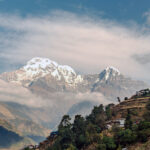
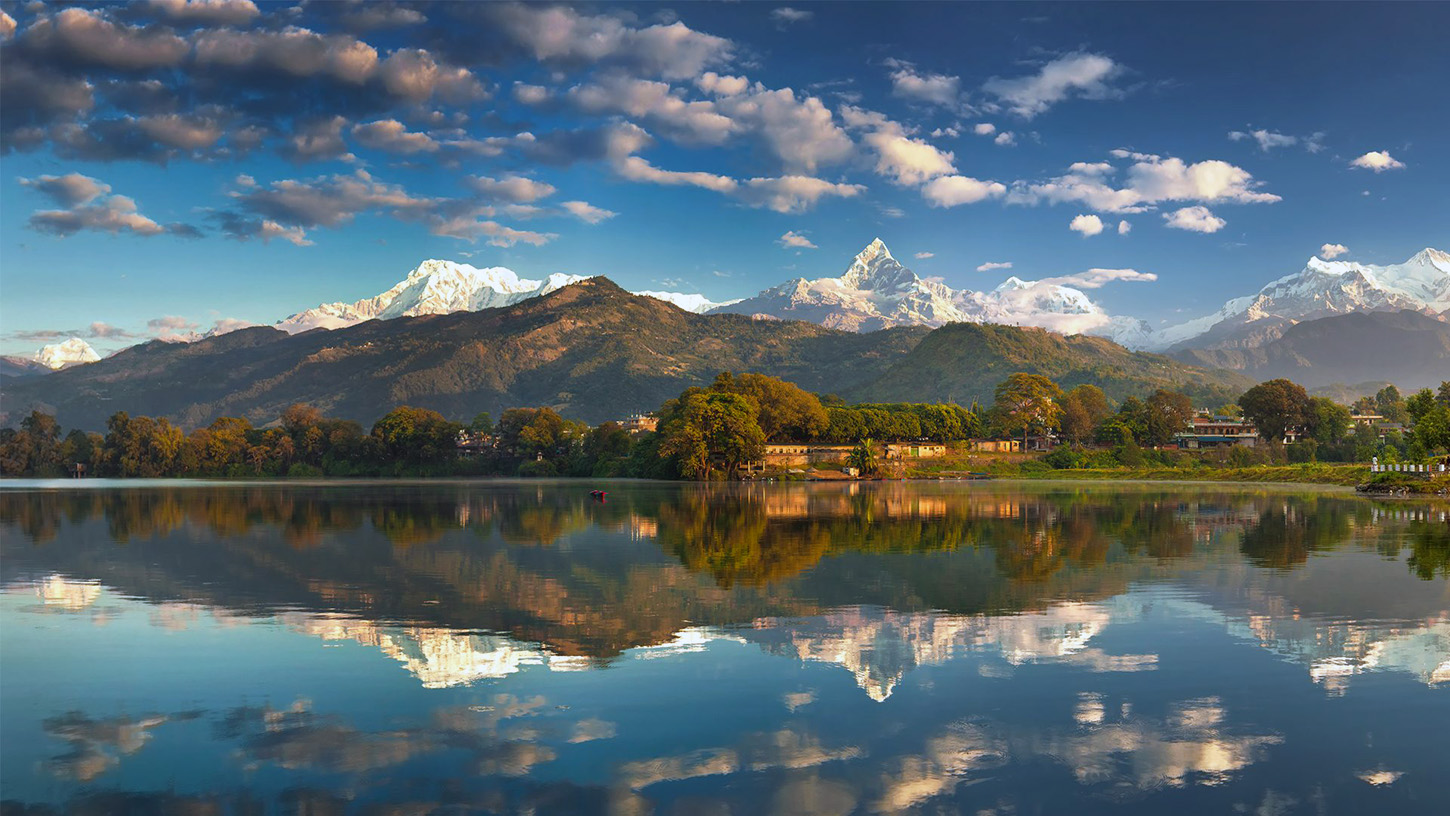
There’s a moment on a clear October morning, standing at the Sarangkot ridge before the valley below has stirred, when Pokhara stops being a city and becomes something harder to categorize. The Annapurna massif — three of the world’s ten highest peaks within 35 kilometers — turns from charcoal to copper to blinding white as the sun clears the eastern hills. Phewa Lake, 800 meters below, holds the reflection with photographic precision. Paragliders are already circling in the thermals, tiny colored specks that look less like aircraft and more like punctuation in an enormous sentence the mountains are writing across the sky.
This is Pokhara’s opening argument. It makes it every clear morning, reliably, and it’s never less than overwhelming.
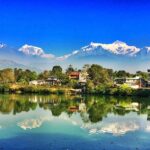
Officially declared Nepal’s tourism capital in 2024, Pokhara sits 200 kilometers west of Kathmandu at 822 meters elevation, cradling Phewa Lake on its southern edge and pressing its northern face against the Annapurna and Dhaulagiri ranges with an intimacy that no other lakeside city in the world replicates. Nine lakes. A river that flows entirely underground through the city before vanishing into a waterfall named after a Swiss man who drowned there in 1961. Four Tibetan refugee settlements that have become permanent cultural communities with functioning monasteries, weaving cooperatives, and 60 years of history. The paragliding launch site with the steepest commercial zipline on earth running off the same ridge. And the Phewa Lake, whose waters are fed by Himalayan glaciers, reflect Machapuchare (Fishtail Mountain) on calm mornings with the kind of doubling that makes you question which version is the real one.
Two days in Pokhara, used well, is enough to feel the shape of all of it. Here’s exactly how.
Day 1: The Mountains, the Lake, the Ridge, and the Sky
4:30 AM — Wake Up Call: Sarangkot Sunrise
Your alarm sounds before Pokhara does. That’s the point.
The drive from Lakeside to Sarangkot takes 20 minutes by taxi, climbing the ridge northwest of the city in darkness through a village that comes alive in stages — a single lit window here, a dog’s bark there, the headlights catching a prayer flag strung across the road. At the viewpoint at 1,592 meters, you arrive in darkness and wait with a handful of other travelers and several Gurung villagers who have watched this sunrise so many times it has become something they barely notice anymore.
Then it begins. Not all at once. First Machhapuchhare — the sacred Fishtail peak that has never been summited due to its religious status — brightens before everything else, its twin peaks catching the pre-dawn light while the valley below is still completely dark. Then Annapurna South. Then the cascade along the entire range from Dhaulagiri (8,167 meters) in the west to Manaslu (8,163 meters) in the east, 200 kilometers of high Himalayan wall igniting in sequence like a slow fuse burning west to east. By the time the sun fully clears, Phewa Lake below has turned from black to silver to the particular deep blue that makes all its postcards look like digital composites even when you’re standing above the actual thing.
Budget approximately 2 hours. Carry layers. The ridge is genuinely cold before dawn regardless of season.
7:30 AM — Breakfast at Sarangkot with Mountain Views
Don’t rush back to Lakeside. Several small teahouses on the Sarangkot ridge serve breakfast with the mountain view still at full intensity before the morning haze builds. Dal bhat, eggs, milk tea, fresh bread — the food is simple, the backdrop is not. This is one of the few places in Nepal where you can eat breakfast with a 360-degree mountain panorama including three peaks above 8,000 meters and a lake reflection far below. Spend it slowly.
Best stalls are just below the main viewpoint platform, slightly cheaper and less crowded.
9:30 AM — Paragliding off the Sarangkot Ridge
While you were eating, pilots have been setting up on the launch slope below the viewpoint. Now it’s your turn.
Pokhara’s paragliding consistently ranks among the world’s top five flying destinations by professional pilots — not for the spectacle alone but because the thermal conditions are unusually reliable and the visual reward of the Annapurna range at eye level with Phewa Lake directly below is genuinely extraordinary. Tandem flights run 20 to 30 minutes from launch to the lake-edge landing zone, and in that window you cover more visual ground than most people manage in an entire day on the ground: the full mountain panorama, the city’s nine lakes laid out below you, the river gorge cutting through the urban fabric, the ring of hills containing the valley.
Your pilot reads thermals and finds the rising columns of warm air that extend the flight, and the silence between you and the mountain — no engine, just wind and altitude — is the thing people report remembering longest.
Cost: NPR 6,000 to 8,000. Book pilots certified by the Nepal Paragliding Association. Avoid the cheapest options on the street.
11:30 AM — Phewa Lake: Rowing to Tal Barahi Temple
Back at Lakeside, the lake is operating at full morning volume — over 750 wooden boats called doongas lining the shore in a tangle of color. Rent one for yourself and row south toward the small island at the lake’s center where the Tal Barahi Temple sits, a two-tiered pagoda dedicated to Goddess Barahi rising from the water surrounded by ancient trees. The lake here reflects Machhapuchhare directly below the temple’s roof, and the shot has been taken by approximately every photographer who’s visited Pokhara in the last 40 years. It’s still worth taking.
The rowing itself is gentle — Phewa is calm, fed by glacial streams from the Annapurna watershed, and the boat traffic has a logic to it once you’ve been on the water for a few minutes. Take your time. The lake local legend says the valley was once a prosperous settlement whose inhabitants refused hospitality to a wandering goddess, who then flooded it entirely. The sole compassionate family escaped to higher ground; their descendants built the Tal Barahi Temple above where the rest of the valley sank. The lake is, in this telling, a punishment that became a paradise — which is a more interesting story than most lakes can claim.
Cost: NPR 500 to 800 per hour. Negotiate before departing, agree a price for the round trip to the island.
1:00 PM — Lunch at Lakeside
Pokhara’s Lakeside strip runs several kilometers along the lake’s northern shore and contains more eating options per square meter than anywhere else in Nepal outside Thamel. The difference from Thamel is pace — Lakeside moves slower, the restaurants have lake views, and the clientele is a mix of trekkers finishing Annapurna routes and travelers who’ve deliberately avoided any trail more demanding than a lakeshore stroll.
For local food, look slightly away from the main drag — the lanes running one block back from the lakefront have the dal bhat places that the returning trekkers know about. For something more varied, the rooftop restaurants facing west have afternoon mountain views. The sel roti (deep-fried rice doughnut rings) sold from small stalls near the boat landing are one of Pokhara’s specific pleasures and should be eaten warm.
Set aside 90 minutes. This is not a meal to rush.
3:00 PM — World Peace Pagoda (Shanti Stupa) at Sunset
The World Peace Pagoda sits on Anadu Hill on the southern shore of Phewa Lake, at approximately 1,000 meters — a gleaming white Buddhist stupa 115 feet tall and 344 feet in diameter, built over eight years by Japanese Buddhist monks and completed in 1996. Getting there is half the experience. The most rewarding approach: take a wooden boat from the Lakeside landing across to the south shore, then walk the forest trail uphill for 45 minutes through dense woodland that opens suddenly onto the hilltop platform with Phewa Lake far below and the Annapurna range filling the entire northern horizon.
The pagoda itself is architecturally restrained and deliberately so — the simplicity is the point. Four golden Buddha statues face the four cardinal directions. The platform runs all the way around the stupa, and walking it clockwise gives you a full 360-degree view: Phewa Lake and its eastern shores behind you, Pokhara city to the north, the Himalayan wall ahead, and forested hills in every direction. The sunset from here, when the mountains catch the last light and the lake below turns orange, is one of Pokhara’s most photographed moments and one of the most genuinely earned.
Alternative access: taxi to the south shore, 20 minutes. The forest hike one way and boat the other is the recommended combination.
7:00 PM — Evening at Lakeside
Pokhara’s evenings belong to its Lakeside strip in a way that feels effortless rather than forced. The restaurants set up outdoor seating facing the lake as the mountain silhouettes go dark, the fairy lights come on across the water, and the returning paragliders settle into their post-flight accounts. Live music emerges from several of the bars facing the water, ranging from the expected (acoustic covers, Nepali pop) to the occasional unexpected (a restaurant near the central market runs outdoor cinema screenings some evenings, with seating in the forest edge and pizza from a wood-fired oven).
The local Everest and Gorkha beers are cold and affordable. The momos at any of the smaller restaurants tucked into the side streets are excellent. The night market near the old bazaar area sells Tibetan handicrafts, Newari silver work, and trekking gear at prices that reward genuine comparison shopping.
Stay up late enough to see if the mountains are catching moonlight. On full moon nights, the Phewa Lake reflection is extraordinary.
Day 2: Gorge, Cave, Waterfall, and the Quiet Lake They Don’t Tell You About
8:00 AM — Seti River Gorge and Mahendra Cave
Pokhara’s most geologically startling feature is not the mountains. It’s the Seti River, which flows through the city entirely underground for much of its course, carved into the porous limestone rock by millennia of glacial meltwater pressure. At several points across the city — Mahendra Pul, K.I. Singh Bridge, Prithvi Narayan Campus — you can look down from a street-level bridge into a gorge 30 to 40 meters deep where the milky turquoise river is just visible at the bottom of a slot canyon that is in some places barely wider than a car. The scale is disorienting: you’re standing in a city, on an ordinary road, looking into what appears to be a geological wound in the earth’s surface.
Mahendra Cave, 3 kilometers northeast of the city center, is one of the points where the Seti’s subterranean journey becomes accessible. The cave is a substantial limestone system with two chambers, stalactite and stalagmite formations, and a resident population of bats in the inner sections. Local legend associates the cave with meditation by a Hindu sage, and a small shrine inside is in active use. The cave entrance is dramatic — a sudden descent into cool, damp darkness from the warm morning air outside.
Entry: NPR 100. Bring a small flashlight or use your phone — the inner sections are genuinely dark.
10:00 AM — Devi’s Falls and Gupteshwor Mahadev Cave
Devi’s Falls — Patale Chhango in Nepali, meaning “underworld waterfall” — is fed by overflow from Phewa Lake’s dam and drops through a narrow gorge before vanishing into a 500-foot-long underground tunnel. The story of the name is grim and specific: in 1961, a Swiss couple was swimming near the falls when the water level rose suddenly. The woman survived; the man named David did not, his body found weeks later at a river exit kilometers away. The falls took the name of the man it took.
Directly across the road, Gupteshwor Mahadev Cave contains a self-manifested Shiva lingam discovered in the 16th century, the cave system extending underground to a point where, during monsoon, the roar of Devi’s Falls is audible through the rock. The combination of a Hindu sacred site and a geologically connected waterfall that operates by disappearing underground is exactly the kind of Pokhara detail that doesn’t quite fit any standard tourism category. Visit both. The connection between them — the water from the lake that feeds the falls, the cave that captures its sound — rewards thinking about.
Both are within 200 meters of each other and easily combined in 90 minutes.
11:30 AM — International Mountain Museum
Opened in February 2004 in Ratopahiro, the International Mountain Museum is one of Nepal’s most substantive and undervisited museums — a serious institution housing the combined mountaineering, cultural, and ecological history of the Himalayan world across well-designed permanent galleries. The building sits in a location where three mountains above 8,000 meters are visible from the museum grounds on clear days, which is an unusual design choice that works.
The permanent collection covers: all 14 eight-thousanders and their ascent histories, the geology of Himalayan formation, the ethnic communities of the mountain world (Sherpa, Gurung, Thakali, Magar culture documented in genuine depth), the flora and fauna of alpine ecosystems, and a remarkable gallery of historical mountaineering equipment — ice axes, oxygen bottles, down suits, and summit photographs from expeditions stretching back to the early 20th century. The library is the best English-language resource on Himalayan history available in Pokhara. It is quiet, air-conditioned, and completely off most visitors’ radar.
Entry: NPR 300 for foreigners. Set aside a minimum of 2 hours — more if Himalayan history genuinely interests you.
2:00 PM — Tibetan Settlement at Tashi Palkhel
Pokhara has four Tibetan refugee settlements — Jampaling, Paljorling, Tashi Ling, and Tashi Palkhel — established after 1959 when Tibetan refugees crossed the Himalayas following the Chinese takeover of Tibet. What began as emergency camps became permanent communities over six decades: each settlement has its own gompa (Buddhist monastery), community structure, schools, and cottage industries. Tashi Palkhel, west of the city near Hyangja, is the largest and most organized for visitors — the monastery holds morning and evening prayer sessions, the carpet weaving workshops produce traditional Tibetan designs using century-old techniques, and the community market sells jewelry, textiles, and ritual objects made entirely within the settlement.
Walking through Tashi Palkhel is walking through a specific piece of 20th-century history that chose Pokhara as its home. The people you encounter are Tibetans who have built their lives within a kilometer radius, maintaining a culture from a country many of them have never been able to return to. The thangka paintings visible in workshop windows, the prayer wheels spinning at the monastery entrance, the butter lamp smell in the air at morning puja — it’s a world apart from the Lakeside tourist strip, even though it’s only 20 minutes away by taxi.
Morning puja around 6 AM and evening puja around 6 PM are the most atmospheric times to visit. The carpet workshop welcomes visitors throughout the day.
4:30 PM — Begnas Lake at Golden Hour
While Phewa gets the postcards, Begnas Lake, 15 kilometers east of Lakeside, gets the evenings that serious travelers talk about afterward. Nepal’s third-largest lake sits in a broad valley between rolling hills, its surface calm in a way that Phewa — with its tourist boat traffic and lakeside construction — rarely manages. There are 36 recorded species of water birds, fishing cooperatives operating from dugout canoes in the late afternoon, and a surrounding landscape of terraced farmland and mango orchards that belongs more to rural Nepal than to a tourist destination.
Arriving at Begnas for the golden hour, when the sun drops toward the western hills and the lake surface turns the specific amber that only happens in the last 45 minutes before dusk, is one of Pokhara’s most quietly extraordinary experiences. The mountains are visible to the north — Manaslu and the Annapurna range — but at a distance that emphasizes the valley rather than overwhelming it. Sit at one of the small lakeside restaurants, order tea, watch the fishing boats come in, and understand that this is the version of Pokhara that exists beyond the postcard.
A taxi from Lakeside costs NPR 600 to 800 one way. Allow 2 hours at minimum. Return before dark — the road between Begnas and Pokhara is narrow and poorly lit.
7:00 PM — Final Evening on Lakeside
The second evening at Pokhara arrives with the specific mellowness of a city you now actually know. You’ve been on the lake, above it, across it, and seen the version of it 15 kilometers east that most visitors miss entirely. The mountains have revealed themselves across two days of different light. The underground river is somewhere below the streets, invisible. The Tibetan monastery is three kilometers west, its butter lamps burning at the evening puja.
Dinner at one of the lakefront restaurants with a view of the Annapurna silhouettes in moonlight, or in the backstreet Newari-influenced restaurants near the old bazaar if you want something less choreographed. Either way, the city earns the sitting-still.
Practical Information for Your 2 Days in Pokhara
Getting There The 25-minute domestic flight from Kathmandu (NPR 8,000 to 12,000 one way) is efficient and delivers aerial mountain views on the right side of the aircraft. The 6 to 7-hour tourist bus (NPR 800 to 1,500) follows the Trishuli River gorge and passes through Malekhu and Muglin — dramatic road scenery with a quality of road that makes the journey feel considerably longer than the map suggests. A private car runs NPR 8,000 to 12,000 and allows Bandipur as a midpoint stop, which significantly improves the deal.
Where to Stay Lakeside’s northern shore houses the majority of guesthouses and mid-range hotels, with lake views available from NPR 2,000 to 6,000 per night. The southern shore has the luxury properties — positioned for unobstructed mountain views and quieter access to the lake. Budget travelers should look at the lanes behind the main Lakeside strip, where guesthouses cost NPR 800 to 1,500 with clean rooms and no view premium.
Best Season October and November are peak clarity months — post-monsoon air, stable weather, and the sharpest mountain visibility of the year. March and April add rhododendron bloom in the surrounding hills. December through February is cold at altitude (below 10°C some mornings) but delivers extraordinary clear-sky mountain views. Avoid trekking and outdoor adventures in monsoon (June through August) but note that Pokhara’s lakeside restaurants and cultural sites remain entirely accessible.
Money and Costs ATMs on the main Lakeside strip accept international cards. Budget travelers can operate on $30 to $50 per day covering accommodation, meals, and a couple of activities. The paragliding and zipline are the day’s biggest single expenses; everything else — boat rental, cave entry, museum — is affordable by any international standard.
Make Your Pokhara Trip Perfect with Getaway Nepal Adventure
Two days in Pokhara works when the logistics are already handled — the right driver who knows which viewpoint actually catches the clearest light at which hour, the paragliding company whose pilots have the certification and the local knowledge that comes from flying this valley daily for years, the guesthouses that balance location with value, and the itinerary flexibility to push Begnas to the morning and move the cave circuit to the afternoon when you realize the light at Sarangkot is going to be exceptional.
Getaway Nepal Adventure builds Pokhara itineraries that way around specific travelers, specific timing, and the kind of ground-level detail that only comes from genuine local experience. Based in Kathmandu and registered with the Nepal Tourism Board, TAAN, and the Nepal Mountaineering Association, the company manages everything from the airport transfer that starts your trip to the restaurant recommendation that ends your last evening. Pokhara is generous with its rewards. The right planning just makes sure you’re in the right place to receive them.
Recent Posts