Sacred Nepal Tour
Nepal is not simply a destination. It is one of the most spiritually charged landscapes on earth — a country where Hinduism and Buddhism have woven themselves into the daily fabric of life for over 2,000 years, where sacred rivers, ancient temples, and high-altitude pilgrimage sites create an atmosphere of devotion that is felt long before it is understood.
This ten-day journey is designed for groups who come to Nepal not for trekking peaks or packed sightseeing schedules, but for something quieter and deeper: the spiritual energy of Pashupatinath at dusk, the silence of a monastery at dawn, the steam of natural hot springs after a mountain road, the lake at Pokhara perfectly still in the early morning, the Muktinath flame burning where water and fire meet at 3,800 meters. Every day has space built into it. Every evening has stillness.
This is not a tour that checks boxes. It is a journey that accumulates slowly — like a meditation practice — until on the flight home you realize that something in you has shifted, and you are not entirely sure when it happened.
Day-by-Day Programme
Day 01 Arrival in Kathmandu
Welcome. Settle in. Let Nepal arrive at its own pace.
▲ Altitude: Kathmandu: 1,400 m above sea level • → Travel Time: Airport to hotel: 30 to 45 minutes
Your Getaway Nepal Adventure representative meets you at the arrivals gate at Tribhuvan International Airport and transfers you by private vehicle to your hotel in the Thamel or Boudhanath area. The first evening in Kathmandu is intentionally unscheduled.
Walk the streets at your own pace. Let the sounds, the incense, the evening temple bells, and the flow of daily life settle around you without a guide’s commentary. Dinner at a quiet restaurant near the hotel. Early night in preparation for tomorrow’s spiritual circuit.
Today’s program:
- Private airport transfer to hotel
- Welcome briefing from your Getaway Nepal Adventure guide
- Free evening — optional gentle walk around the Boudhanath or Thamel neighborhood
- Recommended: an early night to adjust to the time zone before a rich Day 2
Day 02 Pashupatinath Temple and Boudhanath Stupa
Nepal’s two most sacred sites — experienced slowly and with intention.
▲ Altitude: Kathmandu: 1,400 m above sea level • → Travel Time: Within the city — all by private vehicle
Day 2 is the spiritual heart of the Kathmandu chapter. Both sites represent the two great traditions that have shaped Nepal’s spiritual culture: the Shaivite Hindu tradition at Pashupatinath and the Tibetan Buddhist tradition at Boudhanath. Visiting them on the same day, slowly and with reflection between, creates a remarkable sense of the spiritual landscape you are standing inside.
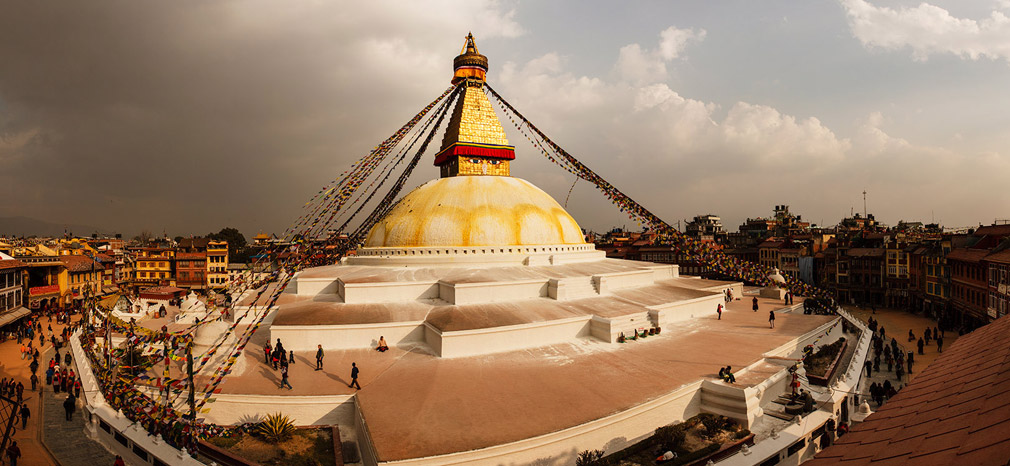
The morning begins at Boudhanath Stupa before 6:30 AM, when the circumambulation walk is at its most atmospheric. The monastery windows are lit, monks chant from the upper floors, butter lamps burn along the plinth, and the great stupa rises in the pale morning light above the turning prayer wheels. Walk three clockwise circuits in the tradition of the devotees around you. Sit for a while on the stone seating at the stupa’s base. There is nowhere else to be.
The afternoon moves to Pashupatinath Temple on the sacred Bagmati River. The Arya Ghat cremation area and the wide stone steps leading down to the water are best visited in the late afternoon as the light softens. The evening aarti ceremony, performed by priests beginning at approximately 6:00 PM, is one of the most spiritually charged public rituals in Asia: fire, flower offerings, chanting, river, smoke, and the sound of bells. Arrive by 5:30 PM. Allow the ceremony to unfold without rushing it.
Today’s program:
- 6:30 AM: Boudhanath Stupa dawn kora walk (1.5 to 2 hours)
- Morning: Return to hotel, free time for journaling, reading, or rest
- Lunch at leisure near the hotel
- 3:00 PM: Depart for Pashupatinath Temple by private vehicle
- 3:30 to 5:30 PM: Pashupatinath exploration — ghats, sadhus, Shikhara-style temple complex
- 5:30 to 7:00 PM: Evening aarti ceremony at the Arya Ghat
- Optional: Evening singing bowl session at a Boudhanath centre after return
- Dinner at leisure
Day 03 Kathmandu to Bandipur
Leaving the city for Nepal’s most perfectly preserved hilltop heritage town.
▲ Altitude: Bandipur: 1,030 m above sea level • → Travel Time: Kathmandu to Bandipur: approximately 4.5 hours by private vehicle
Bandipur is one of Nepal’s most beautiful and least-visited heritage destinations — a medieval Newari trading town on a ridge 160 kilometres west of Kathmandu, entirely free of vehicle traffic. Carved wooden shopfronts and traditional courtyard houses line a single stone-paved bazaar street. The Annapurna and Manaslu ranges are visible from the Tundikhel viewpoint at the northern end of the bazaar on clear mornings. The town has a quality of silence that urban Nepal rarely provides.
The drive from Kathmandu follows the Prithvi Highway west through the Trishuli river gorge, with the river visible below the road for much of the journey. The ascent to Bandipur from the highway takes 20 minutes on a winding mountain road. Arrival in the mid to late afternoon allows time to walk the heritage bazaar at leisure, with the light falling on the carved wooden facades in the last hour before dusk.
Today’s program:
- Morning: Final Kathmandu breakfast, optional brief Swayambhunath visit (vehicle approach, 30 minutes)
- 9:00 AM: Depart Kathmandu for Bandipur by private vehicle
- En route stop: Manakamana Cable Car (optional, adds 2 hours) — sacred hilltop Bhagwati Temple above the Trishuli gorge
- 2:00 PM: Arrive Bandipur, hotel check-in
- Afternoon: Heritage bazaar walk at leisure — Khadga Devi Temple, carved wooden shopfronts, traditional craftsmen
- 4:30 PM: Tundikhel viewpoint for the Himalayan panorama and sunset
- Evening: Free time in the vehicle-free streets
- Dinner at the hotel — local Newari and Nepali cuisine
Day 04 Bandipur to Jomsom by Road
The ancient trading corridor — the full Kali Gandaki road journey.
▲ Altitude: Jomsom: 2,720 m above sea level • → Travel Time: Bandipur to Pokhara: 2.5 hours | Pokhara to Jomsom: approximately 6 to 7 hours by road
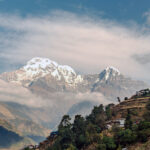
Today is one of the great road journeys in Nepal — and in the Himalayan world. The drive from Pokhara north through the Kali Gandaki gorge to Jomsom follows the ancient trading corridor that connected India and Tibet for centuries. The road climbs through subtropical foothills before entering the dramatic gorge landscape where the world’s two highest non-Everest mountains, Dhaulagiri (8,167 m) to the west and Annapurna I (8,091 m) to the east, flank the river valley on either side. No flight can give you what the road gives you: the gradual revelation of the landscape changing altitude by altitude, the smell of the air shifting from subtropical humidity to high-plateau dryness, and the unhurried sense of genuinely arriving somewhere that took the journey to reach.
The road passes through Nayapul, Kusma, Beni, the Malarangi gorge, Tatopani (a preview of Day 6 and the natural hot springs), Ghasa, Kalopani (where Dhaulagiri’s north face rises directly above the road at breathtaking proximity), and Marpha — the apple orchard village with stone-paved lanes, traditional Thakali architecture, and the finest apple cider in Nepal. A lunch stop in Marpha is strongly recommended.
Jomsom at 2,720 metres is a small town on the Kali Gandaki river with a strong wind that blows consistently from mid-morning — a wind so reliable that locals call it the Jomsom wind. Because the altitude gain is gradual by road, the body acclimatises naturally through the drive. The first evening is restful and unhurried.
Today’s program:
- 7:30 AM: Depart Bandipur after an early breakfast
- 10:00 AM: Pokhara — brief Phewa Lake viewpoint stop if time allows
- Continue north through Nayapul, Beni, and into the Kali Gandaki gorge
- Planned stops: Tatopani riverside (preview of Day 6, 20 minutes), Kalopani Dhaulagiri viewpoint (20 minutes)
- Lunch stop: Marpha village — apple orchards, stone-paved lane, Thakali dal bhat (1 hour)
- 5:00 PM: Arrive Jomsom, hotel check-in
- Drink 3 to 4 litres of water — essential from this altitude onward
- Evening: Gentle walk along the Kali Gandaki riverbed as the wind drops at dusk
- Dinner and early night — Muktinath is best visited in the morning
Day 05 Muktinath Temple and Kagbeni Village
The sacred confluence of fire and water at 3,800 metres.
▲ Altitude: Muktinath: 3,800 m | Kagbeni: 2,810 m | Jomsom: 2,720 m • → Travel Time: Jomsom to Muktinath: approximately 1.5 hours by jeep | Muktinath to Kagbeni: 45 minutes | Kagbeni to Jomsom: 30 minutes
Muktinath is one of the most sacred pilgrimage destinations in the entire Himalayan world, revered simultaneously by Hindus and Tibetan Buddhists. For Hindus, it is one of the 108 Divya Desams — sacred shrines of Vishnu — and one of the 51 Shakti Peethas. For Tibetan Buddhists, it is associated with Guru Rinpoche and considered one of the 24 Tantric sites of the Himalayan tradition.
What makes Muktinath uniquely powerful is the Jwala Mai shrine: a natural eternal flame that burns continuously from a crack in the rock beside a small stream. Fire and water meeting in a single sacred point at 3,800 metres — a phenomenon that defies rational explanation and that pilgrims have been travelling to witness for over a thousand years. The 108 stone water spouts around the temple complex pour continuously from the Himalayan snowfields above, each one a point of sacred purification. Walk among them slowly. Allow time for private reflection.
The return to Jomsom via Kagbeni includes an hour in the beautiful gateway village of Upper Mustang — a medieval walled settlement at the confluence of two rivers, with a fortress gompa at its centre and the Nilgiri peak (7,061 m) visible to the south. Walk the narrow lanes, sit beside the river, and feel the edge of the forbidden kingdom at your back.
Today’s program:
- 8:00 AM: Depart by jeep for Muktinath from Jomsom
- 9:30 AM: Arrive Muktinath (3,800 m)
- 9:30 to 11:30 AM: Muktinath exploration — Vishnu temple, Jwala Mai flame and water shrine, 108 stone water spouts, Buddhist gompa above the temple, views toward the Thorong La pass
- Allow time for personal prayer, reflection, or simply sitting in silence at this sacred site
- 11:30 AM: Depart Muktinath for Kagbeni
- 12:15 PM: Arrive Kagbeni (2,810 m) — village walk, Red Gompa, riverside time (1 hour)
- 1:30 PM: Lunch at a Kagbeni teahouse — local Thakali food
- 2:30 PM: Return to Jomsom
- Afternoon: Rest, journaling, or personal reflection time in Jomsom
- Evening: Free time — watch the Jomsom sunset from the riverbank
Day 06 Jomsom to Tatopani — Descending to the Hot Springs
The mountains give way to warmth. The body gives way to rest.
▲ Altitude: Tatopani: 1,190 m above sea level • → Travel Time: Jomsom to Tatopani: approximately 4 to 5 hours by jeep
The descent from Jomsom through the Kali Gandaki gorge to Tatopani is one of the finest mountain road journeys in Nepal. The route passes southward through Marpha again (with fresh eyes after the Muktinath experience), through Kalopani and the Dhaulagiri view that never loses its impact, and down through Ghasa and Tatopani. The gorge deepens as you descend, the vegetation returns, and the dry plateau air gives way to warmth and humidity.
Tatopani — literally ‘hot water’ in Nepali — announces itself before you arrive: the smell of sulphur from the geothermal springs that have been drawing pilgrims and travellers to this point on the Kali Gandaki for centuries. The natural hot spring pools at Tatopani are fed by geothermal water at 38 to 45 degrees Celsius. Stone-lined outdoor pools beside the river receive the spring water directly. Soaking in them with the river below and the Annapurna ridges visible above is one of Nepal’s most simply restorative physical experiences.
This evening after three days at altitude is the transition point of the journey. The body descends, warms, and releases. The mind, which has been at 3,800 metres and inside ancient sacred temples, settles into a different kind of spaciousness. This evening is for the springs, a Thakali dinner, and rest.
Today’s program:
- After breakfast: Check out of Jomsom and depart by jeep
- Planned stops: Marpha village (30-minute walk through the orchard lanes), Kalopani Dhaulagiri viewpoint (20 minutes)
- 1:30 PM: Arrive Tatopani (1,190 m), hotel check-in and lunch
- 3:00 PM: Natural hot spring bath — allow 1.5 to 2 hours at leisure
- Bring swimwear and a towel
- Evening: Free time by the river
- Dinner: Thakali set meal — dal bhat, seasonal vegetables, local pickle, warming soup
- Early night — the body deserves full rest after five mountain days
Day 07 Tatopani to Pokhara — Arrival at the Mountain Lake
The Annapurna range above. Phewa Lake below. The most beautiful city in Nepal.
▲ Altitude: Pokhara: 820 m above sea level • → Travel Time: Tatopani to Pokhara: approximately 5 hours by private vehicle
The drive from Tatopani to Pokhara follows the Kali Gandaki south and then turns east through the Annapurna foothills on the Beni-Pokhara highway. The road climbs through terraced farmland, rhododendron forest, and hill villages before descending toward the Pokhara valley. Machhapuchhre — Fishtail Mountain — appears above the valley rim on the final approach, its double peak unmistakeable. Then Phewa Lake opens below.
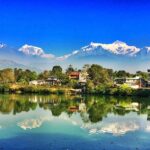
The Pokhara arrival is always a moment of visual relief: the mountains are still here, but now they are above a lake. The afternoon is designed with minimal programme. Check in to the lakeside hotel. Walk to the water. Hire a wooden rowboat if the energy is there, or simply sit at a cafe with the mountain reflection and allow the journey so far — Kathmandu, Bandipur, the Kali Gandaki road, Muktinath, the hot springs — to settle quietly.
Today’s program:
- After breakfast: Check out of Tatopani and depart by private vehicle
- En route: Beni Bazaar brief stop — river confluence viewpoint
- 2:00 PM: Arrive Pokhara, hotel check-in
- Afternoon: Free — Phewa Lake walk, optional rowboat crossing to Tal Barahi island temple
- 5:00 PM: Optional Sarangkot drive (30 minutes) for the Annapurna sunset panorama
- Evening: Dinner at leisure at the Lakeside — organic, vegetarian, and international options available
Day 08 A Full Day of Rest in Pokhara
The schedule is empty. This is intentional.
▲ Altitude: Pokhara: 820 m above sea level • → Travel Time: No travel today — a full rest and reflection day
Day 8 is the most important day in the itinerary and the most unusual in any group travel programme: it is a day with no scheduled activities. The reason is deliberate. A journey through sacred sites, high altitude, and emotionally resonant landscapes accumulates a quality of experience that needs time to settle. Day 8 gives that time.
The Phewa Lake at dawn, when the water is still and the Annapurna reflection perfect, is available to those who rise for it. The World Peace Pagoda walk through forest (45 minutes each way) suits those who want to move in silence. The International Mountain Museum is available for those who want cultural context for the landscapes they have just travelled through. The lakeside spa, a Pokhara singing bowl session, a boat on the lake, a long breakfast with a mountain view, a book on a balcony — all available. Nothing is compulsory.
The group reconvenes in the evening for a communal farewell dinner — the final shared meal before the journey home begins. This is the natural time to sit together with the Annapurna range above the lake in the last light.
Today’s program:
- Morning: Phewa Lake at dawn (optional) — the most beautiful free experience in Pokhara
- Breakfast at leisure
- Day programme — choose freely:
- Rowboat crossing to Tal Barahi island temple
- World Peace Pagoda forest walk (45 minutes each way, walking pace)
- Sarangkot sunrise drive (5:30 AM departure for those who wish)
- Singing bowl healing session at a Lakeside centre
- Spa and Ayurvedic massage
- International Mountain Museum (2 hours)
- Simply rest, read, and be still by the lake
- Evening: Group communal farewell dinner — shared reflections on the journey
Day 09 Pokhara to Kathmandu — Return and Free Time
The final city. The familiar again — but seen with different eyes.
▲ Altitude: Kathmandu: 1,400 m above sea level • → Travel Time: Pokhara to Kathmandu: 25 minutes by domestic flight | Or 6 to 7 hours by road (scenic option on request)
The return to Kathmandu is by the 25-minute domestic flight. The Kathmandu Valley below looks different on the way back from the way it looked on arrival. Most travellers notice it.
The afternoon and evening in Kathmandu are entirely free. The last day in any spiritual journey deserves personal space for whatever each person needs: a final Boudhanath kora, a return to Pashupatinath to complete something left unfinished, shopping for prayer flags or thangkas or singing bowls in Thamel, a cooking class, a final quiet sit at a monastery, or simply a long unhurried dinner at a favourite restaurant from the first days.
Your Getaway Nepal Adventure coordinator is available throughout the day for any requests or recommendations.
Today’s program:
- Morning: Pokhara breakfast and check out
- Domestic flight: Pokhara to Kathmandu (25 minutes) — mid-morning departure
- Private vehicle transfer to Kathmandu hotel
- Afternoon and evening: Completely free — personal final day in Nepal
- Suggestions:
- Return visit to Boudhanath or Pashupatinath for private reflection
- Bhaktapur or Patan Durbar Square if not yet visited
- Thamel — singing bowls, thangkas, prayer flags, Himalayan herbal teas
- Newari cooking class with a local family (half day — bookable in advance)
- Final massage or sound healing session
- Your coordinator can arrange any of the above on request
Day 10 Departure from Nepal
Carry Nepal home quietly.
▲ Altitude: Kathmandu: 1,400 m above sea level • → Travel Time: Hotel to airport: 30 to 45 minutes
The final morning. Depending on your flight time, there may be a few hours for a last Boudhanath dawn walk or a quiet hotel breakfast before the departure transfer. Your Getaway Nepal Adventure representative accompanies you to the airport.
Nepal has a way of staying with you. The mountains do not leave the memory. The evening aarti at Pashupatinath returns unprompted, sometimes months later. The Muktinath flame burning between rock and water. The hot spring evening in Tatopani after the cold of the plateau. The stillness of the Jomsom morning before the wind arrived. These are not souvenirs. They are experiences that become part of how you understand your own life.
Safe travels. Namaste.
Today’s program:
- Final hotel breakfast at leisure
- Private vehicle transfer to Tribhuvan International Airport
- Check-in and departure — carrying something of Nepal home
What is Included
Included
- 9 nights accommodation — comfortable guesthouses and boutique hotels at each destination
- Private vehicle with driver for all overland transfers including the full Kali Gandaki road to Jomsom
- Domestic flight: Pokhara to Kathmandu on Day 9
- Private expert guide with deep knowledge of Nepal’s sacred and cultural heritage
- Daily breakfast throughout; full board (breakfast, lunch, dinner) from Day 4 to Day 7
- All entrance fees, monument fees, and temple entry fees
- Natural hot spring entry at Tatopani
- Airport transfers on arrival and departure
- 24-hour coordination support throughout the journey
Optional Additions
- Manakamana Cable Car and temple visit on Day 3 en route (adds 2 hours, USD 15 per person)
- Singing bowl healing session at Boudhanath — Day 2 evening or Day 9 (USD 20 to USD 50 per person)
- Cooking class in Kathmandu on Day 9 (half day, USD 35 per person)
- Ayurvedic massage in Pokhara on Day 7 or 8 (USD 20 to USD 40 per person)
- Scenic mountain flight over Everest or Annapurna from Kathmandu or Pokhara (USD 180 to USD 400 per person)
- Extended stay at any destination on request
Not Included
- International flights to and from Kathmandu
- Nepal Tourist Visa (USD 50 per person / 30 days)
- Lunches and dinners on Days 1, 2, 3, and 9 (Day 10 final morning only)
- Personal expenses, tips, souvenirs, and personal items
- Travel insurance — strongly recommended including medical and evacuation cover
Practical Information
Altitude and Health
The highest point of this journey is Muktinath at 3,800 meters on Day 5. Because the journey to Jomsom is by road, the altitude gain is gradual — approximately 1,900 meters over a full day of driving — giving the body natural acclimatization time. Mild altitude symptoms (headache, mild breathlessness) may occur on the first morning in Jomsom or at Muktinath and are entirely normal. Drink three to four liters of water daily from Day 4 onward. Avoid alcohol above 2,500 meters. The entire Jomsom to Tatopani section descends quickly on Day 6, returning to 1,190 meters. No acclimatization rest day is formally required with the road approach, but the gentle pace of Day 4 evening and Day 5 morning serves this purpose naturally.
What to Pack
- Warm layers including a down jacket for Jomsom evenings (5 to 10 degrees Celsius at night) and Muktinath mornings.
- Comfortable walking shoes for village and temple sites throughout.
- Swimwear and a towel for the Tatopani hot springs.
- Sunscreen SPF 50 and UV400 sunglasses — the sun at altitude is significantly stronger than at sea level.
- Journal and pen — many spiritual travellers find the writing practice as valuable as the sites.
- Reusable water bottle — staying hydrated is the most important health practice at altitude.
- Dust mask or buff for the Jomsom road sections, which can be dusty in dry weather.
Best Season
- October to November: The finest months. Clear post-monsoon skies, freshly snowed mountains, sharp visibility from Muktinath and Jomsom.
- February to April: Excellent spring conditions. Building mountain visibility and rhododendron bloom on the Tatopani to Pokhara section.
- The Kali Gandaki valley is one of Nepal’s most reliably accessible routes year-round, including the monsoon season, due to its rain-shadow character.
Come and Let Nepal Find You
The most meaningful travel does not happen when you are rushing between sights on a packed schedule. It happens in the pauses: the moment at Boudhanath when the chanting above you and the prayer wheels turning beside you create a single sensory impression that lodges somewhere deeper than memory. The Muktinath flame burning between rock and water at 3,800 meters. The hot spring steam rising in the Tatopani evening. The Pokhara lake perfectly still at 6:00 AM with the mountain above it.
This journey was designed to give your group access to all of these moments — and then to step back and let the moments do what they do. Nepal will handle the rest.
To book the Sacred Nepal Spiritual Journey, contact Getaway Nepal Adventure with your group size, preferred travel dates, and any specific dietary or accommodation requirements. We will design the final program around your group.
Recent Posts