9 Days in Nepal Tour
Nine days sits in an interesting place on the Nepal travel calendar. It is one day short of the tidy round number that most itinerary guides focus on, which means it is often underserved as a planning window. In practice, nine days is plenty. It gives you enough time for a proper five to seven day trek, two full days in Kathmandu, and a Pokhara or Chitwan bookend. Or it fits a relaxed cultural circuit through the valley and southern Nepal without a single mountain trail. Or a multi-day rafting adventure on the Sun Kosi combined with Kathmandu’s temples and Chitwan’s jungle. The nine-day format is genuinely flexible.
This guide is structured exactly the same way as the 10 Days and 11 Days guides in this series. The first half covers Nepal’s best activities and experiences across every major region, with honest practical detail on what each involves. The second half presents six distinct itinerary ideas for nine days, each written for a different type of traveller. All itineraries start and end in Kathmandu. None require technical climbing experience.
Nepal’s Best Activities and Experiences
These are the building blocks of any nine-day Nepal itinerary. Understanding what each region and activity genuinely offers makes choosing the right combination much easier.
1. Kathmandu Valley
Kathmandu is not simply a gateway city. The valley contains seven UNESCO World Heritage Sites within a 20-kilometre radius, a medieval streetscape that has been continuously inhabited for over a thousand years, and a spiritual atmosphere generated by centuries of Buddhist and Hindu practice that is immediately felt on arrival. Two days here is the right minimum for a nine-day trip. It allows one day for the major spiritual sites and a second for the medieval cities.
Key Kathmandu experiences
- Pashupatinath Temple on the Bagmati River is Nepal’s most sacred Hindu site and one of the most significant Shaivite temples in Asia. The evening aarti ceremony and the Arya Ghat cremation area beside the river are the most direct encounters with Hindu spiritual practice available to any visitor. Arrive at dusk and stay for the full ceremony.
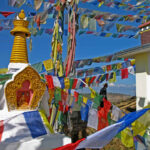
- Boudhanath Stupa is one of the world’s largest Buddhist stupas and the global centre of Tibetan Buddhist practice outside Tibet. The pre-dawn circumambulation walk around its base, with monks chanting from monastery windows and butter lamps burning along the plinth, is Kathmandu’s finest morning experience.
- Swayambhunath, the hilltop stupa on the western rim of the valley, dates from the 5th century CE and offers panoramic views over Kathmandu. Best at sunrise. The resident rhesus monkeys, the prayer wheel corridor, and the watching eyes of the Buddha on the gilded tower make this one of Nepal’s most photographed sites.
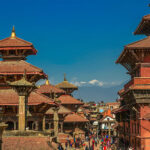
- Bhaktapur is Nepal’s finest surviving medieval city, 13 kilometres east of Kathmandu. The Pottery Square, the 55-Window Palace, the Nyatapola Temple, and the Golden Gate together make up one of Asia’s most concentrated collections of ancient architecture. A full half-day is the minimum to appreciate it properly.
- Patan Durbar Square contains the finest Newari temple architecture in the valley and the Patan Museum, which holds one of Asia’s best collections of Buddhist and Hindu metalwork. The courtyards and stone-paved alleys of the surrounding Mangal Bazaar neighbourhood are equally rewarding.
- Kathmandu Durbar Square is the historic royal plaza with the Kumari Ghar (house of the Living Goddess), the Hanuman Dhoka Palace, and extraordinary carved woodwork on every surrounding surface. Arriving by cycle rickshaw through the old-city lanes is the ideal approach.
- Nagarkot on the eastern valley rim at 2,175 metres offers famous Himalayan sunrise views stretching from Annapurna to Kanchenjunga, with Everest visible on clear days. Works well as an overnight trip from Kathmandu combined with a full-day visit to Bhaktapur.
2. Pokhara
Pokhara is 45 minutes by air from Kathmandu and sits at 827 metres on the northern shore of Phewa Lake, directly beneath the Annapurna massif. It is simultaneously Nepal’s adventure capital and one of its most restful destinations. Every Annapurna trek begins and ends here. It is also worth spending time in for its own sake.
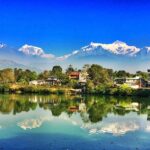
- Phewa Lake at dawn, when Machhapuchhre’s double peak reflects in the still surface, is one of Nepal’s most consistently beautiful daily experiences. Hire a wooden rowboat, cross to the island temple of Tal Barahi, or simply sit at a lakeside cafe and let the mountains come to you.
- Paragliding from Sarangkot Hill is one of the world’s finest tandem paragliding experiences. Thermals carry you to 1,800 metres with the Annapurna range spread across the northern horizon. The landing zone is the lakeside. Book the first morning slot for the best mountain visibility. The experience typically lasts 20 to 60 minutes depending on conditions.
- Sarangkot viewpoint at 1,590 metres delivers the most dramatic pre-dawn Annapurna panorama accessible by road. Dhaulagiri to the west, the full Annapurna massif, and Machhapuchhre directly ahead. Arrive before 5:30 AM for the sunrise.
- The Pokhara zip-line from Sarangkot is 1.8 kilometres long and reaches speeds of 120 kilometres per hour, making it one of the fastest and longest in the world. The landing zone is the lakeside area. Annapurna views throughout the flight.
- The World Peace Pagoda sits on a forested hilltop south of Phewa Lake. Reach it by a short boat crossing and a steep staircase through forest, or by a 45-minute forest walk. The terrace gives panoramic views of Pokhara, the lake, and the mountains.
- White-water rafting on the Seti River (Grade 2 to 3, beginner-friendly) offers a half-day adventure from Pokhara through the upper Seti gorge with mountain views. A good choice for adding a gentle river experience without committing to a full-day Trishuli run.
3. The Panchase Trek
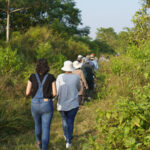
Panchase is one of Nepal’s most overlooked short treks and one of the best suited to a nine-day itinerary. The trail begins just west of Pokhara on the opposite shore of Phewa Lake and climbs through dense rhododendron and oak forest to the Panchase ridge at 2,517 metres, before descending through a series of Gurung villages to the Annapurna foothills. The maximum altitude is low enough that altitude sickness is essentially not a concern, the views of Annapurna, Dhaulagiri, Machhapuchhre, and the Pokhara Valley are outstanding, and the trail sees a fraction of the foot traffic of the Poon Hill or Ghandruk routes.
Panchase Hill is considered sacred by both Hindus and Buddhists. Local tradition holds the ridge as the meditation site of several ancient saints, and the Panchase Lake near the summit has religious significance for pilgrims from surrounding Gurung villages. The trek typically takes four to five days from Pokhara, making it ideal combined with two days in Kathmandu and two days of Pokhara activities.
The trail starts with a boat ride across Phewa Lake to the western shore, immediately providing one of the trip’s finest moments before a single step has been taken on foot. From the landing point the path climbs through forest past several small Magar and Gurung villages to Panchase Bhanjyang, the high ridge with its panoramic viewpoint at 2,517 metres, before descending through Bhadaure village to Naudanda and returning to Pokhara by road.
4. Poon Hill Circuit
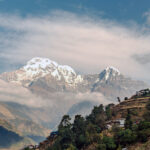
Nepal’s most popular short trek fits comfortably into nine days when combined with two days in Kathmandu and a final day in Pokhara. The circuit from Nayapul through Tikhedhunga, Ulleri, Ghorepani, and Poon Hill is the best mountain sunrise viewpoint in Nepal accessible without altitude risk. At 3,210 metres, Poon Hill delivers a panoramic arc of Dhaulagiri (8,167 metres), Annapurna I (8,091 metres), Annapurna South, Hiunchuli, Nilgiri, Lamjung Himal, and Machhapuchhre illuminated in the first morning light.
The famous Ulleri stone staircase on day one of the trek is one of Nepal’s most talked-about trail features. Over 3,000 stone steps rise steeply from the Modi Khola valley to Ulleri village, then the path continues through increasingly dense rhododendron and oak forest to Ghorepani. In spring (March to April) the forest between Ulleri and Ghorepani is covered in rhododendron bloom in red, pink, and white. In autumn, the same forest is golden, the air is crystalline, and the mountain views are at their sharpest.
The return from Ghorepani can go through Tadapani and Ghandruk for those wanting the full Gurung cultural experience, or directly back to Nayapul for those with less time. Ghandruk at 1,940 metres is the largest Gurung village in the Annapurna region, with a museum documenting the Gurkha military heritage, traditional stone-paved lanes, and the most intimate close-up view of Annapurna South available anywhere on the circuit.
5. Tamang Heritage Trail
The Tamang Heritage Trail runs north of the Kathmandu Valley through a series of traditional Tamang villages that have maintained their cultural character more completely than almost anywhere else accessible to short-stay trekkers. The trail takes five to seven days depending on pace and can be combined with two days in Kathmandu to fill nine days almost perfectly, with no domestic flights required.
The Tamang people have strong cultural ties to Tibetan Buddhism, distinctive artistic traditions, and a history of relative isolation in these northern hills. The villages of Gatlang, Tatopani, and Nagthali are the highlights. Gatlang at 2,238 metres is the largest village, with stone-paved lanes, an ancient chorten, a working gompa, and traditional farmhouses whose architecture has changed little over centuries. The natural hot springs at Tatopani, fed by geothermal sources in a forested river gorge, are one of the trail’s most anticipated rewards. Nagthali Ghyang at 3,165 metres offers sweeping views of Langtang Lirung, Ganesh Himal, and Jugal Himal.
The Tamang Heritage Trail was developed specifically to support sustainable tourism and channel economic benefit directly to Tamang communities that were heavily affected by the 2015 earthquake. Trekking here is a conscious choice as well as an enjoyable one. Village homestays are available throughout the route for those who want a more immersive cultural experience than standard teahouses provide.
6. Gosaikunda Sacred Lakes
Gosaikunda Lake sits at 4,380 metres in the Laurebina massif north of Kathmandu and is one of the most sacred sites in the Hindu-Buddhist world. The lake is believed to have been created by Lord Shiva’s trident, and it draws thousands of Hindu pilgrims during the Janai Purnima festival each August. Outside the festival period, the approach to Gosaikunda is quiet, the trail through Langtang National Park is well maintained, and the lake itself is one of the most atmospherically powerful places in Nepal.
The standard approach from Dhunche or Syabrubesi ascends through Sing Gompa (3,330 metres) to Laurebina Yak (3,921 metres) before the final push to the lake. For nine days, the most satisfying version continues over the Laurebina La Pass (4,610 metres) and descends into the Helambu region, completing a point-to-point journey that concludes at Melamchi Pul Bazar for the road return to Kathmandu.
Gosaikunda in the early morning, with the blue-black lake perfectly still and the surrounding peaks lit by the first sun, is a genuinely extraordinary sight. The spiritual atmosphere is tangible in a way that exceeds most natural beauty experiences. Pilgrims arrive by the thousands in August; at any other time the lake and its surroundings are serene.
7. Sun Kosi Multi-Day Rafting
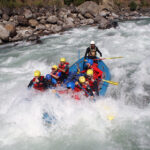
The Sun Kosi is Nepal’s most celebrated multi-day river and one of the finest white-water experiences in Asia. Known as the River of Gold, it runs east through the Mahabharat range from its source near the Tibetan border for approximately 270 kilometres before joining the Sapt Kosi near the Indian border. The standard multi-day rafting section takes eight to ten days in full, but a condensed five-day version running the most spectacular sections is available for nine-day itineraries combined with two days in Kathmandu.
The river offers Class 3 to 5 rapids through remote gorge scenery, with camping on sandy beaches between sessions each evening. The setting is genuinely wild. No roads follow this river. Villages are accessed by foot trail only. The ratio of scenery, rapids, and riverside camping to effort required makes the Sun Kosi one of Nepal’s most memorable experiences for travelers whose priority is adventure over trekking.
The best season for Sun Kosi rafting is October to December (post-monsoon, high and clear water) and April to May (spring, moderate water levels). The river runs through the Sapt Kosi region of eastern Nepal and ends near Chatara, from where the return to Kathmandu takes approximately eight hours by road. Operators include full equipment, all camping meals, safety kayakers, and experienced river guides in the package price, which typically ranges from USD 150 to USD 350 per person for the five-day version.
8. Chitwan National Park
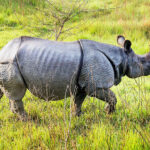
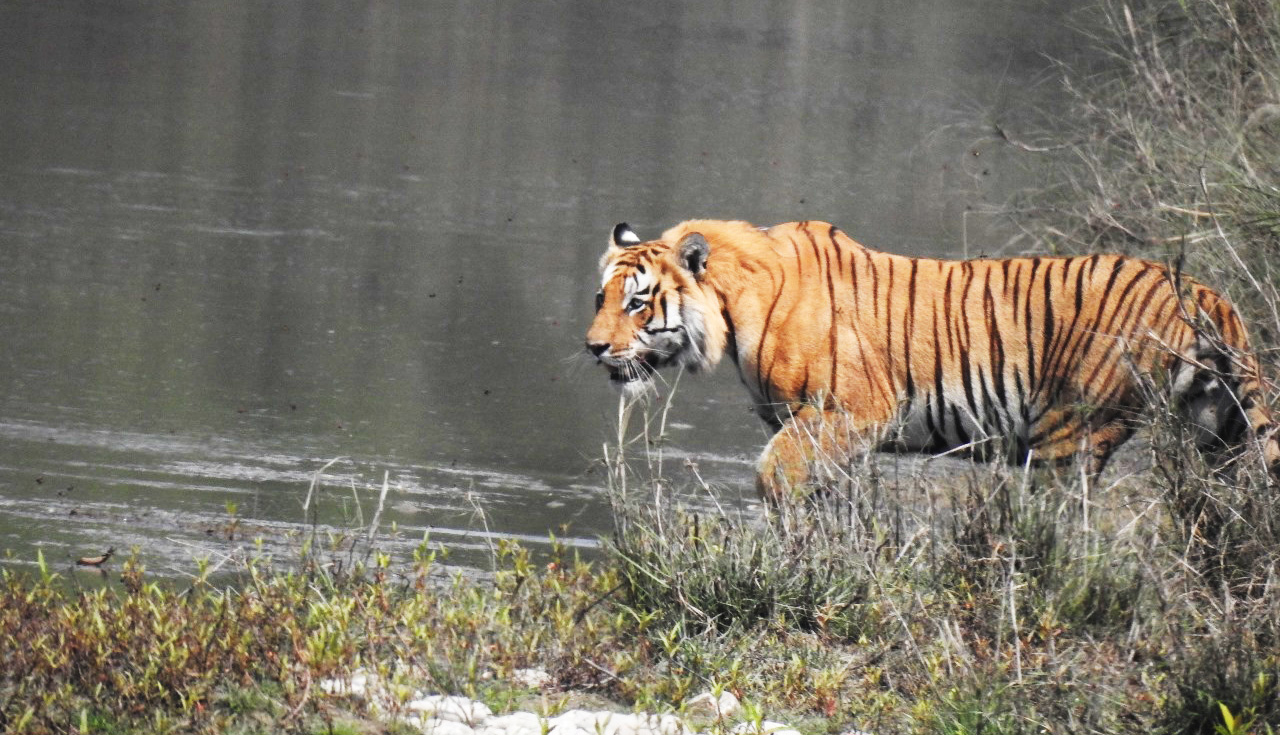
Chitwan is Nepal’s most visited national park and one of Asia’s finest wildlife destinations. The UNESCO World Heritage Site covers 932 square kilometres of subtropical grassland, riverine forest, and sal jungle in the Terai lowlands, and holds one of the world’s highest concentrations of one-horned rhinoceros alongside significant Bengal tiger, Asian elephant, and gharial crocodile populations.
The best activities in Chitwan are the early morning jeep safari into the park’s interior, the dawn canoe ride on the Rapti River, the nature walk with a naturalist guide through the buffer zone, and the Tharu cultural village visit. Rhino sightings on jeep safaris are virtually guaranteed. Tiger sightings occur regularly. The combination of jeep safari in the morning and canoe river trip in the afternoon covers the park’s two very different ecological zones and consistently delivers the best wildlife day of any Nepal itinerary.
For a nine-day itinerary, one or two nights in Chitwan is the standard allocation. Two nights allows both a morning and afternoon jeep safari plus a canoe trip, delivering a substantially more complete wildlife experience than a single overnight visit.
9. Lower Mustang Trek
The Lower Mustang or Jomsom-Muktinath trek is Nepal’s finest rain-shadow route and the best choice for travellers visiting during the monsoon season (June to August). The trail runs through the Kali Gandaki gorge north of the Annapurna-Dhaulagiri massif in a landscape that receives minimal rainfall during monsoon, giving it a completely different seasonal calendar from all other Nepal trekking regions.
The trek begins with a short flight from Pokhara to Jomsom at 2,720 metres and follows the ancient trading corridor north through Kagbeni, a beautifully preserved medieval walled village at the confluence of the Kali Gandaki and Mustang rivers, to Muktinath at 3,800 metres. Muktinath is one of the most sacred pilgrimage sites in the entire Himalayan Buddhist and Hindu world, with a temple that draws tens of thousands of pilgrims annually from across Nepal and India.
The Kali Gandaki gorge between Jomsom and Kagbeni is, by some geological measurements, the world’s deepest river gorge. The wind-scoured desert landscape, the medieval architecture of Kagbeni, and the stark contrast with the green Annapurna foothills to the south all make the Lower Mustang experience unlike anything else available in Nepal.
10. Luxury Everest Helicopter Experience
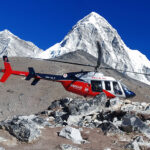
For travelers whose nine days do not include a multi-day trek but who want a genuine Himalayan encounter, the Everest region helicopter experience combines lodge-based comfort with the most spectacular aerial mountain access available anywhere. Several Kathmandu operators run two to three day circuits from Kathmandu into the Khumbu, combining helicopter flights to high-altitude landing points with one or two nights at luxury lodges above Namche Bazaar.
The core experience typically includes a helicopter landing at Kala Patthar (5,545 metres) for the closest and most dramatic Everest viewpoint accessible without trekking, a night at a high-altitude luxury lodge with Everest views from the room, and a return flight via the Gokyo Lakes or the Kongde ridge. For travellers who are time-constrained or physically unable to undertake the full Everest View Trek, this is the most complete alternative available. Costs for a two-day Everest luxury helicopter circuit typically range from USD 800 to USD 1,800 per person depending on the lodge category and flight time.
Six Itinerary Ideas for 9 Days in Nepal
Every itinerary below starts and ends in Kathmandu and suits travellers without prior technical mountaineering experience. Read the opening description of each to find the one that matches your interests.
Itinerary 1: Classic Nepal in 9 Days
The most comprehensive nine-day Nepal experience available. Culture in Kathmandu, a full Poon Hill trek through the Annapurna foothills, and two nights in Chitwan’s jungle. This itinerary covers Nepal’s three most iconic experiences in a single trip and is suitable for first-time visitors. Moderate difficulty on the trekking days.
Itinerary at a glance
Day 01 Arrive Kathmandu, city orientation (overnight: Kathmandu)
Day 02 Kathmandu: Pashupatinath, Boudhanath, Patan Durbar Square (overnight: Kathmandu)
Day 03 Fly to Pokhara, lakeside afternoon, trekking guide briefing (overnight: Pokhara)
Day 04 Drive Nayapul, trek to Tikhedhunga (1,540 m) (overnight: Tikhedhunga)
Day 05 Trek Tikhedhunga to Ghorepani (2,860 m) via Ulleri steps (overnight: Ghorepani)
Day 06 Poon Hill sunrise (3,210 m), trek to Ghandruk (1,940 m) (overnight: Ghandruk)
Day 07 Trek Ghandruk to Nayapul, drive to Chitwan (overnight: Chitwan)
Day 08 Full day Chitwan: jeep safari, canoe, Tharu village evening (overnight: Chitwan)
Day 09 Fly Chitwan to Kathmandu, departure (overnight: Kathmandu / Departure)
Days 1 and 2 ground you in the Kathmandu Valley. Pashupatinath at dusk is the spiritual anchor of the itinerary. Boudhanath in the morning, Patan in the afternoon. The flight to Pokhara on day 3 takes 25 minutes and arrives with the Annapurna range filling the northern sky. The Poon Hill circuit on days 4 to 6 is four days of well-paced trekking: the Ulleri stone steps on day 4, the rhododendron forests of the Ghorepani approach on day 5, and the pre-dawn Poon Hill sunrise on day 6. Ghandruk adds the Gurung cultural dimension before the return to the road. Day 7 uses the drive south to Chitwan as travel time, arriving in the park buffer zone by evening. Days 8 and 9 deliver the wildlife circuit: a 6:00 AM jeep safari, the Rapti River canoe, the Tharu village visit, and a morning flight back to Kathmandu.
Itinerary 2: Panchase Trek and Pokhara
Nepal’s finest quiet trek combined with generous Pokhara time. The Panchase circuit is ideal for travellers who want mountain views and genuine cultural encounters without the crowds of the main Poon Hill route. No Lukla flight required. Easy to Moderate difficulty.
Itinerary at a glance
Day 01 Arrive Kathmandu, welcome dinner, orientation walk (overnight: Kathmandu)
Day 02 Kathmandu: Bhaktapur Durbar Square, Boudhanath Stupa (overnight: Kathmandu)
Day 03 Fly Kathmandu to Pokhara, Phewa Lake afternoon, guide briefing (overnight: Pokhara)
Day 04 Boat across Phewa Lake, begin Panchase trek, overnight at first teahouse (overnight: Dhampus / Forest Camp)
Day 05 Trek to Panchase Ridge (2,517 m), panoramic Annapurna views (overnight: Panchase Bhanjyang)
Day 06 Trek through Bhadaure Gurung village, descend toward Naudanda (overnight: Naudanda)
Day 07 Trek to Nayapul, drive to Pokhara, lakeside recovery afternoon (overnight: Pokhara)
Day 08 Pokhara: Sarangkot sunrise, paragliding or zip-line, World Peace Pagoda (overnight: Pokhara)
Day 09 Fly Pokhara to Kathmandu, departure (overnight: Kathmandu / Departure)
The Panchase itinerary works beautifully over nine days because it gives four full days on the trail, a free day in Pokhara for adventure activities, and two days of Kathmandu heritage. The trek begins with a boat crossing of Phewa Lake on day 4 rather than a drive to a trailhead. The lake is already beautiful at this hour. The Panchase ridge at 2,517 metres on day 5 delivers the complete Annapurna panorama in a setting that most trekkers have entirely to themselves. Bhadaure village on day 6 is a genuine Gurung settlement where trekking tourism is light enough that local life continues entirely on its own terms. Pokhara on day 8 provides the adventure activities bookend: the paragliding flight or the zip-line, a Sarangkot sunrise, and a slow lakeside afternoon before the morning flight on day 9.
Itinerary 3: Tamang Heritage Trail
Nepal’s most culturally immersive short trek combined with Kathmandu heritage. No domestic flights required anywhere on the itinerary. The Tamang Heritage Trail is a conscious choice to support communities rebuilding since the 2015 earthquake while experiencing one of the most authentic traditional cultures in Nepal. Moderate difficulty. Suitable for all ages.
Itinerary at a glance
Day 01 Arrive Kathmandu, welcome dinner, Thamel walk (overnight: Kathmandu)
Day 02 Kathmandu: Pashupatinath, Swayambhunath, Patan (overnight: Kathmandu)
Day 03 Drive Kathmandu to Syabrubesi (7 hours) (overnight: Syabrubesi)
Day 04 Trek Syabrubesi to Gatlang (2,238 m), Tamang village exploration (overnight: Gatlang)
Day 05 Trek Gatlang to Tatopani, soak in natural hot springs (overnight: Tatopani)
Day 06 Trek Tatopani to Nagthali Ghyang (3,165 m), Himalayan panorama (overnight: Nagthali)
Day 07 Trek Nagthali to Briddim village, descend to Syabrubesi (overnight: Syabrubesi)
Day 08 Drive Syabrubesi to Kathmandu (overnight: Kathmandu)
Day 09 Kathmandu: Bhaktapur, Boudhanath final visit, departure (overnight: Kathmandu / Departure)
The Tamang Heritage Trail keeps the entire itinerary on the road and trail, with no flight dependency at any point. This is a significant practical advantage for nine-day trips with fixed return flights. The drive to Syabrubesi on day 3 passes through the Trishuli river corridor and enters the lower Langtang foothills by late afternoon. Gatlang on day 4 is the cultural centrepiece of the circuit: a traditional Tamang village of stone houses, ancient chortens, and a working gompa where monks conduct morning and evening puja. The hot springs at Tatopani on day 5 are a genuine geothermal reward. Nagthali at 3,165 metres on day 6 offers Himalayan views across Langtang, Ganesh Himal, and Jugal Himal without pushing above the altitude threshold where AMS becomes a concern. Briddim village on day 7 is one of the best-preserved Tamang settlements on the trail, with homestay options available. Day 8 is the long drive back to Kathmandu, and day 9 uses the morning for Bhaktapur or Boudhanath before departure.
Itinerary 4: Nepal Classic Highlights
Kathmandu culture, Chitwan wildlife, Lumbini pilgrimage, and Pokhara relaxation in nine days. No multi-day trekking required. This itinerary suits families, older travellers, spiritual pilgrims, and anyone who wants a comprehensive cultural and natural Nepal experience without extended physical exertion. Easy difficulty throughout.
Itinerary at a glance
Day 01 Arrive Kathmandu, transfer, Thamel evening (overnight: Kathmandu)
Day 02 Kathmandu: Pashupatinath, Boudhanath, Swayambhunath, Durbar Square (overnight: Kathmandu)
Day 03 Kathmandu: Bhaktapur, Patan, Nagarkot sunset (overnight: Nagarkot)
Day 04 Nagarkot sunrise, drive to Chitwan National Park (overnight: Chitwan)
Day 05 Chitwan: morning jeep safari, afternoon canoe ride, Tharu village (overnight: Chitwan)
Day 06 Drive Chitwan to Lumbini (3 hours), Maya Devi Temple, monastic zone walk (overnight: Lumbini)
Day 07 Lumbini: Tilaurakot ruins, meditation in sacred garden, fly to Kathmandu or Pokhara (overnight: Pokhara)
Day 08 Pokhara: Phewa Lake, World Peace Pagoda, Sarangkot sunset, lakeside evening (overnight: Pokhara)
Day 09 Fly Pokhara to Kathmandu, departure (overnight: Kathmandu / Departure)
This itinerary does the most kilometres of any in the guide and visits the most distinct destinations. Nagarkot on night 3 makes use of the eastern rim viewpoint and breaks the Kathmandu-Chitwan road transfer into a more interesting two-stage journey. Chitwan on days 4 and 5 uses both its major wildlife activities. The drive to Lumbini on day 6 takes three hours from Chitwan and the arrival in the sacred garden in the late afternoon, with the light turning gold on the Maya Devi Temple and the sound of chanting from surrounding monasteries, is one of the most atmospheric moments of the whole itinerary. Tilaurakot on day 7 should not be skipped. The ruins of ancient Kapilavastu, where the historical Buddha spent his first 29 years, are rarely crowded and carry a weight of history that the more tourist-developed sites lack. Pokhara on days 7 and 8 provides the lakeside landing before departure.
Itinerary 5: Sun Kosi Rafting Adventure
Nepal’s premier multi-day river adventure combined with two days of Kathmandu heritage. For travellers whose nine days are for the river rather than the trail. The Sun Kosi delivers five days of white-water rapids, sandy riverside camps, and remote gorge scenery with no other itinerary format matching it for pure adventure immersion. Suitable for moderately fit adults with no prior rafting experience required. Challenging river sections.
Itinerary at a glance
Day 01 Arrive Kathmandu, welcome dinner, trip briefing (overnight: Kathmandu)
Day 02 Kathmandu: Pashupatinath, Boudhanath, Patan Museum (overnight: Kathmandu)
Day 03 Drive east from Kathmandu to Sun Kosi put-in point, first paddle (overnight: Sun Kosi riverside camp)
Day 04 Full day Sun Kosi: Class 3 to 4 rapids, beach camp (overnight: Sun Kosi riverside camp)
Day 05 Full day Sun Kosi: gorge scenery, rapids, sandy beach evening (overnight: Sun Kosi riverside camp)
Day 06 Full day Sun Kosi: upper Class 4 to 5 section, most intense rapids (overnight: Sun Kosi riverside camp)
Day 07 Final Sun Kosi section, take-out at Chatara, drive toward Kathmandu (overnight: Kathmandu or roadside lodge)
Day 08 Return to Kathmandu, rest, Bhaktapur afternoon or Thamel (overnight: Kathmandu)
Day 09 Kathmandu morning, departure (overnight: Departure)
The Sun Kosi itinerary is the most adventurous option in this guide and the least like conventional Nepal travel. From the moment you push off the put-in point on day 3, the river corridor takes over entirely. There are no roads, no towns, no other tourists, and no decisions to make except how to read the next rapid. Campsites are on natural sandy beaches below forested cliffs. Evenings are around a fire. The sound is the river. Days 4 through 6 cover the most varied and demanding sections, with the upper Class 4 to 5 rapids on day 6 being the most technically intense part of the journey. Day 7 concludes the river run at Chatara near the Sun Kosi’s confluence with the Arun and Tamor rivers, then the 8-hour road return to Kathmandu begins. Day 8 in Kathmandu is a natural recovery day with Bhaktapur as the most rewarding afternoon option before departure the following morning.
Itinerary 6: Gosaikunda Sacred Lakes Trek
A pilgrimage and mountain trek to one of Nepal’s most sacred sites combined with Kathmandu heritage. Gosaikunda at 4,380 metres is the highest destination in any of these nine-day itineraries and delivers a spiritual and visual experience that is genuinely unlike anything else in Nepal. Moderate difficulty with one challenging altitude day. Suitable for fit, acclimatised trekkers.
Itinerary at a glance
Day 01 Arrive Kathmandu, transfer, welcome dinner (overnight: Kathmandu)
Day 02 Kathmandu: Pashupatinath, Boudhanath, Patan Durbar Square (overnight: Kathmandu)
Day 03 Drive Kathmandu to Dhunche or Syabrubesi (4 hours) (overnight: Dhunche)
Day 04 Trek Dhunche to Sing Gompa (3,330 m) through Langtang National Park forest (overnight: Sing Gompa)
Day 05 Trek Sing Gompa to Gosaikunda Lake (4,380 m) (overnight: Gosaikunda)
Day 06 Dawn meditation and exploration at the sacred lake, descend to Chandanbari (overnight: Chandanbari)
Day 07 Cross Laurebina La Pass (4,610 m), descend to Ghopte or Tharepati (3,490 m) (overnight: Tharepati)
Day 08 Descend through Helambu villages to Melamchi Pul Bazar, drive to Kathmandu (overnight: Kathmandu)
Day 09 Kathmandu morning, Bhaktapur or Swayambhunath, departure (overnight: Departure)
The Gosaikunda itinerary is the spiritual and physical peak of these six options. The climb from Sing Gompa to the lake on day 5 gains 1,050 metres in altitude over one day, and the body notices. The acclimatisation night at Sing Gompa (3,330 metres) on day 4 is essential and not to be skipped. The lake itself on day 6 at dawn is the reward: a deep blue-black body of water ringed by prayer flags and snow, with the surrounding peaks reflected in its surface and the complete silence of 4,380 metres. The Laurebina La crossing on day 7 at 4,610 metres is the highest point of the itinerary. From the pass the view encompasses the Langtang range, Ganesh Himal, and on clear days the distant outline of Manaslu. The descent into the Helambu valley leads through traditional Hyolmo Sherpa villages, and the 8-hour road return from Melamchi Pul Bazar on day 8 brings the circuit to a close with Kathmandu’s final morning on day 9.
Planning Your Nine Days
How to Choose Your Itinerary
The simplest way to choose is to answer three questions. What do you most want to feel at the end of the nine days? What is your physical fitness and experience level? And do you need to avoid domestic flight dependency for a fixed return flight date?
Itinerary 1 (Classic Nepal) is for first-time visitors who want to cover the essential Nepal triangle of culture, mountains, and wildlife in a single trip. Itinerary 2 (Panchase) suits those who want a quiet, crowd-free trekking experience with strong Pokhara time. Itinerary 3 (Tamang Heritage) is the best option for cultural travellers who want no flight dependency and a conscious connection to community-based tourism. Itinerary 4 (Classic Highlights) works for families, older travellers, and those prioritising culture and wildlife over physical challenge. Itinerary 5 (Sun Kosi) is for adventure travellers whose nine days are about the river. Itinerary 6 (Gosaikunda) is for trekkers and spiritual travellers who want altitude and sacred landscape.
For monsoon travel (June to August), Itinerary 4 with Chitwan and Lumbini works well. The Panchase trek (Itinerary 2) is also viable in light monsoon conditions as its maximum altitude is low. Avoid high-altitude routes (Gosaikunda, Poon Hill above Ghorepani) and the Sun Kosi when the river is in full monsoon spate unless you are an experienced whitewater paddler.
Best Season for Nine Days
- October and November are the finest months for any nine-day Nepal trip. Post-monsoon clarity means the sharpest mountain views of the year, stable weather on all trekking routes, and excellent wildlife visibility in Chitwan. October is particularly recommended.
- March and April deliver the rhododendron bloom on all Annapurna and Langtang routes. The forests between Tikhedhunga and Ghorepani, and those on the Tamang Heritage Trail and Panchase ridge, are extraordinary in this window. Mountain visibility is generally good. April is the best spring month overall.
- December through February is cold at altitude but often surprisingly clear. Kathmandu is comfortable. Chitwan and Lumbini are at their best in winter. Trekking routes above 3,000 metres are quiet and cold but very beautiful. Good sleeping bag and insulation essential.
- May is workable but warmer in the valleys and occasionally hazy. The high-altitude routes (Gosaikunda, Poon Hill) are clear early in the month before pre-monsoon build-up begins.
Guide Requirement
Solo trekking for foreign nationals has not been permitted in Nepal since 2025. All trekkers on designated trekking routes must be accompanied by a licensed Nepali guide. This applies to every trekking itinerary in this guide. A licensed guide costs USD 25 to USD 50 per day and is included in packages from reputable operators. For non-trekking itineraries (Itineraries 4 and 5 in the sections covering cultural and wildlife activities), guides are recommended but not legally required.
Getting to Nepal
- International flights arrive at Tribhuvan International Airport in Kathmandu. Major airlines with relevant connections include Qatar Airways via Doha, Turkish Airlines via Istanbul, Air India from Delhi and Mumbai, and Emirates via Dubai.
- Nepal Tourist Visa is available on arrival at Kathmandu airport for most nationalities. The fee is USD 30 for 15 days, USD 50 for 30 days, and USD 125 for 90 days. Bring two passport photos and USD cash. The online e-Visa through nepalimmigration.gov.np speeds up the arrival process significantly.
- Domestic flights: Kathmandu to Pokhara takes 25 minutes and costs approximately USD 80 to USD 120. Bharatpur (Chitwan) is 30 minutes. Bhairahawa (Lumbini) is 45 minutes. Book in advance during October and November.
Budget Overview
Nine days in Nepal costs roughly USD 350 to USD 600 at budget level (shared teahouses, local transport, self-arranged guide) and USD 700 to USD 1,400 at mid-range (private accommodation, domestic flights, operator-arranged guide). Luxury levels vary significantly by itinerary. The Sun Kosi rafting package, including all camping and equipment, runs USD 150 to USD 350 per person. The Everest luxury helicopter circuit mentioned in the activities section runs USD 800 to USD 1,800. Most cultural and trekking itineraries fall comfortably in the mid-range band for all-inclusive costs.
What to Pack
- Moisture-wicking base layers in merino wool or synthetic. The temperature range across these itineraries runs from 30 degrees Celsius in Chitwan to 5 degrees or below at night in Ghorepani, Gosaikunda, or Nagthali.
- Fleece mid-layer and a down jacket for any trekking itinerary involving overnight stays above 2,000 metres.
- Waterproof jacket and trousers. Afternoon cloud and light rain is possible in all seasons outside of deep winter.
- Trekking boots broken in before departure for any trekking itinerary. Comfortable walking shoes for cultural and wildlife-focused trips.
- Trekking poles for any route involving significant daily elevation change. Particularly valuable on descents from Gosaikunda and the Poon Hill circuit.
- Sleeping bag rated to minus 5 degrees Celsius for any teahouse nights above 2,500 metres. A liner adds warmth and hygiene flexibility.
- UV400 sunglasses and SPF 50 sunscreen. UV intensity increases significantly with altitude.
- Insect repellent. Essential in Chitwan and Lumbini. Above Pokhara and in the mountain regions it is not required.
- Water purification tablets or a UV Steripen. Treat all water consumed above main towns and teahouse settlements.
- Personal first aid kit including blister pads, Ibuprofen, antihistamine, rehydration salts, and Imodium.
- Portable power bank of at least 10,000 mAh. Electricity is available but unreliable above the main towns on all trekking routes.
- Nepali Rupee cash for personal expenses. ATMs are available in Kathmandu, Pokhara, and Chitwan. They are limited or absent above the trailheads on all trekking routes.
- Travel insurance covering trekking activities, medical treatment, and helicopter evacuation is mandatory for any trekking itinerary. It is strongly recommended for all itineraries.
Final Thought
Nine days is a committed trip. Not a rushed one. The travellers who get the most from this window are those who pick a single itinerary and follow it without trying to improvise extra experiences into every gap. Nepal has a way of rewarding patience. The mountain that is hidden in cloud at 6:00 AM often appears at 7:00 AM if you sit still long enough. The monastery that looks closed sometimes opens if you wait five minutes. The jeep that seems to have no space for one more passenger usually does.
Pick the nine days that match what you came for. Let the country fill in the rest.
Recent Posts