Walking Safari Tour in Bardia National Park
If you’re looking for an extraordinary wildlife adventure in Nepal, far away from crowds and closer to raw, untouched nature, the Walking Safari Tour in Bardia National Park is exactly what you need. Known as one of the most authentic jungle experiences in Asia, a walking safari in Bardia offers travelers the rare chance to explore a vast and vibrant ecosystem on foot—where each step brings you closer to the true heartbeat of the forest. Unlike the typical wildlife safaris by jeep, this form of eco-tourism allows you to walk quietly through nature, guided by expert local trackers, and discover what it really means to be in the wild.
What is a Walking Safari in Bardia National Park?
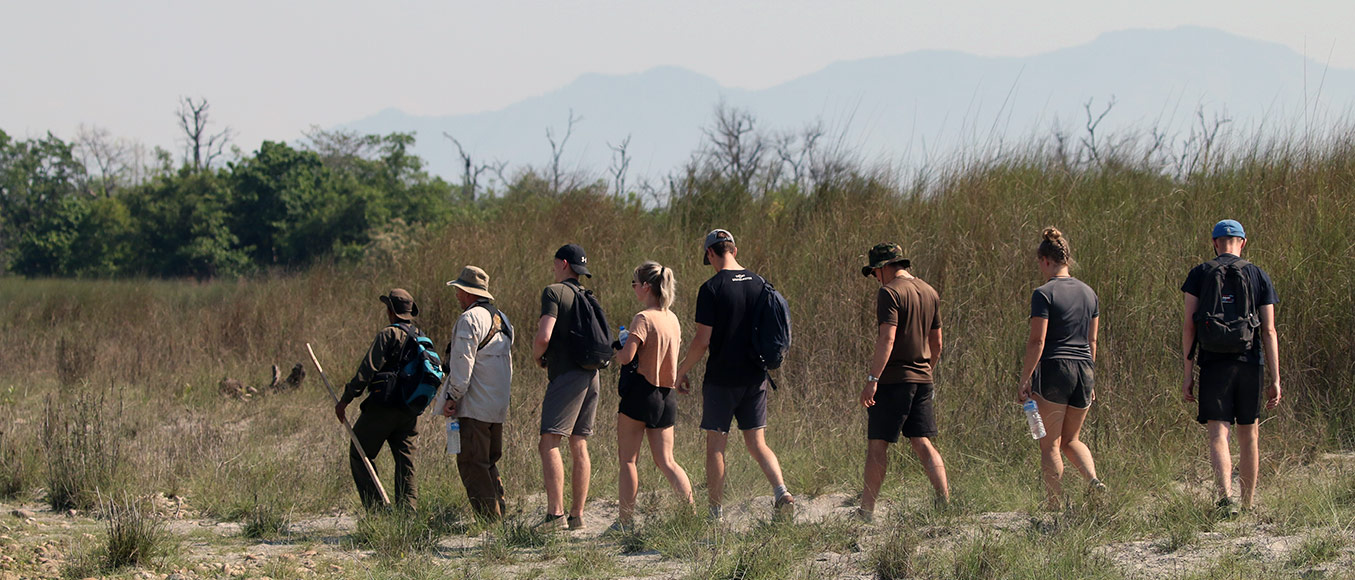
A walking safari in Bardia National Park is an immersive and guided jungle walk designed for those who want to experience wildlife and nature up close. Conducted under the strict supervision of experienced guides and nature experts, this safari offers a safe yet thrilling opportunity to walk within the habitat of some of the world’s most endangered and majestic creatures. Unlike conventional game drives, the walking safari is slow-paced, focused on observation, tracking, and understanding jungle behavior. It’s about feeling the rhythm of the forest, sensing wildlife presence in silence, and witnessing nature’s raw drama without the interruption of engines or crowds.
Located in western Nepal, Bardia National Park spans 968 square kilometers of dense sal forests, riverine woodlands, and wide grasslands. The park is home to some of the most iconic wildlife species in South Asia—including the Royal Bengal Tiger, One-Horned Rhinoceros, Asian Elephant, Gangetic Dolphin, and over 400 species of birds. With fewer visitors compared to more popular parks like Chitwan, Bardia remains a virgin national park, offering exclusivity, tranquility, and authenticity.
Is It Worth Doing a Walking Safari in Bardia?
Without question—yes, it is absolutely worth it. The walking safari is the highlight of any Nepal wildlife tour, especially in Bardia, where the environment is still pristine and unspoiled by mass tourism. While jeep safaris offer reach, they often lack intimacy. Walking in the wild gives you an adrenaline-pumping yet peaceful experience—especially when you find yourself only meters away from a tiger’s paw prints or watching rhinos wade through muddy swamps. The feeling of being truly present in the wilderness, without barriers or the sounds of engines, is something you can’t replicate elsewhere.
What sets Bardia’s walking safaris apart is the genuine connection to nature. Here, every rustle, chirp, and shadow tells a story. The experienced naturalists not only guide your path but teach you how to read the forest—how to recognize signs of animal movement, how birds give alarm calls when predators are near, and how to track large mammals safely. With high chances of spotting tigers, rhinos, elephants, deer, and countless bird species, the walking safari gives you not just sightings, but a deeper appreciation of wildlife and conservation.
What to Expect from a Walking Safari in Bardia
Your walking safari day typically begins early in the morning. After a briefing at the lodge, you’ll set off into the jungle with your guide, a nature specialist, and sometimes a park ranger for added safety. The group size is intentionally small to maintain silence and avoid disturbing the animals. You’ll walk along riverbanks, through tall grasses, forest trails, and animal tracks while learning about the flora and fauna that make up Bardia’s rich ecosystem.
Expect moments of stillness as you wait in hides or near watering holes, where animals often gather to drink. With patience and a bit of luck, you may catch a glimpse of a Royal Bengal Tiger resting in the shade, a herd of elephants migrating across the jungle, or a one-horned rhino grazing in the distance. You’ll also spot monkeys, langurs, wild boars, porcupines, and hundreds of bird species including hornbills, kingfishers, and eagles. The guides will share insights into animal behavior, medicinal plants, and forest conservation throughout your journey.
Afternoon walks are often followed by a quiet break near the Karnali River, where you might see crocodiles basking or even the rare freshwater dolphin surfacing. You’ll return to your lodge by evening, usually filled with stories, sightings, and a sense of awe at the day’s wild encounters.
Why Walking Safari in Bardia is a Must for Nepal Wildlife Tour Enthusiasts
For those planning a Nepal wildlife tour, including a walking safari in Bardia is a must. This is not just a tour—it’s an education in wildlife ethics, an opportunity to contribute to conservation through sustainable tourism, and a deep personal journey into nature. Bardia’s walking safaris offer one of the best chances in Asia to see a tiger on foot. But even if you don’t, the sheer experience of being a guest in nature’s house—moving quietly, observing keenly, and respecting wildlife—makes the journey worthwhile.
Additionally, this form of low-impact tourism supports the local Tharu communities, many of whom are employed as guides, trackers, and hosts. Your visit directly benefits the local economy, encourages conservation efforts, and helps preserve this wild haven for future generations. And with modernization rapidly reaching even Nepal’s remote areas, visiting Bardia National Park now ensures you experience it in its most authentic form—before it becomes yet another commercialized safari destination.
Conclusion: Step Into the Wild Before It’s Too Late
The Walking Safari Tour in Bardia National Park is more than a travel experience—it’s a personal journey into one of the last wild frontiers of Nepal. As the world becomes increasingly fast-paced and automated, experiences like this are vanishing. Bardia offers a unique window into nature as it once was—pure, silent, and majestic. If you’re looking for a truly transformative addition to your Nepal adventure, this walking safari will leave you with memories that last a lifetime and a renewed respect for the wild.
Recent Posts