Dhorpatan is More Than Just a Hunting Reserve
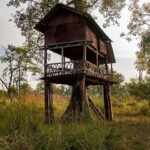
Ask most travelers about Dhorpatan and they will give you one answer: hunting reserve. Nepal’s only legal hunting reserve, established in 1987 in the Baglung, Rukum, and Myagdi districts of western Nepal.
That answer is not wrong. But it is dangerously incomplete.
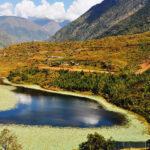
Dhorpatan is a high-altitude valley sitting above 3,000 meters, surrounded by Dhaulagiri and Putha Hiunchuli massifs, filled with dense forests, open meadows, glacial streams, and villages that have barely changed in centuries. It is one of the most beautiful and least visited corners of Nepal, and almost nobody is talking about it.
That is exactly why you should go.
A Valley That Opens Up Like a Secret
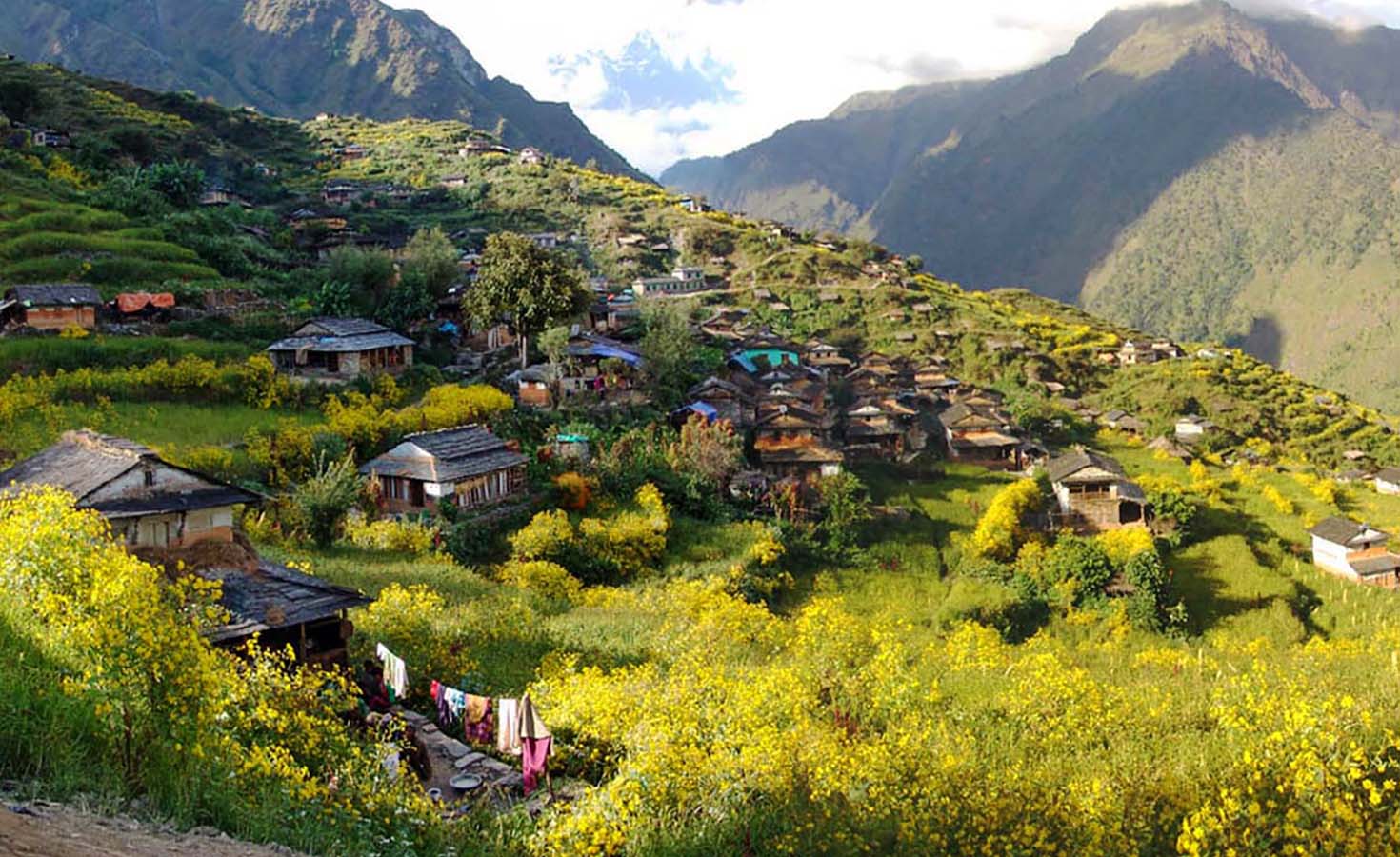
The approach to Dhorpatan already tells you something different is happening. As you leave behind the main highways and move deeper into western Nepal, the landscape shifts. Terraced farmland gives way to forested ridgelines. The air gets cleaner. The trails get quieter.
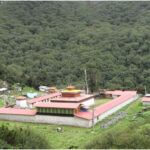
By the time you arrive in the Dhorpatan valley, the scale of what surrounds you is hard to process. A vast, open highland plateau ringed by snow-capped peaks. Yak herders moving across green meadows. Monasteries perched on hillsides above villages that run entirely on their own rhythms.
This is not a staged experience. Nobody here is performing rural Nepal for tourists. This is just how life has always been in this part of the country.
Trekking in Dhorpatan: Raw, Rewarding, Uncrowded
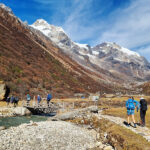
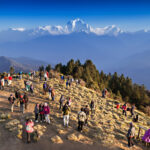
Dhorpatan offers some of the most underrated trekking in Nepal. Trails wind through rhododendron and blue pine forests, cross high passes with unobstructed views of the Dhaulagiri range, and drop into hidden valleys where you may walk for hours without seeing another trekker.
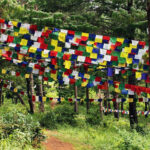
The Dhorpatan Circuit Trek takes you through multiple ethnic communities — Magar, Tibetan, and Chhetri villages — each with its own culture, architecture, and way of life. Teahouses are simple and genuine. Hospitality here is not a business model; it is just what people do.
For trekkers tired of the Annapurna and Everest circuits, Dhorpatan is the antidote. Same quality of Himalayan scenery. A fraction of the foot traffic.
Best trekking season: October to November and March to May.
Rural Life That Feels Completely Real
One of the most powerful things about traveling in Dhorpatan is how ordinary everything feels. Not ordinary in a boring way — ordinary in the sense that real life is happening all around you and you are simply a quiet witness to it.
Women carry loads along stone-paved trails. Children play outside stone houses with carved wooden windows. Farmers work terraced fields with hand tools against a backdrop of peaks that seem impossibly close. Monasteries hold morning prayers you can hear from the trail.
There is no tourist village here. No souvenir market. No performance of culture for outside consumption.
What you see in Dhorpatan is Nepal as it actually lives — self-sufficient, deeply rooted, and genuinely welcoming to the rare traveler who makes the effort to reach it.
Wildlife Beyond the Hunting Angle
Yes, Dhorpatan Hunting Reserve exists, and yes, blue sheep (bharal) and Himalayan tahr are among the species found here. But wildlife in Dhorpatan is far more than a hunting statistic.
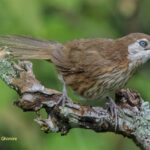
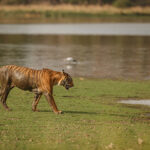
The reserve and its surrounding forests are home to snow leopards, red pandas, Himalayan black bears, musk deer, and over 200 species of birds including the colorful Impeyan pheasant, Nepal’s national bird.
For wildlife watchers and nature photographers, Dhorpatan’s combination of high-altitude terrain and minimal human pressure creates exceptional sighting opportunities. This is the kind of place where you might round a trail bend and find yourself face to face with a herd of blue sheep grazing a hundred meters away, completely unbothered.
The Scenery Alone is Worth the Journey
Dhorpatan sits in the rain shadow of the Dhaulagiri massif, the seventh highest mountain in the world. On clear days — and there are many — the views from the valley and its surrounding ridges are extraordinary.
Putha Hiunchuli (7,246m), Churen Himal, and the Dhaulagiri range form a permanent skyline that photographers and trekkers alike find difficult to stop staring at. The quality of light at this altitude, especially in autumn and early spring, is unlike anything you find in lower trekking zones.
Sunrises over the plateau. Frozen streams catching morning light. Meadows dusted with frost. It is the kind of scenery that makes you put your camera down because no photo will ever do it justice.
How to Get to Dhorpatan
Dhorpatan is accessible by road from Baglung or Burtibang, both reachable from Pokhara. The journey from Pokhara takes roughly one to two days depending on the route and road conditions.
From the roadhead, trekking begins. Most organized itineraries run between 10 and 16 days depending on the route and side trips included. All trekkers require a Dhorpatan Hunting Reserve entry permit, available through registered trekking agencies.
Traveling with a local guide is strongly recommended. Trails are not always well-marked, and local knowledge makes the difference between a good trip and a great one.
Why Dhorpatan Deserves a Place on Every Nepal Itinerary
Nepal has Everest Base Camp. It has the Annapurna Circuit. Both are genuinely world-class. But the version of Nepal that most visitors never reach — the raw, quiet, deeply rural Nepal that has not yet been shaped by mass tourism — that version lives in places like Dhorpatan.
The hunting reserve is a footnote. The real story is a high Himalayan valley full of wildlife, culture, ancient trails, and mountain views that will stay with you long after you return home.
Dhorpatan is not a compromise destination. It is a discovery.
Come and see what most people are missing.
Recent Posts